TL;DR: Amazon’s Zoox now operates robotaxi service to Las Vegas airport baggage claim—a competitive advantage over Uber/Lyft—following its August federal exemption permitting 2,500 vehicles. Nevada expects 8,000 robotaxis deployed across Clark County within 12 months as Tesla, Uber, and Waymo licenses activate.
Zoox Claims Airport Advantage as Robotaxi Race Accelerates
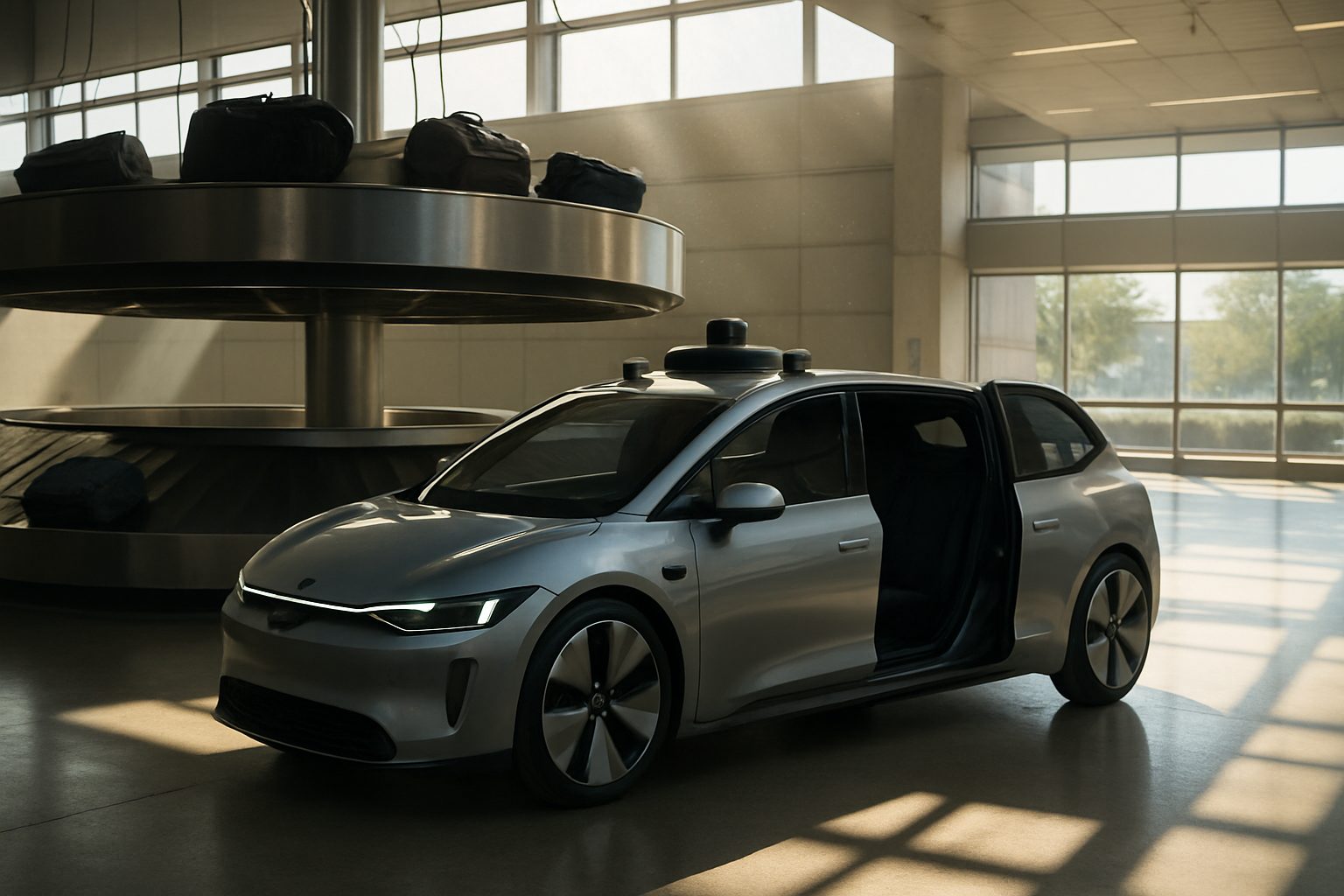
Zoox’s airport expansion matters operationally because it captures a high-value, high-frequency use case with minimal regulatory friction. Direct baggage-claim pickups eliminate the 5-10 minute walk competitors impose, creating immediate competitive differentiation. This isn’t incremental—it’s a structural advantage in market share capture during the critical deployment window.
The move signals Amazon’s confidence in post-exemption scaling. Zoox launched paid rides August 10, announced San Diego and Houston testing, and released its safety framework. Airport access validates the regulatory pathway and de-risks expansion to other restricted-access venues.
Background: The Exemption That Changed Everything
Zoox’s regulatory breakthrough came in August 2026 when the National Highway Traffic Safety Administration granted a temporary exemption from eight federal motor vehicle standards. The two-year exemption permits deployment of 2,500 vehicles and represents NHTSA’s first major robotaxi exemption, effectively authorizing vehicles without steering wheels, pedals, or traditional windshield defrosting systems.
The Amazon-owned company spent over a decade on its custom robotaxi platform. Prior to exemption, Zoox operated only as a pilot program—collecting data and safety records without commercial revenue. August marked the inflection point from research to monetization.
Las Vegas emerged as Zoox’s proving ground due to concentrated geography and permissive state regulation. The city has hosted autonomous vehicle testing since the early 2020s and maintains relatively light-touch licensing under Nevada Transportation Authority oversight.
Competitive Dynamics: 8,000 Robotaxis Coming to Clark County
Zoox’s first-mover advantage is temporary. Tesla, Uber, and Waymo each received Clark County permits in August 2026, with combined authorization for up to 8,000 vehicle deployments over 12 months. Uber plans dual operations: Hyundai’s Motional platform and Zoox robotaxis through partnership.
This creates a bifurcated market where Uber gains access to two distinct vehicle architectures and technology stacks, hedging against single-platform risk. Tesla operates its own stack independently. Waymo continues with its Jaguar/Geely EV partnership.
The airport contract accelerates Zoox’s unit economics in high-utilization corridors. Airport trips generate predictable demand, premium pricing, and minimal off-network deadheading. If Zoox captures 20-30% of Harry Reid airport mobility demand before competitors launch, it locks in revenue and operational data critical for market leadership claims.
Regulatory Precedent and Path Forward
Zoox’s exemption creates a regulatory template. Other robotaxi applicants will reference it as proof-of-concept for safety frameworks, potentially accelerating timelines for Waymo, Cruise, or emerging competitors seeking exemptions in different jurisdictions.
The critical test: whether Zoox can maintain safety performance parity with competing systems under commercial load. Exemptions are renewable but also revocable. Any significant incident could trigger re-regulation and reset the 8,000-vehicle deployment timeline.
For investors: Zoox’s path to profitability now depends on network density and airport/venue premiums, not regulatory certainty. The metric to watch is cost-per-ride-mile in the Vegas market compared to Waymo’s San Francisco operations.
About the Author