Tesla Opens Robotaxi Fleet to Third-Party Operators—Strategic Pivot Away from Vertically Integrated Model
TL;DR: Tesla published a fleet operator interest form, signaling it will license Cybercabs to third-party companies rather than maintain exclusive control. This mirrors Waymo’s partnership model with fleet manager Moove and represents a fundamental shift from Musk’s 2016 vision of owner-operated vehicles.
Tesla Abandons Vertically Integrated Robotaxi Model
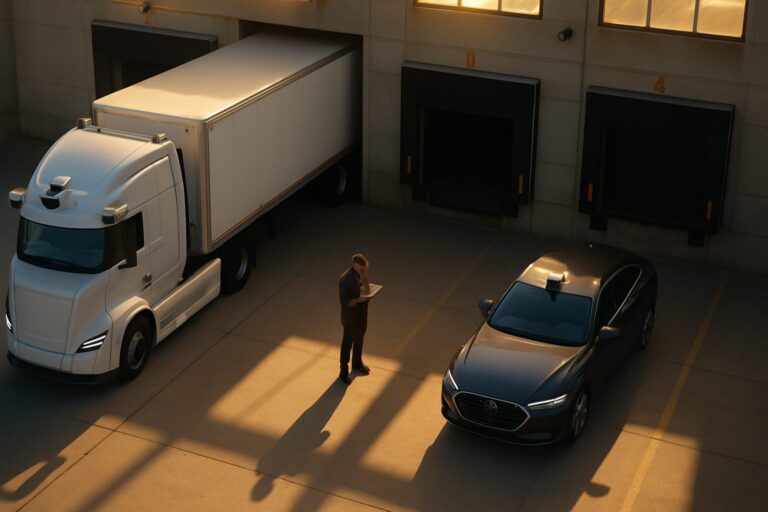
Tesla’s recently published interest form targets businesses seeking to operate Cybercab fleets, marking a decisive departure from the company’s historical strategy. The form, released ahead of Tesla’s Austin Cybercab event, solicits commitments from fleet purchasers, infrastructure providers, and event collaborators.
The operational implication is significant: Tesla trades margin control for rapid market saturation. By licensing third-party fleet operators, Tesla accelerates network effects without capital expenditure or operational overhead—effectively outsourcing the highest-friction layer of autonomous taxi deployment.
A Decade-Long Strategic Reversal
Elon Musk’s original 2016 thesis centered on personally owned Tesla vehicles generating passive income through a ride-sharing network akin to Uber’s driver model. In 2019’s Autonomy Day, Tesla reiterated this vision, positioning itself as a marketplace connecting owners with riders.
That model never launched. The company shifted to direct fleet ownership—first with Model Y vehicles, then purpose-built Cybercabs. The interest form signals acceptance that vertical integration wasn’t viable at scale. Distribution partnerships now supersede the owner-operator experiment.
Competitive Pressure from Waymo’s Fleet Model
Waymo’s strategy with Moove—a $2.1 billion fintech startup managing its robotaxi fleets across Phoenix, Miami, Las Vegas, and planned London expansion—established a proven playbook. Moove doesn’t own Waymo vehicles but manages their operations, reserving eventual ownership optionality.
Uber’s autonomous partnerships with Avomo and New Horizon, plus legacy players like Avis and Hertz entering fleet management, further validated the model. Tesla’s pivot mirrors industry consensus: autonomous vehicle manufacturers succeed by licensing hardware and software, not running cabs.
Implications for Operators and Investors
The interest form structure—featuring options for fleet purchase, infrastructure development, and collaboration—suggests multiple revenue vectors. Third-party operators assume capital risk and operational complexity while Tesla extracts per-vehicle or per-ride economics.
- Fleet operators benefit: Access to Cybercabs without Tesla’s operational burden; geographic expansion without corporate overhead
- Tesla benefits: Exponential fleet scaling; reduced capex and opex; recurring SaaS-like revenue from software licensing and network access
- Market dynamics: Consolidation accelerates as small operators require sufficient scale to compete; regulatory approvals become operator-specific rather than Tesla-monolithic
Scaling Through Distributed Networks
Tesla’s willingness to fragment its robotaxi network suggests confidence in autonomous technology maturity and regulatory pathways. If Cybercabs require minimal centralized coordination, third-party operators can launch independently in separate jurisdictions—dramatically reducing deployment timelines.
This model also de-risks regulatory approval by distributing liability and operational responsibility. Tesla maintains technology IP; operators assume regulatory and passenger-facing obligations.
What the Form Reveals About Tesla’s Timeline
The interest form’s vagueness—”helps us build our robotaxi network” without specific terms—indicates Tesla hasn’t finalized licensing models. Operational details (cost per vehicle, revenue-sharing percentages, software licensing fees) remain undefined.
This suggests early-stage partner evaluation rather than imminent commercial launches with third parties. Tesla likely seeks feedback on operator sophistication, geographic ambitions, and capital availability before structuring formal agreements.
Background: Key Players and Context
Tesla has operated its own Cybercab robotaxi service in select markets following years of development on autonomous driving capabilities. The gold-hued, purpose-built vehicle represents a hardware departure from Tesla’s standard Model Y testing platform. Elon Musk founded the company in 2003; it became the world’s most valuable automaker by market cap.
Moove, headquartered in Lagos with operations across Africa, the US, and UK, pivoted from vehicle financing for ride-hailing drivers to autonomous fleet management. The startup raised $250 million in August 2026 at a $2.1 billion valuation, making it one of the robotaxi ecosystem’s most well-capitalized fleet operators. It manages Waymo’s entire US and planned London operations.
Waymo, Google’s autonomous vehicle subsidiary, operates robotaxi services in Phoenix, San Francisco, Los Angeles, and Las Vegas. Unlike Tesla’s direct-operation model, Waymo has partnered exclusively with Moove for fleet management and driver operations, focusing engineering resources on autonomous technology development.
Uber has partnered with multiple autonomous fleet operators (Avomo, New Horizon) while maintaining its core ride-hailing network. The company views autonomous vehicles as a margin-expansion opportunity rather than core competency, licensing third-party autonomous technology rather than building in-house.
Avis and Hertz, traditional car rental giants, launched autonomous fleet management divisions in response to robotaxi adoption. Both companies leverage existing fleet logistics, maintenance infrastructure, and regulatory relationships to compete with fintech-native operators like Moove.
About the Author