Exoskeletons Move From Lab to Front Lines: What This Means for Operations and Returns
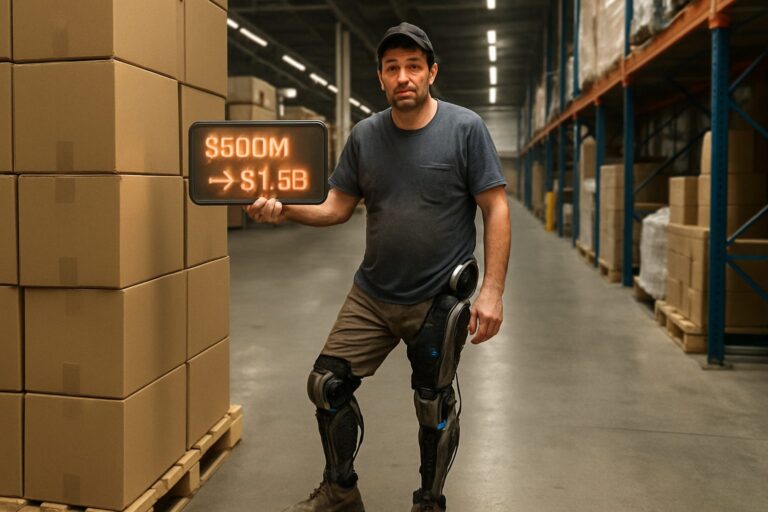
TL;DR: Powered exoskeletons are transitioning from R&D into operational deployment across rescue, manufacturing, and military sectors. The market sits at ~$500M today but could reach $1.5B by mid-2030s as actuator costs drop and real-world ROI data solidifies.
The Operational Shift: Exoskeletons Enter Mission-Critical Work
Seattle Mountain Rescue is field-testing powered hip and leg devices to accelerate wilderness rescue operations—a bellwether for adoption in high-stakes environments. When speed and endurance directly impact survival outcomes, the business case collapses time horizons.
Ukraine’s military deployment of Hypershell exoskeletons in active combat validates force multiplication under extreme conditions. Soldiers report reduced fatigue, faster work cycles, and sustained combat effectiveness—metrics that translate directly to operational tempo and casualty reduction.
Where Commercial Adoption Is Fastest
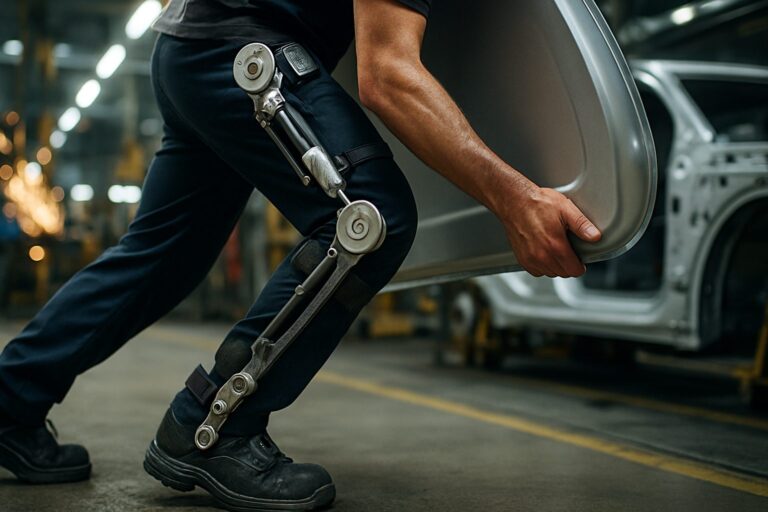
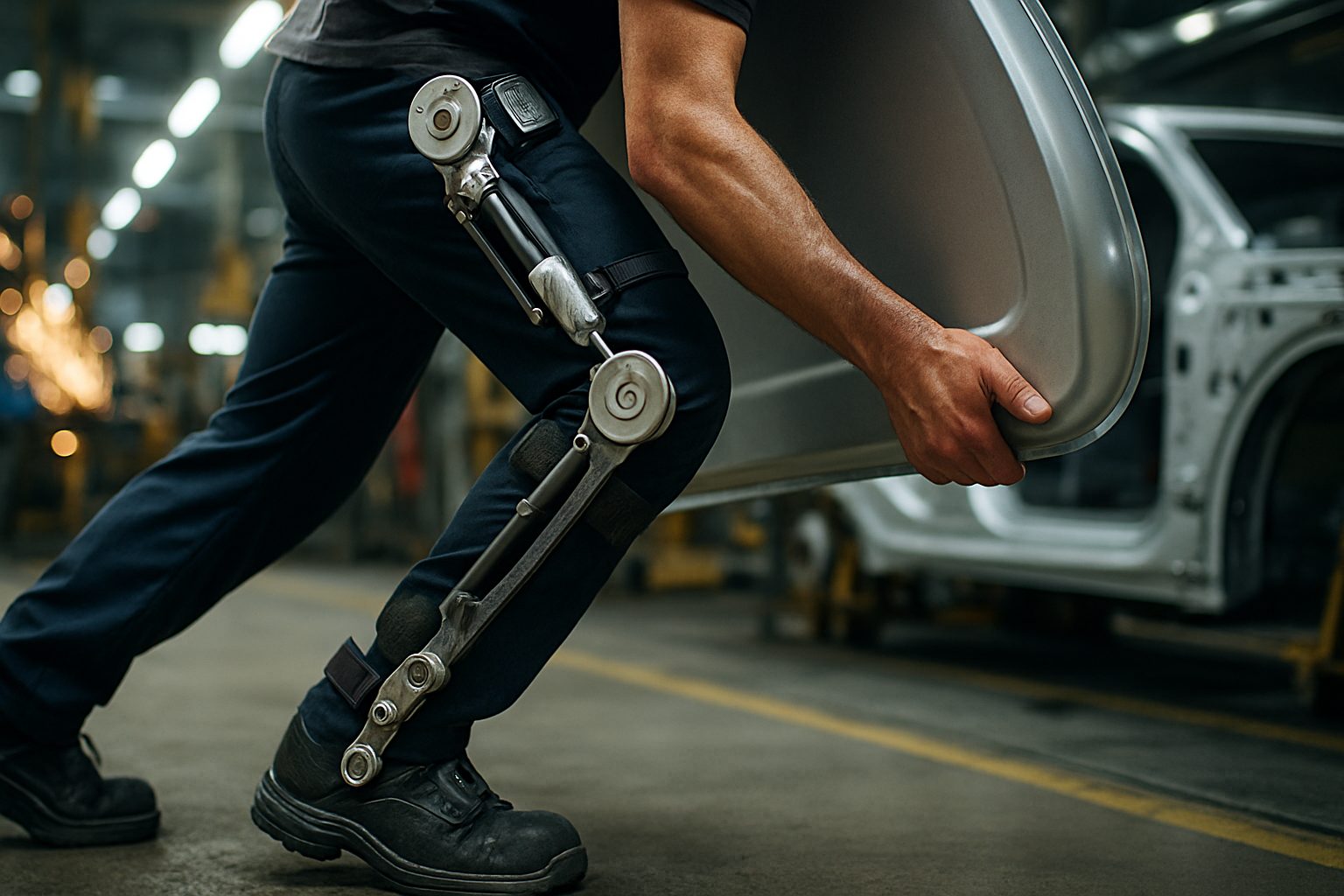
Manufacturing has become the anchor tenant. IKEA, Ford, Boeing, and Mazda Toyota already field exoskeletons on assembly lines for material handling. The Finland-based ExoPELA project documented measurable muscle strain reduction in rescue and firefighting tasks, converting anecdotal benefits into verifiable labor science.
Warehouse logistics operators see immediate ROI: reduced worker compensation claims, higher throughput per labor hour, and extended work-life for aging workforces. These aren’t speculative gains.
Why Now: The Cost Inflection Point
Robotic actuators, sensors, and control systems hit affordability thresholds in the past five years. Powered exoskeletons shifted from $50K+ engineering projects to deployable tools in the $10-25K range—crossing the break-even line for 24/7 industrial use.
Battery density improvements and lightweight materials cut the total system weight from 40+ pounds to 15-25 pounds, reducing compliance burden and wear fatigue on the operator.
Market Trajectory and Valuation
Current sector valuation sits around $500M, with analyst consensus pointing to 2-3x growth by 2035. But this assumes linear adoption. Military procurement cycles, workplace injury cost inflation, and labor scarcity could accelerate the timeline significantly.
The clinical and consumer segments (rehabilitation, elderly care, fitness) represent the longer-tail opportunity. Aging demographics in developed markets create structural demand for mobility augmentation that extends beyond industrial use cases.
Historical Context: A Century-Old Concept Finally Viable
The exoskeleton concept is not new. Nicholas Yagn patented a wearable exercise apparatus in 1890, and Leslie C. Kelley filed a steam-powered walking support patent in 1919. What changed: electromechanical engineering matured enough to make these devices reliable, affordable, and ergonomic at scale.
By the 1960s, actuated robotic exoskeletons with electronic controls existed as laboratory prototypes. The past decade compressed iteration cycles—what would have taken 20 years of R&D now happens in 3-5 years due to accessible component ecosystems and simulation software.
How Exoskeletons Actually Work
The mechanical architecture is straightforward: a lightweight frame anchors to the trunk, waist, and limbs via ergonomic attachment points. Actuators—electric motors or pneumatic systems—convert battery power into mechanical force that amplifies or assists body movement.
The Hypershell used in Ukraine attaches at the waist and thighs, amplifying hip flexion and extension for load-bearing. The SuitX device (IKEA) supports the back and shoulders during overhead or repetitive material handling. Control systems—increasingly AI-assisted—synchronize actuator output with the wearer’s intended movement, reducing cognitive load.
Key Design Variables Affecting Adoption
- Battery life (4-8 hour operational windows are current baseline)
- Weight distribution (over 25 pounds, compliance drops sharply)
- Durability in harsh environments (mud, saltwater, extreme temperatures)
- Training burden (steeper than expected for field teams)
- Maintenance costs and spare parts availability
The Investment Thesis
This is not speculative robotics. Rescue teams, militaries, and Fortune 500 manufacturers are already writing checks. The question is velocity and vertical consolidation. Companies that own both the exoskeleton IP and the service/maintenance ecosystem will capture disproportionate value.
Watch for: acquisition of smaller device makers by tier-1 defense and industrial automation firms; expansion of rental/subscription models in logistics; and clinical reimbursement data that opens healthcare procurement channels.
About the Author