Exoskeleton Deployment Signals $1B Market Inflection for Industrial Labor Tech
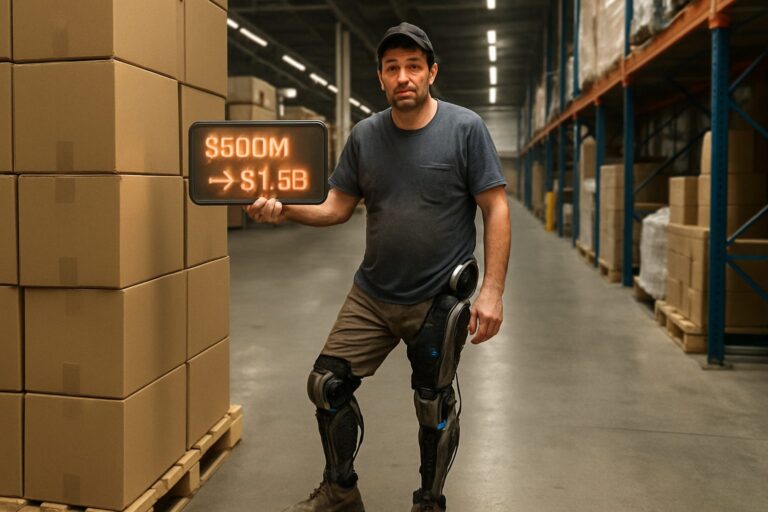
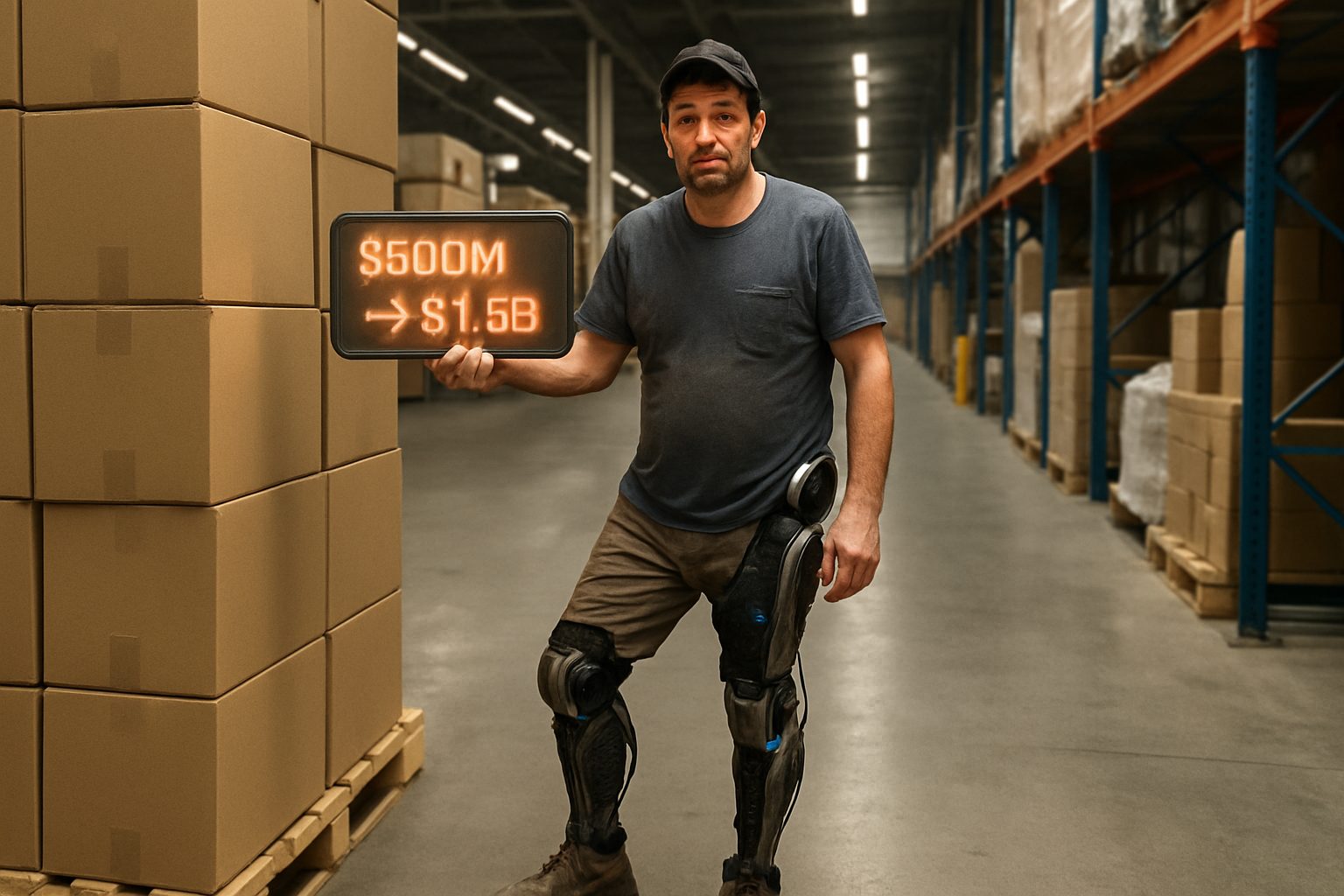
TL;DR: Military, rescue, and factory deployments of powered exoskeletons are accelerating real-world validation. The sector—valued at ~$500M today—could reach $1.5B by mid-2030s, driven by cost reductions in motors and sensors.
Operational Reality: From Lab to Front Line
Exoskeletons have transitioned from theoretical to operational. Seattle Mountain Rescue now deploys powered hip-and-leg devices during wilderness search missions. The Ukrainian military confirmed soldiers wearing Hypershell exoskeletons show measurably faster work rates and sustained combat effectiveness.
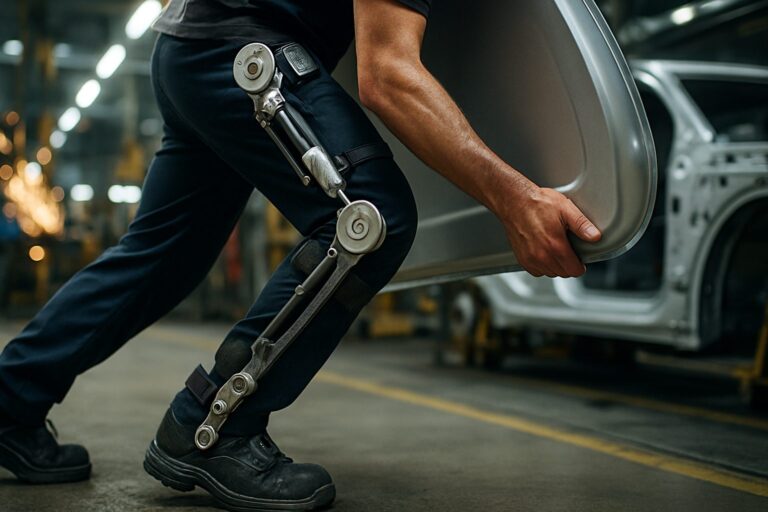
This isn’t niche. IKEA, Ford, Boeing, and Mazda Toyota have integrated SuitX exoskeletons into warehouse and assembly operations. Finland’s ExoPELA project documented quantifiable reductions in muscle strain for rescue and firefighting personnel.
The operational win is straightforward: reduced fatigue translates to faster task completion, lower injury rates, and extended deployment windows for high-stakes work.
Market Trajectory and Investment Signals
Current valuations place the exoskeleton sector at approximately $500 million. Industry analysts project doubling or tripling by 2035—positioning the market at $1.0–1.5 billion.
Growth drivers are clear: actuator costs have fallen sharply; sensor miniaturization continues; battery density improves. Consumer and clinical variants (rehabilitation, daily assistance, fitness) now compete alongside enterprise systems, broadening addressable markets.
How Exoskeletons Generate Operator Advantage
Active robotic exoskeletons function as force multipliers. A lightweight mechanical frame—attached at trunk, waist, or limbs—houses electric actuators that convert battery power into mechanical support.
The Hypershell (hip/thigh attachment) enhances lower-body hip flexion and extension. The SuitX variant (torso/shoulder) distributes upper-body load. Coordinated actuators time assistance to match natural movement patterns, reducing perceived effort by 20–40% in field tests.
Devices also improve posture stability and movement accuracy—critical for rescue operations and precision assembly.
Application Spread Across Sectors
- Military/Tactical: Artillery transport, sustained patrol speed, reduced combat fatigue
- Rescue Services: Wilderness navigation with heavy load carrying, extended search endurance
- Manufacturing: Warehouse material handling, assembly line tasks, injury prevention
- Healthcare: Rehabilitation, mobility assistance for reduced-capacity patients, post-injury training
Technology Maturation and Historical Context
The exoskeleton concept predates modern robotics. Nicholas Yagn patented a mechanical exercising apparatus in 1890; Leslie C. Kelley designed a steam-powered walking support in 1919. Electronic actuated systems emerged by the late 1960s.
The inflection point arrived over the past decade: miniaturized motors, affordable sensors, and sophisticated control algorithms converged. What once required lab conditions now functions reliably in mud, snow, and combat zones.
Why Now?
Three factors aligned simultaneously: (1) cost compression in brushless motors and IMU sensors; (2) battery energy density improvements enabling 8–12 hour operational windows; (3) machine learning reducing calibration overhead.
Capital intensity for exoskeleton R&D dropped below the threshold where venture and corporate venture funding became routine. Commercial viability shifted from “if” to “when.”
Investment Thesis and Near-Term Catalysts
Three categories command attention:
- Hardware OEMs: SuitX, Hypershell, and emerging competitors face scale challenges and supply-chain commoditization of core components. Margin compression likely; volumes are the escape route.
- Enterprise Deployment: Logistics, automotive, and defense procurement cycles will drive 2026–2028 adoption waves. Injury litigation risk reduction justifies capex.
- Consumer/Clinical: FDA clearances for rehabilitation devices and aging-in-place mobility aids represent fragmented but resilient markets. Lower price points accelerate household adoption.
Military procurement represents the highest-certainty revenue stream. Rescue and industrial safety adoption follows 18–24 months behind military validation. Consumer markets remain volatile but structurally sound.
Risks and Limitations
Cost per unit remains prohibitive for small-scale operations. Most field-deployed systems cost $15k–$50k. Durability in harsh environments requires continuous iteration. Battery life constraints limit patrol depth for rescue and military missions.
Regulatory frameworks remain nascent. Liability questions around operator injury during exoskeleton-assisted tasks remain legally untested in most jurisdictions.
Adoption friction persists: training overhead, maintenance complexity, and user resistance from workers skeptical of wearable tech limit velocity in conservative industries.
Bottom Line
Exoskeletons have cleared the valley of death. Real-world deployments by credible operators (military, rescue, Fortune 500 manufacturers) validate the category. Market expansion from $500M to $1–1.5B by 2035 is defensible based on sector maturity curves and procurement momentum.
For industrial automation investors, this signals a parallel track to traditional robotics: human-augmentation systems now compete directly with fully autonomous solutions in certain labor-intensive domains. Both theses merit portfolio allocation.
About the Author