TL;DR
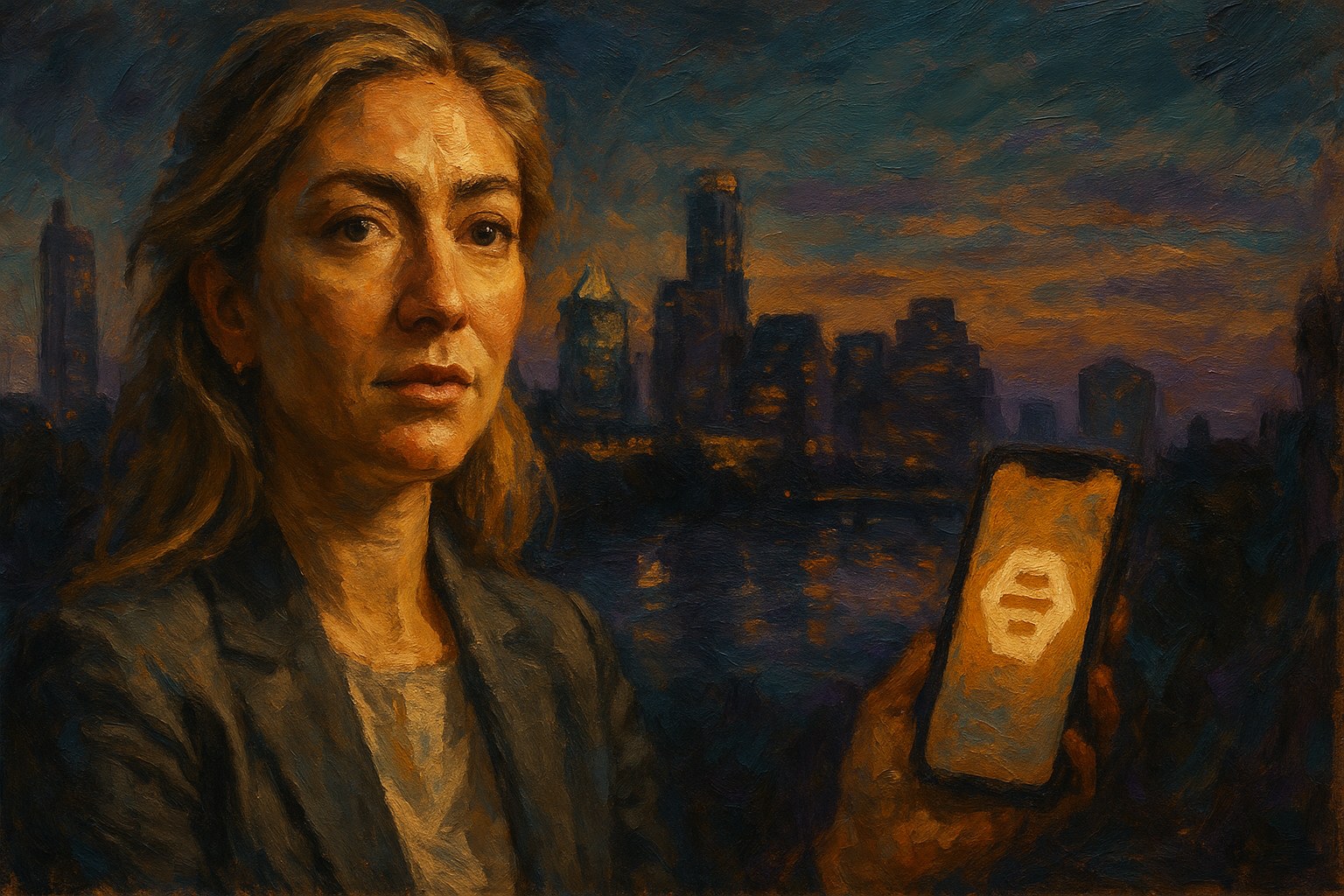
Whitney Wolfe Herd built Bumble into a $15B+ dating empire by inverting the rules of online romance — women message first. She’s turned a single insight into a global platform and a test case for founder-led feminism in tech, proving there’s more than one way to build a billion-dollar business.
Career Highlights
Whitney Wolfe Herd grew up in Salt Lake City, the daughter of a venture capitalist father and a yoga instructor mother. She studied business at Southern Methodist University and took an internship at a Los Angeles modeling agency before gravity pulled her toward tech. In 2011, at 21, she joined Tinder as employee number one — a move that would define her trajectory for the next decade.
At Tinder, Wolfe Herd was not just an early hire; she was the architect of the company’s public identity. She built the brand from scratch, shaped its voice, and helped turn a swipe-based app into a cultural phenomenon. But by 2014, internal tensions — a messy lawsuit alleging harassment, an alleged demotion, a public resignation — forced her out of the company she’d helped define. She was 24. Most founders might have retreated. Wolfe Herd did the opposite.
She moved to Austin in 2014 and built Bumble from a thesis about power dynamics in dating. The core mechanic was radical in its simplicity: women initiate. No algorithm could match two people if the woman didn’t send the first message within 24 hours. It was a constraint dressed up as liberation. The market didn’t know it was hungry for this until Bumble proved it was. She took the company public in February 2021 at $43 per share, with Bumble hitting a $13 billion valuation on day one. As of 2024, the stock has oscillated between $20 and $60. The app now claims 23+ million monthly active users across multiple verticals — dating, friendships, business networking via Bumble BFF and Bumble Bizz.
“I realized that the problem wasn’t the app,” Wolfe Herd said of her Tinder days. “The problem was the culture.”
I. The Inflection Point
The moment came in late 2014. Wolfe Herd had just settled her lawsuit with Tinder, signed an NDA, and left the company. She had equity that was worthless to her at the time — Tinder was pre-IPO, and the payout was modest. She had no job, no clear plan, and a reputation that was thorny in Silicon Valley circles. She could have taken a VP role at an established company. Instead, she called her college friend Andrey Andreev, the founder of the Russian dating app Badoo, and told him she had an idea.
Andreev listened. More than that, he bet on her. He gave her $500,000 in seed funding and a small office in Austin. Bumble was incorporated in December 2014. Wolfe Herd was 25 years old. The first version of the app launched in December 2014 with a single, non-negotiable rule: women message first, or the match expires. It was a product insight wrapped in a cultural statement. The beauty of the constraint was that it solved a real problem — women’s inboxes flooded with unsolicited messages, conversations that began with vulgarity or nothing at all — while simultaneously reframing women’s agency as a feature, not a limitation.
“I wanted to flick the switch on power,” Wolfe Herd said in interviews about the early days. The market response was swift. By 2015, Bumble had 200,000 downloads. By 2017, it crossed 22 million. Sequoia Capital led a Series B at a $1 billion valuation.
II. The Build
Bumble is not a dating app that also does other things. It is a platform for human connection with a feminist operating system baked in. The architecture reflects that philosophy at every level.
- Bumble Dating — The flagship product. Women message first within 24 hours or the match vanishes. Men can extend matches by 24 hours. Standard features: profile verification, video calls, in-app messaging. The core mechanic remains unchanged since 2014.
- Bumble BFF — Launched 2016. Same mechanics applied to friendship. Women message first. No romantic element. Addresses the real problem many people face: adult friendships are hard to form and maintain.
- Bumble Bizz — Launched 2017. Professional networking. Women message first. The idea: replicate the power-inversion thesis in the boardroom. Connections are strictly professional.
- Acquisitions — Badoo (2021, ~$1.4B deal) merged Bumble’s fresh brand with Badoo’s global scale, particularly in Latin America and Europe. Chappy (LGBTQ+ dating app, acquired 2017) added vertical diversity to the platform.
- International Expansion — 190+ countries, ~23 million monthly active users (2024). Bumble prioritizes markets where online dating adoption is still climbing: India, Brazil, Mexico.
- Safety & Verification — Photo verification, background checks in select markets, in-app safety guides, partnerships with nonprofits focused on harassment and assault.
The business model is straightforward: freemium. Free users see matches and send messages. Premium subscriptions (Boost, Premium, Premium+) unlock features like unlimited swipes, rematch with expired connections, and extended match windows. The Badoo acquisition brought additional revenue from markets where SMS-based monetization still works. Bumble’s strategy is patience at scale — build trust first, monetize later. The company prioritizes user safety and brand integrity over short-term revenue extraction.
III. The Person
Wolfe Herd is not a natural public speaker, though she’s become a more comfortable one. She prefers written statements to impromptu remarks. She moves slowly through a room and tends toward listening over talking. In meetings, she asks questions — often the same question multiple times, rephrased — to test whether her team has thought through all angles. It can feel glacial. It’s intentional.
She is known for two habits: rebranding and clarity. In 2019, she orchestrated a complete visual redesign of the Bumble brand, moving from hot pink to yellow and black, from millennial-coded to timeless. The rebrand cost millions and confused some early users. It was the right call. Equally famous: she demands unambiguous communication. Jargon is not permitted in her presence. Acronyms must be spelled out. If you can’t explain it in simple English, you don’t understand it well enough to build it.
“I don’t believe in the concept of the ‘strong female founder,'” she has said. “I believe in the concept of the strong founder who is female.” The distinction matters. She’s resisted being sorted into a category, though she’s also been vocal about funding inequality. As of 2024, women receive roughly 2% of venture capital. Bumble’s board is majority female. It’s not activism. It’s arithmetic.
IV. The Network & Numbers
Milestones
- Founded: December 2014
- IPO: February 11, 2021 (NASDAQ: BMBL)
- IPO Price / Valuation: $43 per share, $13B market cap on day one
- Current Valuation (2024): ~$3.5B–$6B (stock price volatility)
- Employees: ~1,000+
- Revenue (2023): ~$635M (estimated annual)
Key Relationships
- Andrey Andreev: Co-founder of Badoo, first investor, board member, strategic advisor
- Sequoia Capital: Series B lead investor ($1B valuation), ongoing investor
- Private Equity Partners: Silver Lake, Blackstone (later years)
- Founder Circle: Competitive relationship with Match Group (Tinder, Hinge, OkCupid parent) and Snap; collaborative relationship with feminist founders and VC firms focused on women entrepreneurs
V. The Thesis
Wolfe Herd believes that platforms built with intention — with explicit values baked into the product — win long-term. Not because values are profitable, though they can be. They win because they attract aligned users, create defensible culture, and resist commoditization. Bumble is not cheaper than Tinder. It’s not more feature-rich. It’s different in a way that matters to its users.
Her larger bet is that the future of social platforms belongs to founders who understand that connection is not neutral. Every design choice — from the color of a button to who speaks first — encodes a worldview. Most platforms pretend their design is inevitable. Bumble is honest about its choices. It builds the culture into the code.
Looking forward, Wolfe Herd sees Bumble expanding into offline spaces — events, communities, real-world venues where the digital logic of “women message first” translates into women-centered spaces. The app is a Trojan horse for a larger thesis about how communities should be organized. “I want to build the world’s largest women-first community,” she has said. “And if I do that right, everyone benefits — men included.”
Factbox
Name Whitney Wolfe Herd | Age 35 | Location Austin, Texas | Company & Role Bumble Inc., Founder & Executive Chairwoman | IPO Date February 11, 2021 | Employees 1,000+ | Contrarian Belief Constraints in product design are features, not limitations — they build culture and defensibility.
About the Author