TL;DR: Eric Wu’s NavigateAI launches with $225M valuation to deploy AI copilots for construction workers, targeting a sector facing 349,000-worker deficit exacerbated by massive data center builds requiring 5,000-6,400 workers each.
Construction AI Copilot Targets $349B Labor Gap
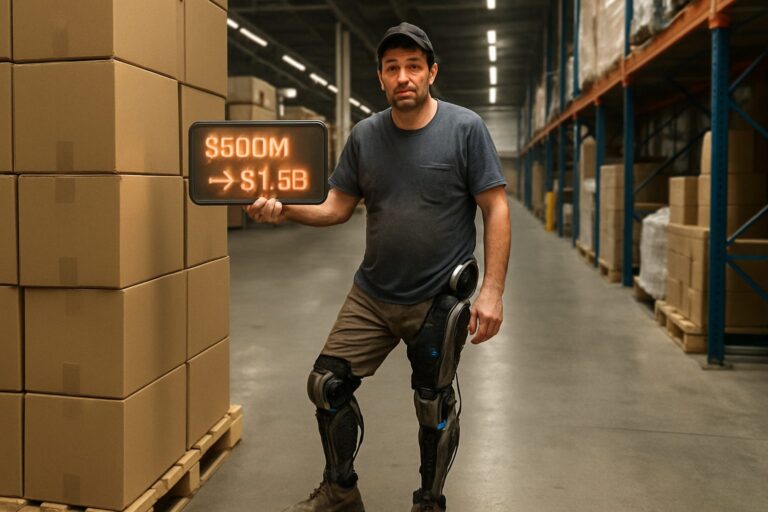
NavigateAI’s seed round signals where serious capital sees construction automation heading: not heavy machinery, but augmenting the worker layer. The $25M funding at $225M post-money valuation reflects investor conviction that smartphone-based AI coaching will move the labor supply needle faster than retraining or immigration policy.
Construction’s math is brutal. The Associated Builders and Contractors estimates a 349,000-worker shortfall just to maintain current project velocity. Data center construction—the real demand driver—has escalated dramatically: Meta’s Hyperion campus needs 5,000 workers; OpenAI’s Stargate requires 6,400. This isn’t cyclical; it’s structural, driven by aging workforces, immigration enforcement, and megaproject proliferation.
The Opendoor Founder Returns to Construction Tech
Wu exited Opendoor in 2022 after eight years running what became real estate’s most ambitious iBuying experiment. Rising rates killed that model’s arbitrage, but Wu’s instinct toward infrastructure problems persisted. He took a reset year, then concluded AI was “the defining tech platform of his lifetime,” pushing him back into founder mode rather than LP mode.
NavigateAI launched stealth in May 2026. The syndicates backing it—Elad Gil leading, Khosla Ventures and Fifth Wall supporting—represent both AI-native and real estate-native capital, suggesting hybrid conviction. Lennar and Tishman Speyer aren’t typical venture passengers; they’re buying optionality in their own labor constraints.
Smartphone-First, Hands-Free Architecture
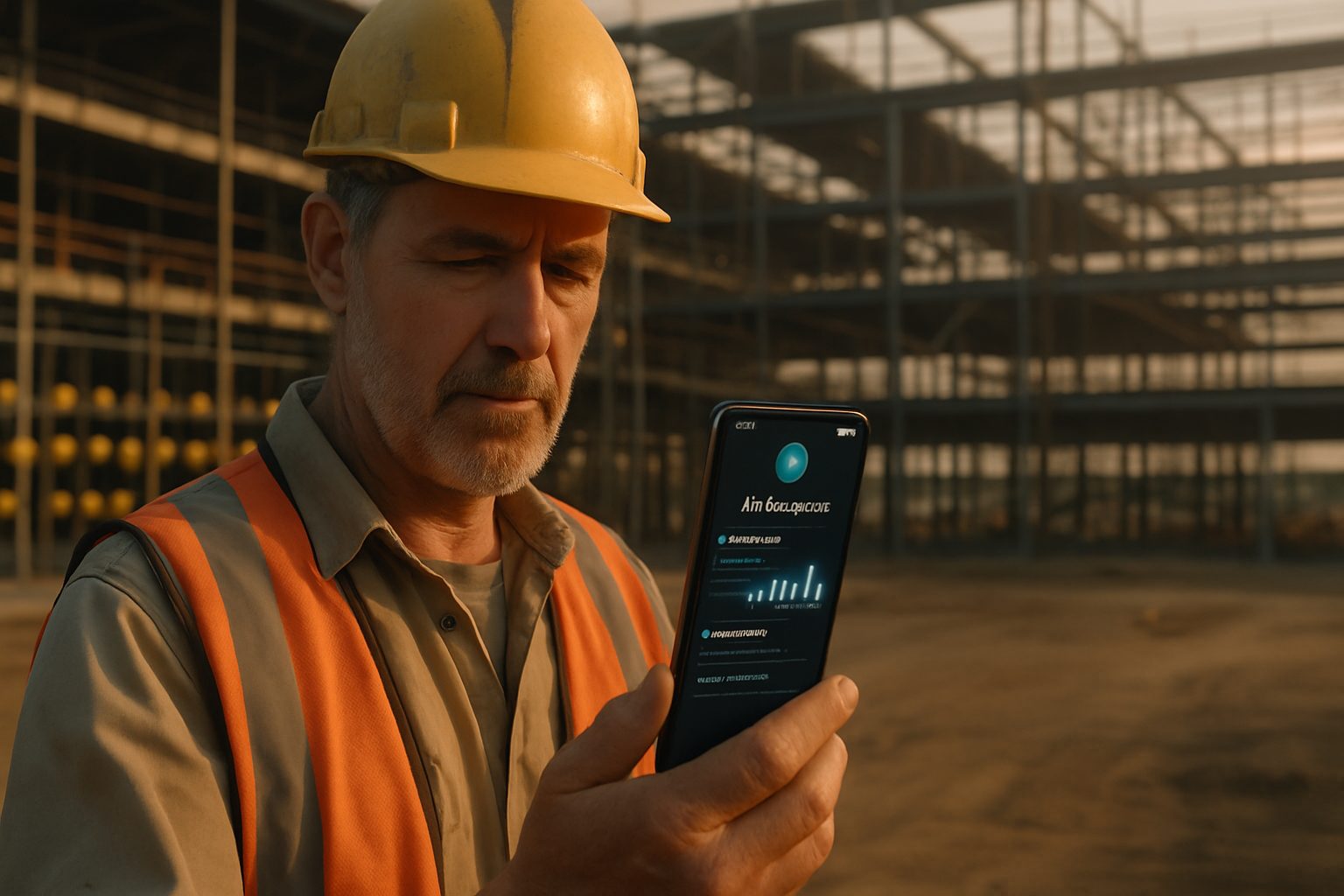
NavigateAI’s product runs native on smartphones with hands-free mode on Meta’s AI glasses. The UX targets the physical reality of job sites: workers can’t pocket a phone mid-installation. Point camera at assembly, ask if torque is correct or if installation meets code, and the system pulls specs, manufacturer manuals, and policy in real time.
Hands-free matters operationally. Safety codes, OSHA compliance, and ergonomics all favor not requiring workers to alternate between task and screen. This isn’t a nice-to-have; it’s what makes on-site AI coaching actually deployable at scale.
Market Tailwinds: Magnitude and Duration
Kelly Global Staffing reports 90% of data center operators cite staffing shortages as critical constraints. This isn’t demand generation; it’s existing demand that can’t be met. NavigateAI inherits a market where productivity gains convert directly to project acceleration and margin expansion.
The durational question matters for venture returns. AI-driven worker augmentation in construction solves a structural problem (aging demographics, immigration policy, megaproject clustering) that won’t resolve in 3-5 years. Investors are betting on a 10+ year tailwind, not a cyclical play.
Background: Companies and Context
Eric Wu and Opendoor’s Legacy
Wu founded Opendoor in 2014 as an iBuying platform designed to eliminate real estate friction through algorithmic pricing and instant offers. By the time Wu ran it (2014-2022), Opendoor became venture’s most-capitalized real estate experiment, raising over $1B. The model worked during low-rate environments but collapsed when the Fed began rate hikes in 2022, killing the arbitrage that iBuying depended on. Wu’s exit was pragmatic, not failure-driven; the company survived but never recovered its growth trajectory.
Construction’s Structural Labor Crisis
The U.S. construction industry faces a multi-factor labor crunch. Average age of construction workers has risen; immigration enforcement has reduced inflow; and megaproject pipelines (especially data center infrastructure) have exploded. The ABC’s 349,000-worker shortfall is conservative; some estimates run higher. This shortage directly constrains margins and timelines for contractors and developers.
Data Center Megaprojects as Demand Accelerant
Meta’s Hyperion campus in Louisiana and OpenAI’s Stargate project in Texas represent a new category of construction demand: ultra-large-scale compute infrastructure. These projects dwarf traditional commercial construction in labor intensity. Hyperion alone will employ 5,000 workers at peak; Stargate, 6,400. These aren’t one-off events; they’re the leading edge of AI infrastructure buildout that will persist for years.
Investor Syndicate Composition
NavigateAI’s seed round mixes pure-play venture (Khosla Ventures, Elad Gil), real estate strategics (Lennar, Tishman Speyer), trade contractors (Helix Electric), and tech founder networks (Tony Xu, Apoorva Mehta, Brian Armstrong). This composition signals that construction’s labor problem is now perceived as venture-scale, not just operational. Khosla Ventures has been explicitly vocal about AI “worker” portfolios across verticals; NavigateAI slots cleanly into that thesis.
Investment Implications
NavigateAI’s funding density ($225M valuation on $25M) reflects confidence in execution and market timing. The real test is whether hands-free AI coaching actually moves crew productivity metrics enough to justify on-site deployment. Early data from manufacturing and field service AI suggest 15-30% productivity gains are achievable, but construction’s regulatory complexity and site variability make replication uncertain.
The syndicate’s real estate depth matters: Lennar and Tishman Speyer don’t write venture checks casually. If they’re betting on NavigateAI, they’re betting that AI-augmented crews become a competitive advantage for general contractors and developers within 3-5 years. That’s a bullish signal on deployment velocity.
For operators: Watch if NavigateAI can move from data center pilots to broad general contracting adoption. Data centers are high-touch and capital-dense, making them easier early customers but harder to scale from. The real TAM is framing, MEP, and finishing work across commercial and residential construction—where standardization is lower and variability higher.
About the Author