China Blocks Meta’s $2 Billion Manus Acquisition: The End of “Singapore-Washing” in AI
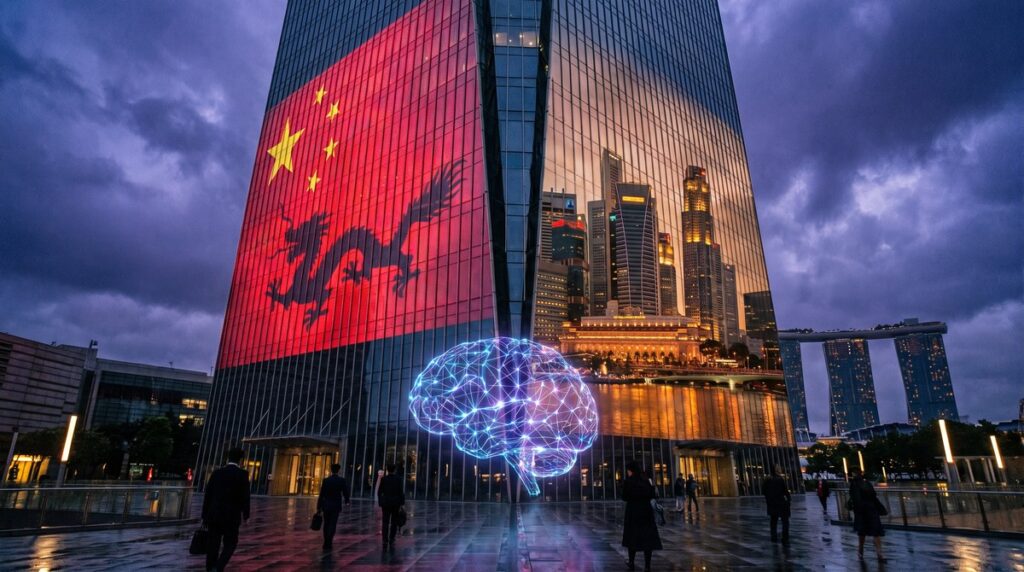
TL;DR: China’s National Development and Reform Commission (NDRC) has retroactively blocked Meta’s $2 billion acquisition of the agentic AI startup Manus, ordering both parties to completely unwind the deal. The aggressive intervention, enforced in part by exit bans on the startup’s Chinese founders, demonstrates that Beijing considers its top artificial intelligence talent and intellectual property to be sovereign assets, regardless of where the corporate entity is legally registered. The move effectively closes the “Singapore loophole” that Chinese tech founders have increasingly used to access U.S. capital and compute.
The Failed Escape to Singapore
The story of Manus is a masterclass in the increasingly desperate geopolitical maneuvering required of Chinese AI entrepreneurs. Founded in Beijing in 2022 by engineers Xiao Hong, Ji Yichao, and Tao Zhang, Manus built a highly capable autonomous AI agent that grabbed global attention in early 2025. But the founders quickly realized that remaining in mainland China meant permanent isolation from the two lifebloods of modern AI: U.S. venture capital and advanced Nvidia processors.
In mid-2025, after securing a $75 million investment led by Silicon Valley heavyweight Benchmark, Manus executed a classic “Singapore-washing” maneuver. The company closed its China offices, laid off its domestic staff, and formally relocated its headquarters to the Southeast Asian city-state. The strategy appeared to work perfectly. By December 2025, Meta CEO Mark Zuckerberg announced a $2 billion acquisition of the startup, intending to integrate its agent technology directly into Meta AI.
The deal was structured to require a full exit from Chinese ownership and operations. By March 2026, approximately 100 Manus employees had already moved into Meta’s Singapore offices, and CEO Xiao Hong was reporting directly to Meta COO Javier Olivan. The integration was well underway.
Beijing Drops the Hammer
On Monday, April 27, 2026, the Chinese government shattered the illusion that a change of address could sever a startup from its origins. The NDRC unceremoniously posted a directive prohibiting foreign investment in the Manus project and demanding the complete unwinding of the acquisition.
Because Meta’s core applications (Facebook, Instagram, WhatsApp) are already banned in China, Beijing has very little direct leverage over the U.S. tech giant. Instead, the government exerted its power directly over the individuals involved. Authorities placed exit bans on co-founders Xiao Hong and Ji Yichao, effectively trapping them in mainland China while the regulatory review was conducted.
The unwinding process promises to be a chaotic legal and technical nightmare. Meta must now attempt to extract deeply integrated code, personnel, and intellectual property, while simultaneously figuring out how to reverse payouts made to early Chinese backers like Tencent and Hongshan Capital. A Meta spokesperson stated only that the transaction complied with applicable law and that the company anticipates an “appropriate resolution.”
The Geopolitical Trap for AI Founders
The retroactive block of the Manus deal is a watershed moment for the global AI industry. It signals the rapid and forceful decoupling of the U.S. and Chinese technology ecosystems. Beijing’s message is unambiguous: if your foundational technology and engineering talent originated in China, you cannot simply incorporate elsewhere and sell yourself to an American tech giant.
This dynamic places China’s most ambitious AI founders in an impossible bind. If they remain in the domestic market, they are cut off from the global supply chain of advanced compute and the deep pools of Western capital necessary to train frontier models. But if they attempt to redomicile overseas—whether to Singapore, the Middle East, or elsewhere—they invite devastating regulatory retaliation from Beijing the moment they attempt to tap public markets or secure an acquisition.
The “Singapore-washing” playbook, previously attempted with mixed results by companies like Shein and TikTok, is now officially dead for strategic technologies. The battle lines of the AI cold war have been drawn not just around silicon and data centers, but around the physical mobility of the engineers writing the code.
Background: The Key Players and Entities
Manus is an artificial intelligence startup originally founded in Beijing in 2022 by Xiao Hong, Ji Yichao, and Tao Zhang. The company specializes in “agentic AI”—systems capable of autonomously executing complex, multi-step tasks across various software applications with minimal human prompting. Following the global shockwaves caused by Chinese AI lab DeepSeek in early 2025, Manus gained significant international traction for its highly capable autonomous agents, prompting its strategic relocation to Singapore.
Meta Platforms is the American technology conglomerate behind Facebook, Instagram, and WhatsApp. Under CEO Mark Zuckerberg, the company has pivoted aggressively toward artificial intelligence, spending billions on Nvidia GPUs and open-sourcing its Llama series of foundational models. The $2 billion acquisition of Manus was intended to be a cornerstone of Meta’s strategy to deploy highly capable, autonomous AI agents directly to its billions of users.
The National Development and Reform Commission (NDRC) is a powerful macroeconomic management agency under the Chinese State Council. It has broad administrative and planning control over the Chinese economy. In recent years, the NDRC has increasingly weaponized its regulatory authority to scrutinize cross-border technology deals, enforce export controls, and prevent the transfer of critical domestic intellectual property—particularly in artificial intelligence—to foreign entities.