TL;DR: German automaker BMW is expanding its deployment of physical AI at its Spartanburg plant, transitioning from the Figure 02 humanoid pilot to the next-generation Figure 03 platform [1]. Supported by Figure AI’s new Helix 02 vision-language-action model, the deployment marks a critical shift from experimental assembly tasks to complex, real-world logistics sequencing [1].
From Body Shop to Logistics: BMW Deploys Figure 03
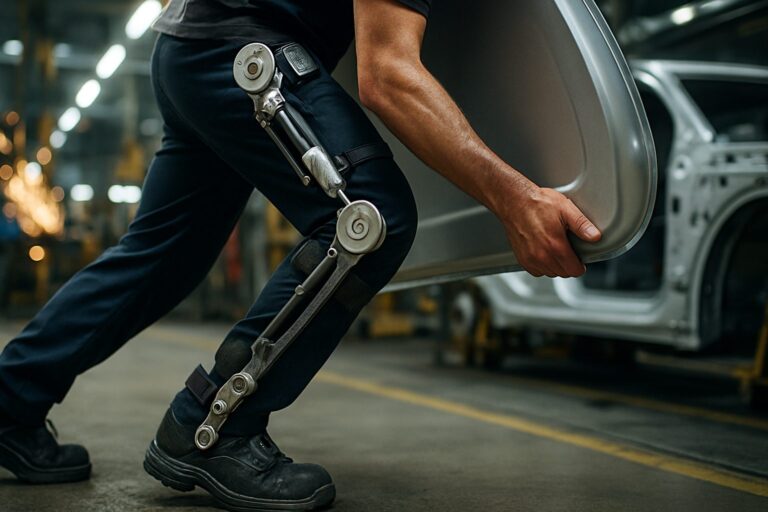
The operational day-to-day role of humanoid robots is transitioning from viral video demonstrations to measurable production line metrics. BMW Manufacturing has announced that its Spartanburg facility in South Carolina—the carmaker’s largest global plant—will serve as the deployment site for Figure AI’s newly unveiled Figure 03 humanoid robot [1]. This follow-on deployment builds on a highly successful ten-month pilot in which the predecessor model, Figure 02, supported the production of more than 30,000 BMW X3 vehicles by inserting sheet-metal parts into welding fixtures [1].
For automotive manufacturing operators, the Figure 02 pilot provided the industry’s most robust reliability and throughput data point to date, proving that humanoids can handle high-accuracy, physically demanding assembly tasks. With the Figure 03 platform, BMW is shifting focus to logistics sequencing [1]. Powered by Helix 02—a pixels-to-actions vision-language-action (VLA) foundation model—Figure 03 can coordinate its hands, arms, torso, and feet in real-time [1]. This allows the robot to perform complex, multi-step actions such as precise picking, thin-walled parts manipulation, and pulling heavy, wheeled material carts down the line while dynamically adjusting its footing [1].
The Investor and Operator Calculations
The scale of Figure AI’s fleet is starting to rival traditional industrial automation providers. According to founder Brett Adcock, Figure’s active humanoid fleet has passed 700 robots, outnumbering the company’s human headcount of roughly 650 employees [2]. This rapid expansion is backed by massive capital expenditure projections; the Boston Consulting Group projects that the global humanoid robotics market will grow significantly by 2030, with estimates ranging from one million to over six million annual units [1]. For public-market investors tracking industrial automation, BMW’s multi-year commitment serves as the premier validation of Figure’s commercial readiness and long-term moat.
The table below details the progression of BMW’s humanoid deployment strategy, highlighting the shift in operational requirements and technical complexity between the two robot generations.
| Deployment Phase | Figure 02 Pilot (Completed) | Figure 03 Deployment (Active) |
|---|---|---|
| Operational Area | Body Shop (Welding Fixtures) | Logistics (Sequencing & Materials Handling) |
| Core Task | Inserting sheet-metal parts into weld fixtures | Precise picking, cart pulling, and parts sequencing |
| Deployment Duration | 10 months (30,000+ vehicles supported) | Multi-year commercial deployment |
| AI Architecture | Early-stage embodied vision models | Helix 02 Vision-Language-Action (VLA) Model |
| Manipulation Type | Static, high-accuracy placement | Whole-body coordinated manipulation and mobility |
| Operator Impact | Reduced physical strain on welding line workers | Flexible, dynamic logistics workforce scaling |
Background on the Physical AI Leaders
BMW Manufacturing’s Spartanburg plant is a massive 10-million-square-foot facility employing over 11,000 workers [1]. It serves as the global center of competence for BMW’s highly profitable X-series Sports Activity Vehicles, assembling models from the X3 to the XM. Spartanburg has historically been at the forefront of advanced manufacturing technology, making it the natural testing ground for BMW’s “iFACTORY” strategy, which seeks to integrate digitalization, physical AI, and flexible automation into day-to-day automotive production.
Figure AI was founded in 2022 by technology entrepreneur Brett Adcock with the mission of developing general-purpose humanoid robots to address labor shortages and supply chain bottlenecks. Backed by major technology giants including Microsoft, Nvidia, OpenAI, and Jeff Bezos, the company has rapidly iterated through three major hardware platforms. By focusing on bipedal locomotion, advanced dextrous manipulation, and end-to-end neural network control, Figure has positioned itself as the leading Western challenger to China’s rapidly expanding humanoid manufacturing base, which currently accounts for a dominant share of global industrial robot installations.
Ultimately, the BMW Spartanburg deployment represents a fundamental milestone for the robotics industry. By moving humanoids out of isolated test cells and into the dynamic, high-traffic environment of logistics sequencing, BMW and Figure are demonstrating that physical AI can function as a reliable, flexible industrial workforce. As labor shortages continue to challenge global manufacturing, the success of this deployment will likely dictate the speed at which other industrial giants adopt bipedal automation.
References:
[1] Manufacturing Digital: How BMW is Using Figure AI Humanoid Robots in Production
[2] Facebook: Figure’s robots outnumber human employees
About the Author