TL;DR
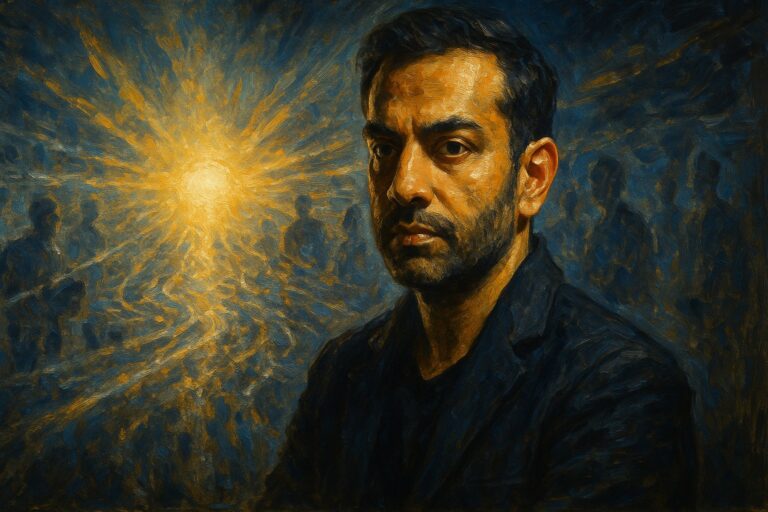
Trae Stephens is the co-founder and president of Anduril Industries, a defense-tech startup that has become America’s fastest-growing autonomous weapons and AI surveillance company. At 34, he has reshaped how the U.S. military acquires and deploys cutting-edge technology—by building products first, then selling them to the Pentagon.
Career Highlights
Stephens was not destined for defense. He co-founded Anduril in 2017 with Palmer Luckey, the teenage VR prodigy behind Oculus, and Brian Schimpf, a defense systems engineer. The three shared a conviction that the military-industrial complex moved too slowly, thought too small, and missed obvious opportunities where commercial technology could solve national security problems. Stephens brought operational discipline and a gift for translating between Silicon Valley and the Pentagon—a rare skill that would prove essential.
Before Anduril, Stephens had co-founded Vatic Labs, an AI company acquired by Google in 2018. That exit gave him credibility in both worlds. But it was his time at the Defense Innovation Unit, where he served as a special advisor, that showed him the gap between what the military needed and what defense contractors delivered. He watched generals struggle with legacy systems built in the 1990s. He saw acquisition processes that took years to approve products that could be built in months. He decided to fix it from the outside.
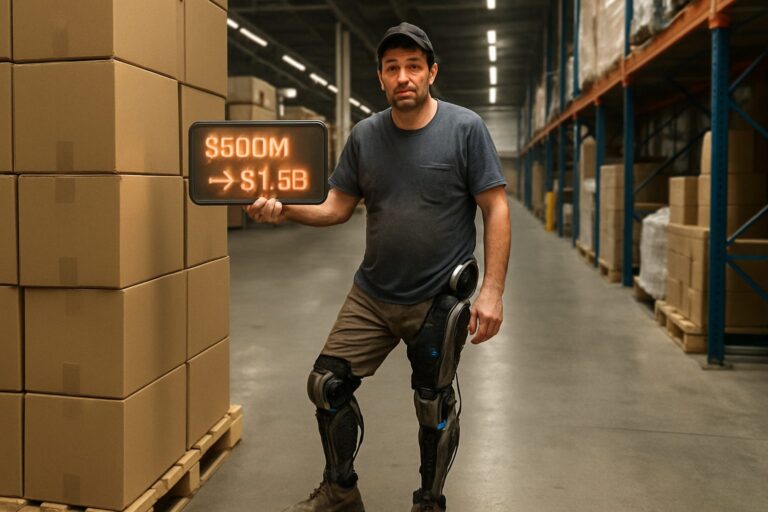
Anduril launched with a single obsession: build autonomous systems that give American troops a decisive edge. The company’s first product, a border surveillance platform, was so effective that the U.S. Air Force ordered it within 18 months of founding. By 2023, Anduril had raised over $2 billion and was valued at approximately $8.5 billion. By 2024, that valuation had climbed toward $14 billion, making it one of the fastest-scaling defense-tech companies in history.
Stephens remains the operational core of the company, known for his quiet intensity and his refusal to hype product before it works. “We build first, then we sell,” he has said. That discipline—rare in venture-backed defense—earned him a reputation as serious rather than flashy.
I. The Inflection Point
The moment came in 2017, when Stephens and Luckey realized that the Pentagon was still buying surveillance drones designed in the early 2000s, and acquisition timelines ran five to ten years. They saw an opening: build autonomous systems in Silicon Valley’s way—fast, iterative, user-obsessed—but purpose-built for military problems.
Stephens led the effort to design Anduril’s first surveillance product as a software-first platform, not a hardware chassis. It could run on existing infrastructure, integrate with legacy systems, and deploy in weeks instead of years. The U.S. Air Force tested it on the southern border in 2018 and ordered it immediately. That product proved the thesis: the military would buy next-generation tech if it actually worked and arrived on time. “We realized that if you could compress timelines from five years to five months, you could own entire categories,” Stephens has said.
That success unlocked the venture capital floodgates and gave Stephens the credibility to build an entirely new category: AI-native defense systems owned and controlled by Americans, not outsourced to legacy contractors.
II. The Build
Anduril is not a hardware company. It is a software and autonomy platform designed from first principles for military operations. The architecture is modular, cloud-native, and built to integrate across legacy systems without replacement.
- Lattice: Autonomous operating system for unmanned platforms. Runs on drones, ships, and ground vehicles. Allows military units to command multiple autonomous agents simultaneously.
- Roadrunner: AI-driven border surveillance platform. Detects, tracks, and identifies threats in real-time across vast geographic areas. First commercial success.
- Altius: Loitering munitions (kamikaze drones) for precision strikes. Designed for counter-insurgency and anti-armor operations.
- Ghost: Autonomous air-launched effects. Launched from manned aircraft, operates independently, returns on command.
- Dive: Undersea autonomous systems for naval intelligence and surveillance.
- Tron: Integrated command and control platform. Central nervous system for all Anduril systems. Allows military operators to orchestrate complex operations across multiple asset types.
The strategy is clear: vertical integration of the entire autonomous military stack. Rather than selling point products, Stephens is building an ecosystem that makes Anduril indispensable to modern military operations. Customers buy one product, then discover they need another. That lock-in—justified by performance—accelerates growth and deepens the moat.
III. The Person
Stephens operates in the background while others take credit. He avoids press, rarely speaks at conferences, and guards his personal life fiercely. He is described by colleagues as intellectually ruthless, deeply read in military history and strategy, and contemptuous of bullshit. He has little patience for pitch decks and venture-speak; he expects proposals to be grounded in operational reality.
He leads by example. He spends time on the floor with engineers, not in board meetings. He learned to code as a teenager and still reviews product architecture. He is known to ask uncomfortable questions at all-hands meetings and to fire executives who prioritize optics over substance. His leadership style is consensual but decisive: debate intensely, then align completely.
Stephens is also unafraid of controversy. He has defended Anduril’s work in autonomous weapons publicly, arguing that American military technology superiority is a prerequisite for peace and deterrence. “If we don’t lead in autonomy, someone else will,” he has said in private conversation. That clarity—moral conviction without grandstanding—defines him.
IV. The Network & Numbers
Milestones
- Founded: 2017
- Last Major Funding Round: Series C (2024)
- Current Valuation: ~$14 billion (as of 2024)
- Employees: ~1,200+
- Annual Revenue: ~$200+ million (estimated, not disclosed)
Key Relationships
- Palmer Luckey: Co-founder. Chief Product Officer. Brought VR expertise and contrarian thinking.
- Brian Schimpf: Co-founder. Chief Technology Officer. Defense systems engineer. Technical credibility with military.
- U.S. Department of Defense: Primary customer. Primary strategic relationship. Anduril embedded in acquisition strategy.
- Founders Fund: Early investor. Peter Thiel’s backing provided credibility in venture capital.
V. The Thesis
Stephens believes that the future of military competition is autonomous systems and AI, and that the United States will lose that competition if it relies on legacy defense contractors. He believes the private sector can move faster, iterate harder, and integrate AI more seamlessly than traditional defense companies. He believes that full autonomy—machines making combat decisions without human input—is inevitable, and that better to be led by Americans aligned with democratic values than by actors with different priorities.
This is not a utopian view. Stephens is not selling autonomy as liberation or progress. He is selling it as military necessity. The thesis is structural: China invests heavily in autonomous warfare. Russia experiments constantly. America cannot afford to lag. If Anduril does not scale fast enough, a competitor—or a foreign power—will own this category. “The next great power conflict will be fought by machines,” he has said. “We are building the operating system for that war.”
Factbox
Name Trae Stephens | Age 34 | Location Newport Beach, California | Company & Role Anduril Industries, Co-founder and President | Funding Series C, 2024 | Most Recent Round Series C | Employees 1,200+ | Contrarian Belief The defense industry will be reshaped not by traditional contractors but by startup-scale companies that prioritize speed and product quality over process.
About the Author