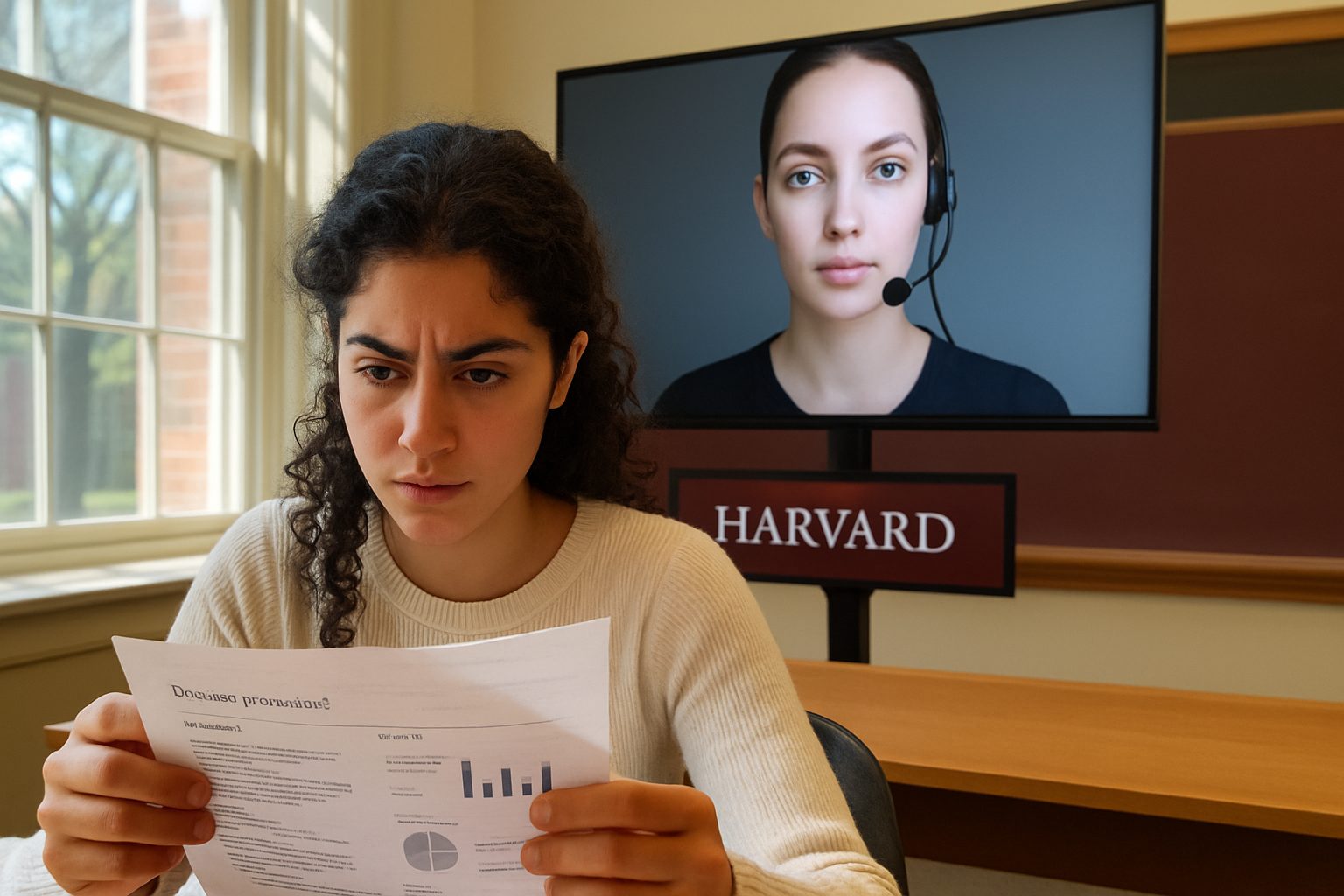
Harvard’s AI Avatar Instructors Signal Scalable Model for Premium Education
TL;DR: Harvard Business School’s $699 Foundry bootcamp deploys HeyGen-powered AI avatars to deliver personalized feedback at scale, addressing the instructor bottleneck in high-touch programs while students report positive reception despite the uncanny valley.
The Operational Play: Scaling Feedback Without Hiring
Harvard Business School’s eight-week Foundry bootcamp tackles a fundamental constraint in entrepreneurship education: one instructor cannot meaningfully critique dozens of startup pitches each week. By embedding HeyGen’s AI avatars alongside live weekly instructors, HBS converts high-touch mentorship into a hybrid model that preserves perceived personalization while dramatically improving unit economics.
The avatars provide real-time feedback during practice pitches and board meetings—the repetitive, high-volume interactions where instructor time creates bottlenecks. This frees human instructors for strategic, complex guidance that requires genuine judgment.
What HeyGen’s Integration Reveals
Project director Katharina Rings initially envisioned a chatbot. Student feedback during trials pushed the specification upward to avatar-based interaction, suggesting the market values embodied presence over disembodied text. The frozen smile reported by NYT’s Sarah Kessler—and acknowledged as “creepy” by real instructor Jeff Bussgang—didn’t deter adoption among Foundry participants.
This gap between emotional uncanniness and functional acceptance is critical. Users tolerate the artificiality if the value exchange feels legitimate.
Background: The Players and Context
Harvard Business School operates the Foundry program as a direct response to the entrepreneurship bootcamp market dominated by General Assembly, Founder Institute, and Y Combinator. At $699 for eight weeks, HBS prices below traditional MBA programs but above coding bootcamps, targeting founders who value institutional credibility.
HeyGen is a synthetic media startup specializing in AI video generation and avatar creation. The company competes with D-ID, Synthesia, and other deepfake infrastructure vendors, but HeyGen has positioned itself toward enterprise education and training use cases rather than pure entertainment synthesis.
The timing matters: This deployment arrives as colleges navigate mixed student sentiment toward AI. Some institutions face backlash over algorithmic proctoring and plagiarism detection; HBS’s approach inverts the narrative by positioning AI as amplifying rather than replacing human instruction.
Jeff Bussgang, co-founder of Flybridge Capital, serves as an instructor whose likeness appears in the system. His willingness to participate—while acknowledging the creepiness—signals investor acceptance of this model, which has downstream implications for corporate training adoption.
Investment Implications
This deployment validates a specific unit economics thesis: AI avatars reduce per-student instructor cost while maintaining perceived quality. If Foundry sees high completion rates and job placement outcomes, expect rapid adoption across executive education, corporate onboarding, and international MBA expansion.
Watch for three metrics: cohort growth rates, instructor utilization improvements, and price elasticity. If HBS can scale to 5,000+ students annually without proportional instructor hiring, the model becomes a margin expansion engine.
The Uncanny Valley Problem
Sarah Kessler’s observation about the frozen smile isn’t trivial—it’s a UX tax. Bussgang’s admission of creepiness suggests avatar quality matters for credibility, even when functional performance is acceptable. Future versions will need micro-expression work and voice latency reduction to normalize the experience.
However, the fact that students still prefer avatars to no feedback indicates the baseline is asymmetric. Poor feedback at scale beats no feedback at scale.
What’s Actually New Here
Educational AI isn’t novel. Adaptive learning platforms, intelligent tutoring systems, and chatbot TAs exist. The innovation here is branded embodiment at premium price points—using celebrity instructor likenesses in synthetic form to justify tuition while reducing labor dependency.
This is less about AI capability and more about business model restructuring disguised as technological advancement. That’s the real story for operators.
Read the full story on TechCrunch.
About the Author