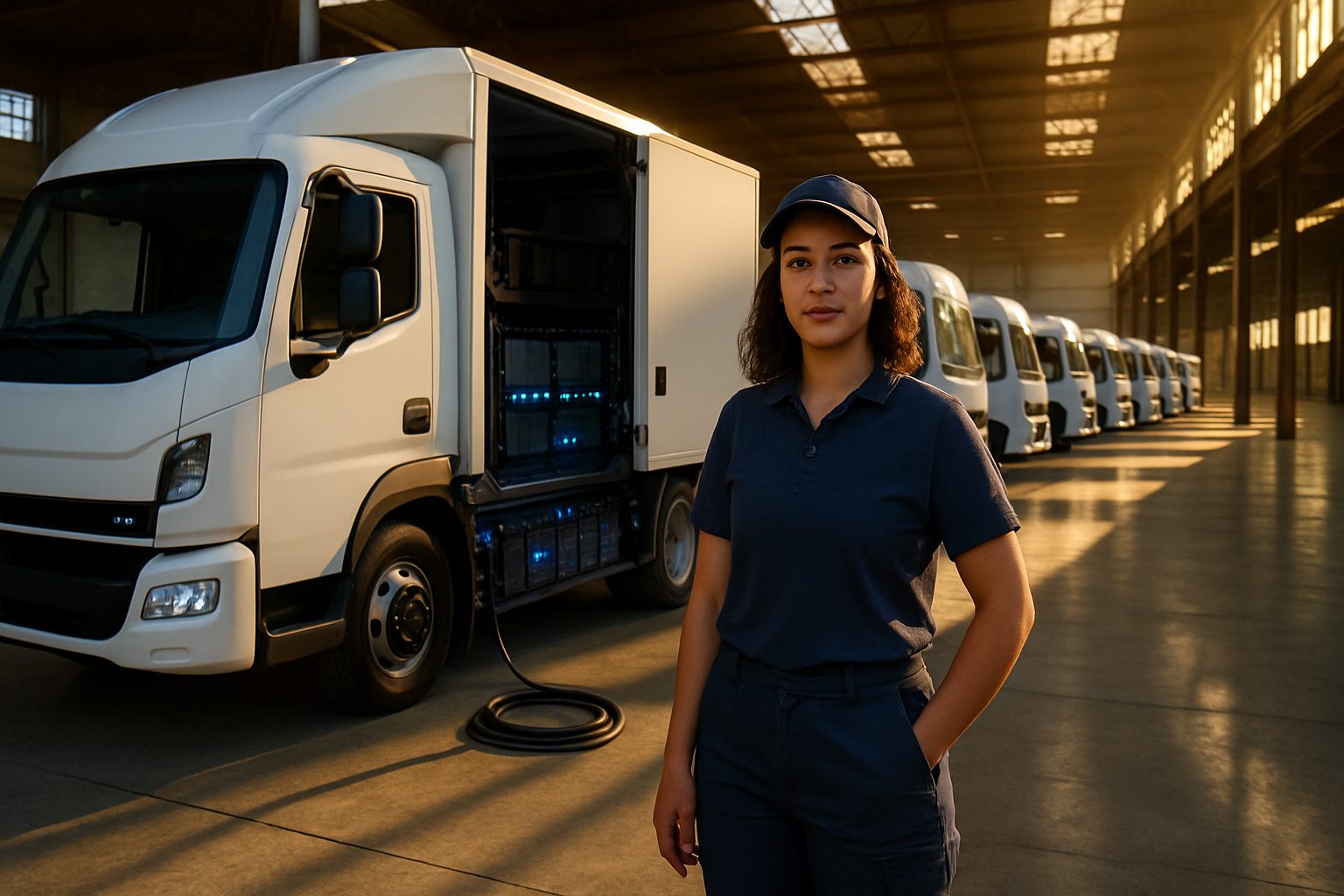
FedEx’s 2,000-Truck Order Signals EV Fleet Electrification at Scale
TL;DR: FedEx committed $300M to Harbinger for 2,000 electric medium-duty trucks—the largest order yet for the three-year-old startup—with full delivery expected by end of 2027. This validates both Harbinger’s production capability and the commercial viability of electric last-mile logistics at enterprise scale.
The Deal: Production Velocity Meets Enterprise Demand
FedEx ordered 2,000 electric trucks from Harbinger in a $300 million commitment, representing the largest bulk purchase in the startup’s three-year history. Harbinger plans to deliver all units by the end of 2027, demonstrating production scaling uncommon for early-stage EV manufacturers.
The deal extends FedEx’s existing relationship with Harbinger, which began last year when FedEx led a $160 million Series C round and simultaneously placed an initial order. The shipping giant has already accepted delivery of 53 trucks from that prior commitment.
Why This Matters for Fleet Operations
This order validates two critical assumptions: that medium-duty electric chassis can be manufactured at cost-competitive levels and that incumbent logistics operators will commit capital to EVs at scale. FedEx’s continued investment signals confidence in Harbinger’s ability to meet both timeline and reliability benchmarks—stakes too high for speculative purchases.
Harbinger: From Stealth to Production in Three Years
Harbinger was founded in 2022 by engineers from Anduril, defunct EV maker Canoo, and battery specialist Quantumscape. The company’s singular focus—building an electric medium-duty truck chassis—contrasts sharply with competitors pursuing broader vehicle portfolios.
That discipline appears validated by current operations. Despite being only three years old, Harbinger has moved from development to production revenue faster than most EV startups. The company is already generating revenue from FedEx deliveries while maintaining cash runway from previous fundraising.
Expanding Beyond Core Trucks
Harbinger has begun diversifying revenue streams while maintaining chassis production as the anchor business. Recent initiatives include:
- Hybrid emergency response vehicles (municipal/government market)
- Autonomous driving integration (post-acquisition in February)
- Battery pack sales as standalone energy storage solutions
- Defense sector applications
These adjacencies reduce revenue concentration risk without diverting engineering focus from core truck production—a disciplined approach often missing in venture-scale EV companies.
Market Context: Enterprise EV Adoption Accelerating
FedEx’s commitment reflects broader shifts in commercial fleet electrification. Last-mile delivery represents roughly 50% of logistics carbon emissions, making it the highest-ROI target for electrification investments. Enterprise operators face regulatory pressure in major markets (California, EU) to reduce fleet emissions within defined timelines.
Medium-duty electric trucks (Class 5-6) address the “missing middle” in EV adoption—heavier than passenger vehicles but lighter than Class 8 long-haul trucks. This segment has attracted limited competition from established manufacturers, creating white space for focused startups like Harbinger.
Harbinger’s Path to Public Markets
Axios reported in May that Harbinger is considering an IPO. A $300M FedEx order—combined with 53 units already delivered and expanding revenue lines—provides the revenue narrative and growth trajectory that public markets typically demand for EV companies. An IPO would likely value Harbinger in the $1.5-2.5B range based on comparable EV manufacturers at similar production stages.
Operational Implications for Logistics
FedEx’s scale commitment signals confidence in total cost of ownership (TCO) economics for electric medium-duty trucks. Delivered units will likely operate in urban and regional routes where medium-duty tractors dominate—routes with predictable daily mileage (80-150 miles) well within modern EV range.
The 2,000-unit cadence implies FedEx views this as a material portion of its medium-duty fleet replacement strategy, not a pilot program. Assuming a 10-year vehicle lifecycle, this order represents roughly 200 units annually entering the active fleet—sufficient to gather operational data and refine maintenance/charging protocols.
What Investors Should Monitor
Production execution: Can Harbinger deliver 2,000 units in 12 months without quality degradation? This is the fundamental test.
Unit economics: The $150K per-truck implied price ($300M ÷ 2,000) needs to remain sustainable as volume scales. Material costs, labor, and supply chain stability are critical variables.
Charging infrastructure: FedEx’s deployment success depends on adequate charging at distribution centers—a variable outside Harbinger’s direct control but critical to operational outcomes.
Competitive response: Traditional OEMs (Volvo, Daimler, Isuzu) will likely accelerate medium-duty electric launches. Harbinger’s window for category dominance is 18-24 months.
About the Author