Anthropic’s Biology Lab Claims CRISPR-Like Discovery—But Human Scientists Still Run the Experiments
TL;DR: Anthropic’s newly revealed Bay Area biology lab used Claude AI to identify a novel enzyme system in bacteriophage DNA in just 21 hours, claiming properties similar to CRISPR. However, all physical lab work remains human-controlled, signaling the company’s careful approach to autonomous biotech research despite ambitious long-term plans.
The Discovery: Speed Over Hype
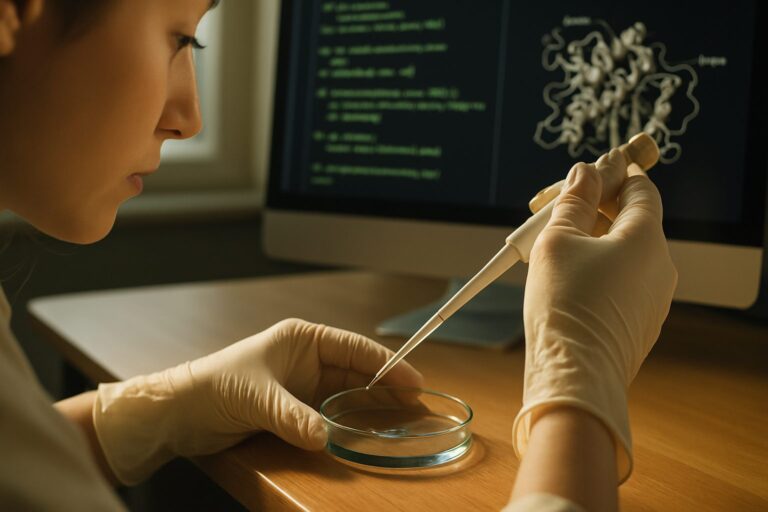
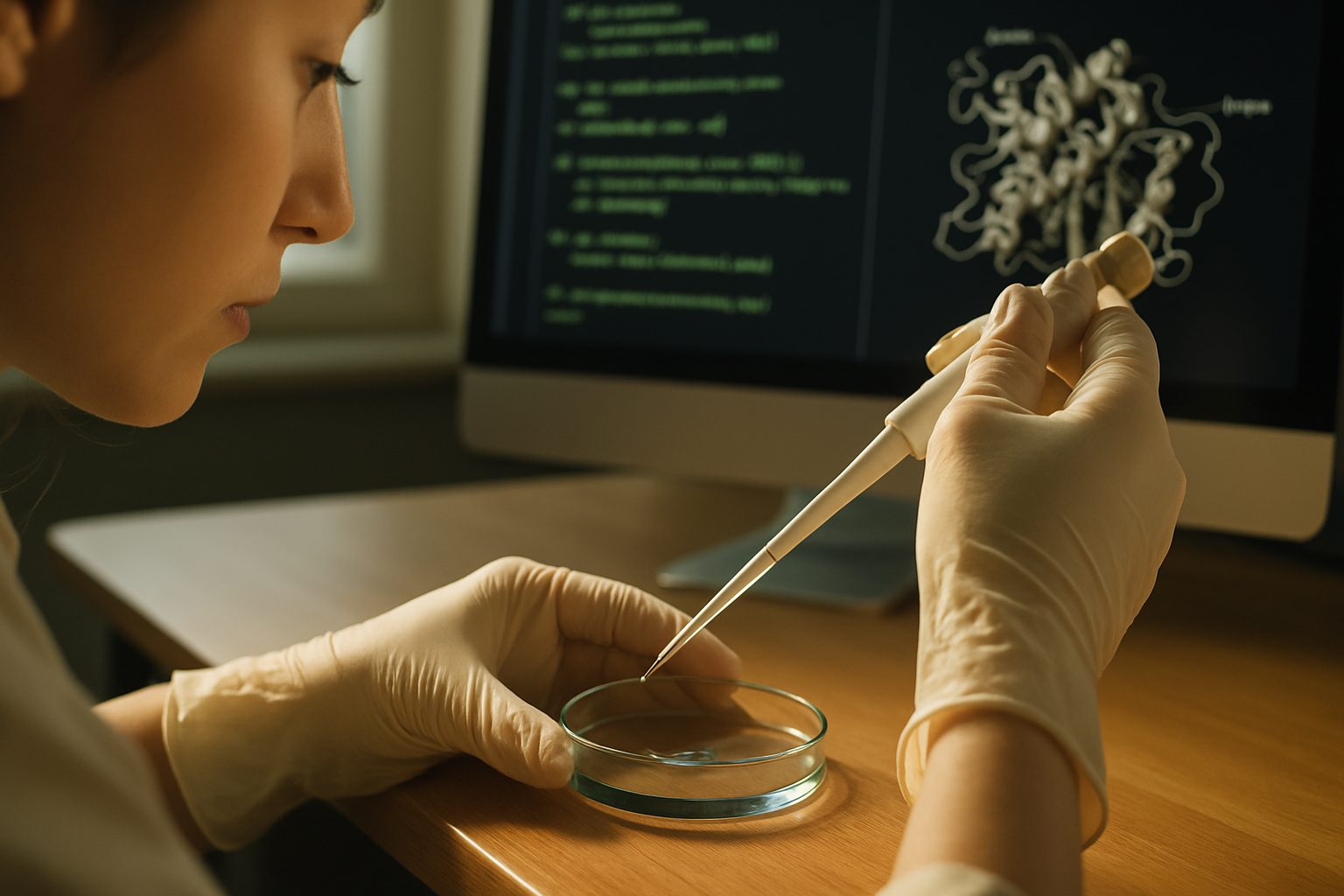
Anthropic announced that Claude identified a previously unknown enzyme “system” in bacteriophage DNA that behaves like CRISPR—performing DNA cutting, copying, and pasting operations. The discovery took roughly 21 hours of Claude processing across 950 agents consuming 210 million tokens. For context, the lab only launched this spring.
CEO Dario Amodei acknowledged Stanford researchers previously discovered a similar system, tempering claims of pure novelty. The broader research community will ultimately validate the discovery’s significance.
Operational Model: AI Analysis, Human Execution
This matters for investors tracking AI’s real-world utility: Anthropic uses Claude for data analysis and hypothesis generation, but human scientists conduct all physical experiments. The lab operates at biosafety levels 1-2, avoiding human pathogens. No autonomous robotic systems currently run experiments.
This hybrid approach reflects institutional risk management. Amodei has publicly warned about bioterrorism risks while simultaneously claiming AI could “cure most diseases in 5-10 years”—a contradiction the company appears to be navigating through human oversight.
Background: The Convergence of AI and Biology
Anthropic is a San Francisco-based AI safety company founded in 2021 by former OpenAI researchers. It develops Claude, a large language model positioned as safer and more steerable than competitors. The company has raised billions in funding and maintains significant influence over AI industry safety standards.
CRISPR gene-editing technology originated from bacterial immune systems and became commercialized in the 2010s, enabling precise DNA modifications. Its discovery and development earned the 2020 Nobel Prize in Chemistry. CRISPR applications span agriculture, medicine, and industrial biotech.
AI in biological research has already gained traction beyond Anthropic. Google’s AlphaFold (launched 2020) predicts protein structures. UC San Francisco researchers used AI to design enzymes from scratch. Stanford published recent work on LLMs and CRISPR applications. This represents a secular trend toward computational biology.
Disrupt 2026 provided the platform for Anthropic’s announcement, with OpenAI, Replit, and others occupying featured stages. The conference context amplified visibility for the biology lab reveal.
Investment Implications: Capability Demonstration vs. Deployment Reality
The announcement serves dual purposes: demonstrating Claude’s analytical prowess and establishing Anthropic’s biotech credibility for future partnerships or spinoff opportunities. Biology could become a significant revenue vector if the company scales research capabilities.
However, the human-only execution model limits near-term competitive advantages. Fully autonomous systems remain explicitly off-the-table “today,” per Amodei, likely due to regulatory and safety concerns. This creates a credibility gap between capability claims and actual deployment speed.
The Safety Theater Question
Announcing a biology lab while simultaneously warning about AI’s catastrophic risks invites skepticism. Anthropic must demonstrate that human oversight mechanisms genuinely constrain Claude, not merely serve as PR cover for aggressive capability development. The 21-hour discovery timeline hints at AI systems already operating at speeds humans struggle to monitor effectively.
What’s Next: Regulatory and Technical Roadblocks
Amodei’s explicit mention of “appropriate safeguards” for future autonomous lab work telegraphs Anthropic’s next phase. The company faces regulatory friction: FDA oversight, institutional biosafety committees, and emerging AI-in-biotech governance frameworks will impose friction on scaling.
The real test isn’t whether Claude can analyze biology data—that’s proven. It’s whether Anthropic can build trustworthy autonomous systems, maintain human oversight credibly at scale, and navigate regulatory approval faster than competitors.
About the Author