TL;DR
NASA’s Perseverance rover has broken Opportunity’s distance record in one-third the time by operating 90% autonomously. The breakthrough validates self-driving tech in extreme environments—a proving ground for autonomous systems before Earth deployment.
The Operational Edge: Autonomous Systems at Scale
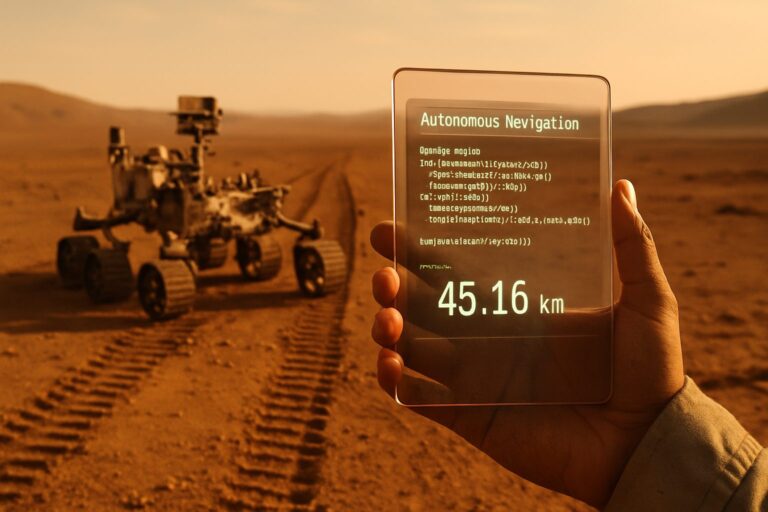
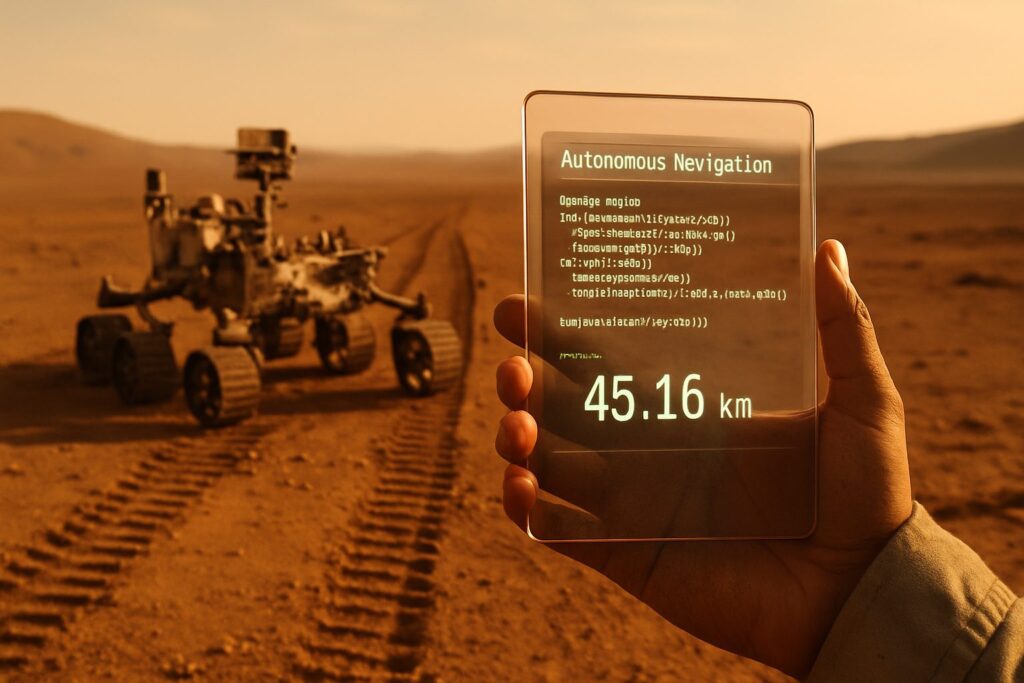
Perseverance’s 45.16 km milestone demonstrates that onboard autonomous navigation compresses mission timelines dramatically. The rover has traveled beyond Opportunity’s 28-year career distance in under five years by eliminating Earth-command latency. This validates a critical insight for industrial operators: autonomous systems unlock productivity gains when processing power matches environmental complexity.
For investors tracking autonomous vehicle development, Mars proves the concept works at maximum friction—dusty sensors, communication delays, no infrastructure, and unforgiving terrain. Every challenge solved here transfers backward to terrestrial applications.
Background: Rovers, Chips, and Competition
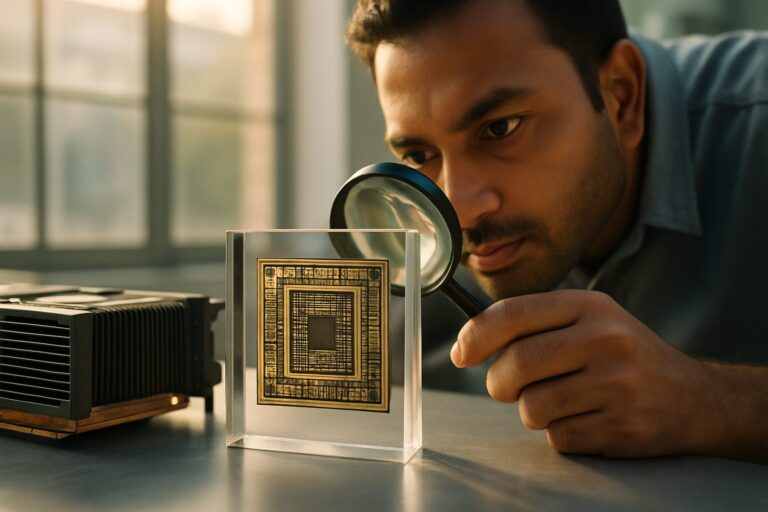
Perseverance landed in Jezero Crater in February 2021 as part of NASA’s Mars 2020 mission. The automobile-sized rover carries a modern Vision Compute Element enabling real-time terrain analysis and route planning without waiting for instructions from Earth.
Opportunity rover, which operated from 2004 until losing communication in 2018, drove 45.16 km over nearly 15 years. It held the extraplanetary distance record until Perseverance’s recent breakthrough. Opportunity’s limited autonomous capability meant frequent stops for human-directed commands.
Curiosity rover, Perseverance’s near-identical predecessor launched in 2009, has driven 38.6 km in roughly 16 years of operation. Its onboard computer—featuring chipsets from the 1990s—supports only 10% autonomous driving. This hardware bottleneck forced engineers to architect Perseverance’s improved compute stack.
The generational leap between rovers reflects semiconductor advancement and algorithmic maturation. Modern vision-based navigation algorithms process imagery onboard in seconds, enabling continuous movement rather than episodic crawling.
Why 90% Autonomous Beats 10%
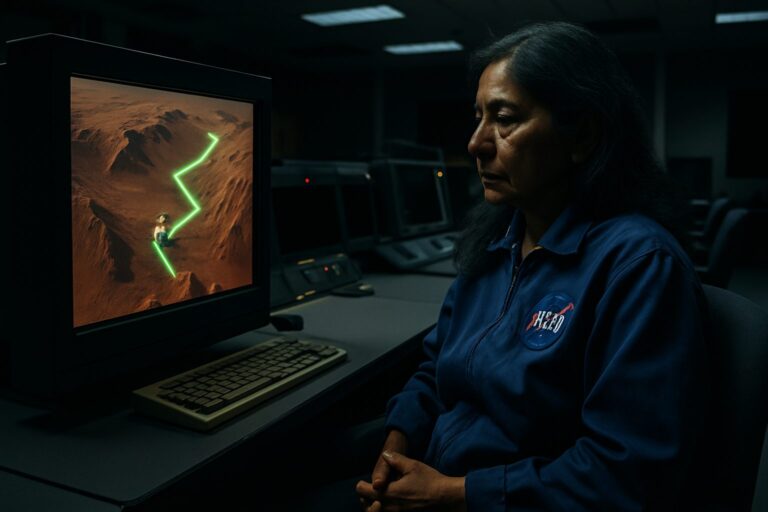
Perseverance’s Vision Compute Element processes terrain imagery while wheels turn, eliminating the observe-wait-command-confirm cycle that hobbles Curiosity. Round-trip Earth communication takes 20+ minutes depending on orbital geometry; autonomous processing happens in seconds.
The rover’s cameras scan surroundings for hazards—boulders, steep slopes, soft sand—and compute the safest route algorithmically. Perseverance’s maximum speed is 150 meters per hour, modest but irrelevant if movement never stops. Time gained compounds: weeks of continuous operation versus months of interrupted commands.
- Curiosity approach: Drive short distances, stop, transmit data to Earth, wait for command, execute. Repeat ~20+ times for significant progress.
- Perseverance approach: Drive continuously with onboard decision-making. Stop primarily for science objectives, not navigation.
Vivian Sun, the mission’s deputy project scientist, noted that autonomy expanded mission scope beyond previous rover capabilities, allowing broader geological surveys across Jezero Crater’s dispersed research sites.
Science Acceleration: Ancient Mars Under Investigation
Perseverance explores 4-billion-year-old terrain—material predating Earth’s oldest rocks. During Mars’s heavy bombardment era, geological and hydrological conditions remained poorly understood. Autonomous mobility enabled Perseverance to investigate ancient lake beds and possible ocean basins in situ for the first time.
The rover’s ability to transit between dispersed sites revealed discoveries faster than planned. Scientists working with Curiosity accepted methodical pace because rover mobility was the bottleneck. Perseverance removes that constraint, letting geology and instrumentation—not logistics—determine research velocity.
This reversal has practical value beyond Mars science. It proves that autonomous systems increase discovery capacity when applied to constraint-driven missions. Industrial inspection, mining, and environmental monitoring face identical friction: human operators spend more time transiting than analyzing.
What This Means for Autonomous Vehicle Development
Perseverance validates vision-based autonomous navigation under conditions worse than most Earth deployments: sensor dust, communication latency, unmapped terrain, and single-point-of-failure consequences. Success here implies terrestrial autonomous systems face manageable engineering challenges by comparison.
The generational improvement from Curiosity to Perseverance—9 years of advancement enabling 9x autonomy increase—tracks Moore’s Law on a longer timeline. Modern edge compute (Nvidia Jetson, Qualcomm Snapdragon platforms) executes 2021-level Mars rover processing in real-time on handheld devices.
For investors: This is a live, high-stakes validation test of autonomous technology durability and real-world decision-making. No simulation matches actual terrain surprises. NASA’s operational success subsidizes R&D validation that private vendors cannot afford independently.
What’s Next
Perseverance will continue mapping Jezero’s ancient geology while its autonomous systems mature further. Future Mars missions (planned for the 2030s) will inherit this technology baseline, likely with expanded computational capacity.
On Earth, commercial entities are deploying similar vision-based autonomous systems in mining, agriculture, and logistics. Each success on Mars accelerates confidence in terrestrial deployment and justifies capital allocation to autonomous vehicle infrastructure.