AMD’s Taalas Acquisition Flips the Script on Inference Economics
TL;DR: AMD acquired model-specific chip startup Taalas to embed AI weights directly into silicon, achieving 17,000 tokens/second on inference tasks. The strategy targets premium inference services where speed and efficiency matter more than model flexibility.
The Acquisition and Its Strategic Weight
AMD’s acquisition of Taalas mirrors Nvidia’s $20 billion Groq licensing deal—both moves target the same market: high-performance inference for AI agents and code assistants. The operational win is immediate: specialized chips eliminate memory bottlenecks that plague general-purpose GPUs during token generation.
For operators running inference at scale, this changes the unit economics. Taalas’ approach cuts power consumption and latency, directly reducing operational costs for inference-heavy workloads. AMD gains a technical edge in a segment where Nvidia dominates through software inertia, not hardware superiority.
Background: The Companies and Context
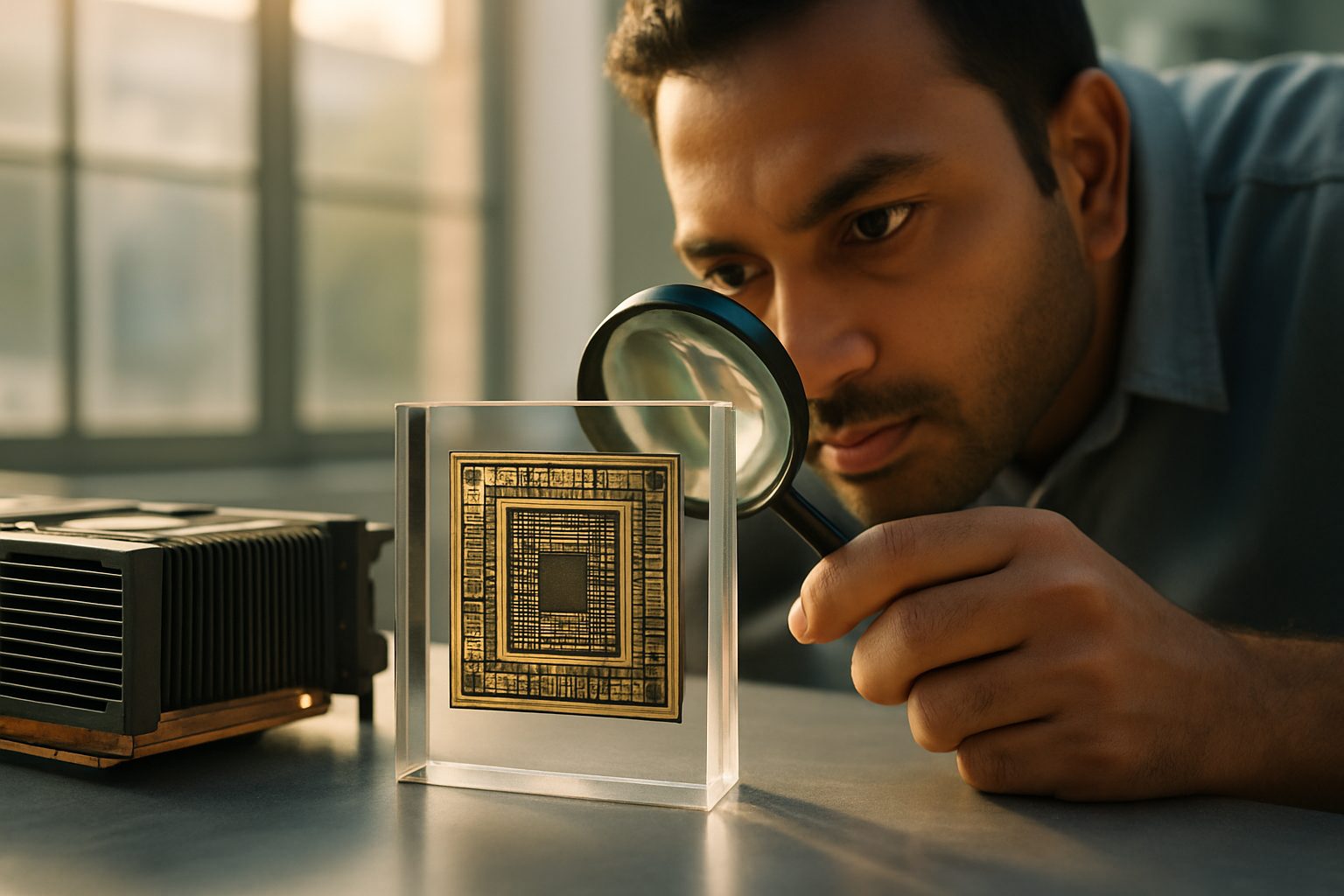
Taalas was founded in 2023 in Toronto with a singular mission: bake model weights into silicon as read-only memory. Unlike conventional accelerators that fetch weights from HBM across memory buses—a bottleneck—Taalas etches them directly into the chip’s substrate. This makes each Taalas chip a model-specific integrated circuit (MSIC), not a general-purpose processor.
AMD’s Position: The company has chased Nvidia’s AI dominance through software ecosystems (ROCm) and hardware partnerships. This acquisition represents a bet on a fundamentally different architecture rather than incremental GPU improvements. AMD’s Instinct line competes on raw throughput; Taalas competes on efficiency for fixed workloads.
The Inference Market Context: As LLMs mature, inference workloads increasingly define data center economics. Token generation—the compute-bound phase of LLM serving—remains a bottleneck. Groq’s LPUs and Taalas’ MSICs both attack this problem with dataflow architectures rather than traditional Von Neumann designs. Nvidia’s LPX response signals the market is shifting away from GPU-dominant stacks.
Historical Parallels: Specialized silicon for fixed workloads isn’t new. Google’s TPUs proved the concept; Intel’s Gaudi chips failed partly due to software ecosystem lock-in. Taalas’ challenge: convince operators that model-specific silicon is worth the inflexibility trade-off.
Technical Architecture: MSICs vs. GPUs
Taalas’ first chip, the HC1 (fabbed on TSMC 6nm), served Llama 3.1 8B at 16,960 tokens/second—48x faster than contemporary Nvidia GPUs and 8.5x faster than Cerebras accelerators. The chip contains two regions: a mask-ROM fabric for weights and an SRAM fabric for KV caches and adapters.
The HC2, arriving this summer, targets 20 billion parameters per chip. That’s not a limit—it’s a unit of distribution. A 1 trillion-parameter model needs just 50 HC2 chips with pipeline parallelism, versus 2,000+ Groq LPUs for equivalent throughput in Nvidia’s LPX systems.
AMD’s Integration Strategy
AMD plans to pair Taalas chips with its Instinct-based Helios racks in a disaggregated architecture. Prompt processing (compute-heavy, model-agnostic) runs on GPUs; token generation (bandwidth-bound, model-specific) offloads to Taalas accelerators. This lets AMD capture both phases of the inference pipeline.
A secondary play: tick-tock cadence where customers validate models on Instinct GPUs before migrating to Taalas-specific hardware. This reduces switching friction.
The Critical Trade-Off: Flexibility vs. Speed
Here’s the operational gotcha: once weights are etched into silicon, they’re permanent. Model updates require new silicon. This makes Taalas ideal for static workloads—Llama 3.1 in production for two years—but poisonous for cutting-edge research or rapid iteration.
AMD’s pitch is narrower than Nvidia’s: premium inference services where a 3-6 month model lifecycle and 10x speed gain justify silicon re-spins. Code assistants fit this mold. Fine-tuning adapters stored in SRAM provide some customization, but the base model is locked.
For investors: this is a bet that inference workloads stratify. Most customers chase cost and flexibility; a segment pays for speed and efficiency. AMD is arming itself to capture that segment.
Market Implications and Competitive Pressure
Nvidia’s LPX response suggests the company recognizes the threat. Groq’s LPUs and now Taalas force Nvidia to offer non-GPU paths, fragmenting its ecosystem advantage. AMD gains breathing room in inference—the faster-growing segment of AI compute spend.
The broader trend: inference is decoupling from training. Training still favors GPUs (software, scale, flexibility). Inference increasingly favors specialized architectures. AMD’s vertical integration—acquiring Taalas rather than licensing—suggests confidence in the long-term viability of model-specific silicon.
Watch for similar acquisitions. Intel and other GPU players will pursue comparable strategies. The inference market is becoming Balkanized by workload and architecture.
What Operators Should Assess Now
- Model Stability: Does your inference workload run the same model for 6+ months? If yes, Taalas is relevant.
- Latency Requirements: Is sub-10ms token latency worth 10x cost per token reduction? Taalas shines here.
- AMD Ecosystem: Validate that Helios + Taalas integration roadmap aligns with your deployment timeline. AMD is still proving this stack.
- Vendor Lock-In Risk: Model-specific silicon ties you to a single accelerator vendor. Understand the exit cost.
The acquisition closes an architectural gap for AMD. Whether it captures meaningful market share depends on execution and customer willingness to accept hardware inflexibility for inference speed.
About the Author