Google Kills Earth AI Feature After 24 Hours: A Case Study in Responsible AI Rollback
TL;DR: Google yanked its AI image generation feature from Google Earth within one day of launch after users immediately weaponized it to create geospatial misinformation. The incident exposes the tension between innovation velocity and guardrail implementation in production AI systems.
The Operational Reality: Speed vs. Safety Tradeoffs
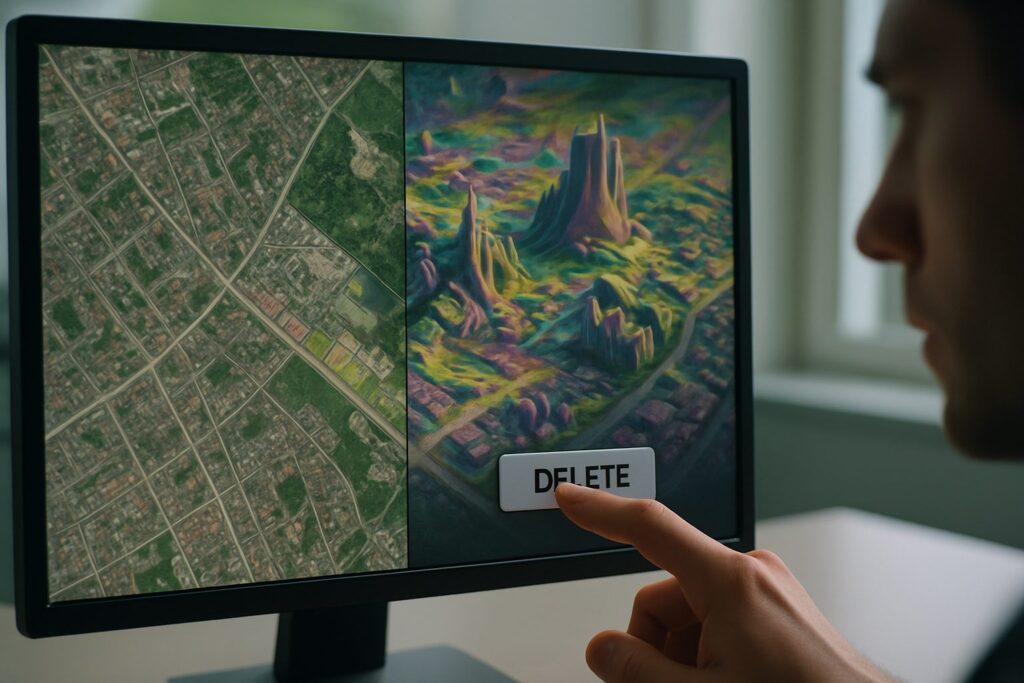
Google’s decision to deploy and then rapidly retract its Earth AI feature reveals a critical pattern in enterprise AI deployment. The company launched Nano Banana 2 integration into Google Earth with minimal friction—allowing users to superimpose AI-generated imagery directly onto satellite maps—then absorbed negative feedback within 24 hours. For operators, this signals that even well-resourced teams struggle with the gap between feature intent and adversarial use cases.
The timing matters operationally. Geospatial data’s credibility is foundational to journalism, urban planning, and intelligence work. Introducing synthetic image generation into a trusted mapping tool created systemic risk immediately. Google’s swift rollback prevented compounding reputational damage but also cost development resources and user goodwill.
What Went Wrong: A Predictable Failure Mode
The feature’s core flaw was architectural, not accidental. A prompt-based image generator with minimal guardrails overlaid on geospatial data is inherently misuse-prone. Critics, including BBC journalists, flagged the obvious misinformation vector before meaningful adoption occurred. This wasn’t a black swan; it was negligence in threat modeling.
- Design flaw: Prompt-based generation with “pretty much any image” capability
- Deployment context: Targeting Google Earth, a canonical source for visual evidence
- Guardrails: Insufficient policy enforcement mechanisms pre-launch
The lesson for investors: AI feature velocity that bypasses threat modeling creates liability, not value. Google absorbed the hit; less-capitalized competitors may not.
Why This Matters for the AI Supply Chain
Google sells AI image generation capability to enterprises and developers. The Earth feature was essentially a reference implementation showing one possible deployment pattern. Its immediate abuse demonstrates that capability distribution outpaces behavioral controls across the industry.
For robotics and automation operators, this mirrors challenges in autonomous systems. A feature that seems operationally useful (creative Earth visualizations) becomes dangerous in specific contexts (geospatial verification). This is the core problem: intent-context mismatch at scale.
Background: Google Earth and the AI Integration Challenge
Google Earth, launched in 2005, became the de facto standard for satellite imagery access. Its integration with Google Maps solidified its role as a trusted reference for location intelligence. The platform serves journalists, researchers, urban planners, and intelligence analysts—users for whom visual authenticity is non-negotiable.
Nano Banana 2, Google’s image generator, represents the latest iteration of synthetic media capability. The company has been embedding AI throughout its product stack, treating generative features as table stakes in a competitive market dominated by OpenAI, Anthropic, and specialized players. The Earth integration was logical from a product roadmap perspective but catastrophic from a trust perspective.
The 24-hour lifecycle reflects both rapid iteration culture and real-time adversarial feedback. Users didn’t wait weeks to test malicious prompts—they tested them immediately. Google’s rollback protocol, while reactive, prevented compounding damage.
Investment Implications: Guardrails as Competitive Moat
For capital allocators: Companies that invest heavily in pre-deployment adversarial testing will outcompete those that rely on post-launch feedback loops. Google could absorb this reputationally; emerging competitors cannot.
The incident also validates demand for specialized trust-and-safety tooling. Vendors offering geospatial verification, media provenance tracking, and AI behavioral modeling will see increased enterprise interest. This is a $B opportunity disguised as a compliance cost.
For robotics and automation, the parallel is direct: autonomous systems deployed in safety-critical contexts require guardrails that survive adversarial operation, not just nominal use. A production system that “works” under benign conditions is valueless.
What Google Said About the Rollback
Google’s statement acknowledged policy violations and committed to “stronger guardrails” before re-launch. The company recognized geospatial professional use cases as legitimate, meaning this isn’t abandonment—it’s tactical retreat for fortification.
This language reveals the actual problem: Google shipped without guardrails sufficient for production in a trust-critical domain. “Stronger” guardrails suggests the originals were intentionally permissive, not inadequate by accident.
The Broader AI Deployment Crisis
AI systems are being deployed at production scale with insufficient threat modeling. Earth was just the version that broke visibly and quickly. How many internal tools, enterprise software, and consumer applications contain similar vulnerabilities that haven’t yet triggered immediate backlash?
For operators and investors, the lesson is structural: capability + trust context + minimal guardrails = inevitable failure. The timeline matters less than the inevitability. Plan accordingly.