Chinese Automakers Race to Capture Humanoid Robot Profits, Following Tesla’s Playbook
TL;DR: Chinese automakers are flooding capital into humanoid robotics, with Xpeng raising $900M at $6.3B valuation. The bet assumes razor-thin EV margins will shift to fat robot profits—but execution on AI remains the critical differentiator.
The Capital Flood: China’s Embodied AI Bet Gets Real
Xpeng’s robotics unit closed a $900M fundraising round this week, valuing the unit at $6.3 billion—the largest single-round private financing ever recorded in China’s embodied AI sector. The round included IDG Capital, Tencent, and Alibaba, with founders He Xiaopeng and Brian Gu personally committing ~$100M.
This isn’t isolated activity. Chery’s AiMOGA unit is preparing an IPO, BYD unveiled humanoid robot Xiao Di, and Changan, GAC, Li Auto, SAIC, and Seres are all developing humanoid systems. The speed and capital density signal a strategic pivot: automotive margins are collapsing, but autonomous humanoid systems could offer 40%+ gross margins if deployed at manufacturing scale.
Why Chinese Automakers See Robots as Margin Recovery
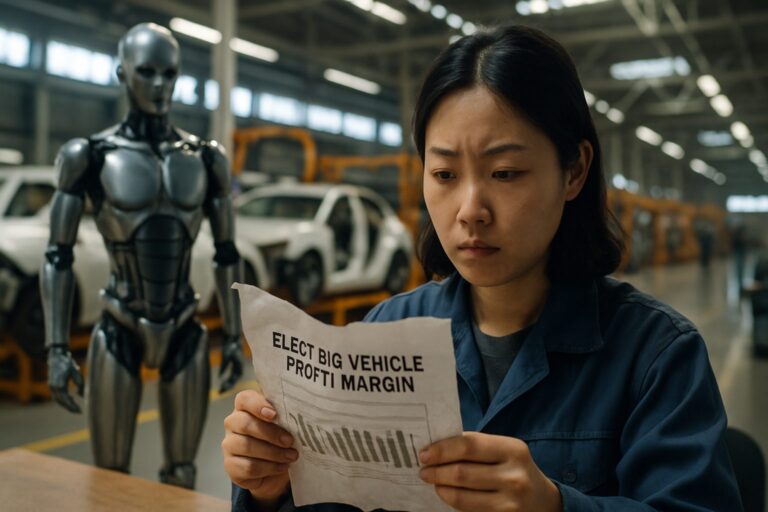
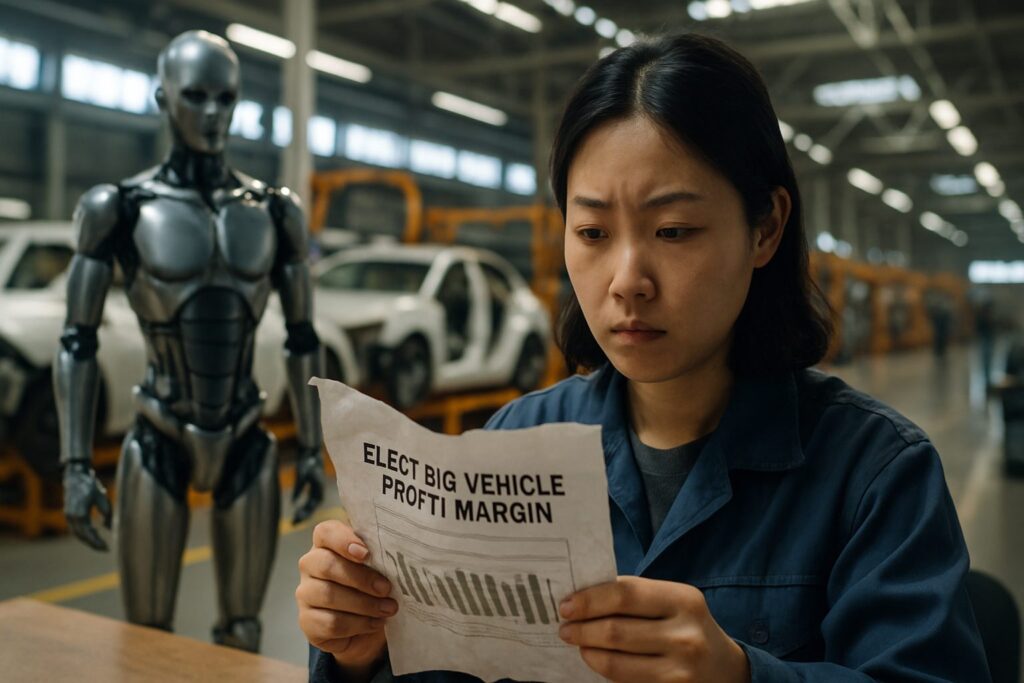
EV profitability in China has compressed to single digits as price competition intensifies. Robots represent a downstream vertical integration play—same supply chain, manufacturing expertise, and customer relationships, but with higher-margin SaaS-like economics once amortization begins.
Michael Dunne, CEO of advisory firm Dunne Insights, noted that Xpeng founder He Xiaopeng is “a tech billionaire known for his agility.” Dunne told TechCrunch: “He sees razor-thin profit in cars on the near horizon. Robots look much more promising.” Xpeng’s Iron robot targets commercial deployment in warehouses, logistics, and light manufacturing.
Hardware Advantage, AI Knowledge Gap
Chinese automakers possess undeniable manufacturing infrastructure: supply chain networks, factory floor expertise, and capital velocity. The critical gap is AI—specifically, the software stack that enables complex task learning.
Recent breakthroughs in applying large language model techniques to robotics have created a window where hardware companies without proprietary AI can still compete. But this window is narrow. Tesla’s Optimus and Boston Dynamics’ Atlas (now backed by Hyundai and Google DeepMind) represent the current frontier.
Dunne’s assessment cuts to the commercial reality: “They have all the hardware to get the job done. Question is if they can catch Tesla on the AI side of the equation.”
Competitive Landscape: Global Players Closing Fast
The humanoid robotics race extends well beyond China. Hyundai is deploying Atlas to its Georgia facility this year with a 2028 timeline for factory-floor sequencing tasks. The Korean automaker partnered with Google DeepMind to accelerate development and is opening a U.S. Robot Metaplant Application Center to train robots on lifting and turning movements.
Other contenders include Agility Robotics, Apptronik, and Figure AI—all pursuing commercial deployment at scale. Intel’s Mobileye acquired humanoid startup Mentee Robotics for $900M earlier this year, while Rivian’s Mind Robotics spinout is developing non-humanoid form factors.
Operational Implications for Investors
The capital concentration in Chinese automaker robotics signals conviction that manufacturing deployment scales faster than service verticals. Xpeng’s $6.3B unit valuation implies $8-12B in exit expectations within 5-7 years—pricing in successful commercial pilots by 2027-2028.
Risk factors remain substantial:
- AI capability gaps vs. Tesla and Boston Dynamics may persist despite hardware parity
- Supply chain concentration (NVIDIA GPUs, advanced sensors) could create bottlenecks
- Customer acquisition costs in manufacturing may exceed projections if task-switching capability lags
- Regulatory uncertainty around autonomous systems in industrial settings
Watch for pilot deployment announcements from Xpeng Iron and Chery AiMOGA by Q1 2027. Successful factory-floor integration would validate the margin-recovery thesis and likely trigger a second funding wave. Failure would reset expectations for the entire sector.
The hardware-to-software dynamic mirrors the 2010s smartphone supply chain shift. Chinese manufacturers’ ability to compress iteration cycles and scale manufacturing could prove decisive—or their lack of proprietary AI could become insurmountable.