TL;DR
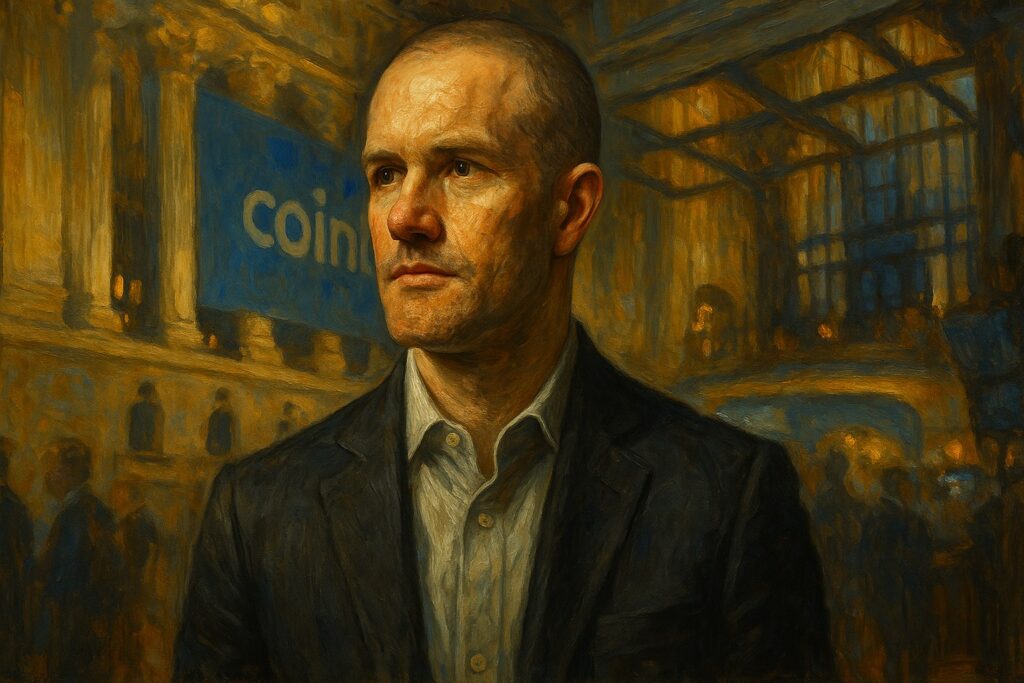
Brian Armstrong built Coinbase into the world’s leading cryptocurrency exchange by betting that digital assets would become as foundational to finance as the internet became to communication. At 41, he remains the rare crypto founder who has resisted get-rich-quick schemes in favor of long-term institutional legitimacy.
Career Highlights
Armstrong grew up in San Jose, the son of a mortgage broker and a teacher. He studied computer science and economics at Rice University, then spent five years as an engineer at Airbnb, where he witnessed the power of platforms to disrupt incumbents. In 2012, riding the wave of Bitcoin’s resurrection after the Mt. Gox collapse, Armstrong left Airbnb to co-found Coinbase with Fred Ehrsam, a former Goldman Sachs trader. The thesis was simple but radical: make cryptocurrency accessible to ordinary people.
For six years, Armstrong built in relative obscurity. Coinbase raised venture capital while competitors chased ICO mania and leverage. Armstrong stayed disciplined. He hired compliance officers before regulators asked. He pursued banking relationships instead of regulatory arbitrage. In 2021, as crypto sentiment peaked, Coinbase went public at a $100 billion valuation. Armstrong rang the bell. The timing looked perfect—and then it didn’t. The crypto winter arrived within months.
Armstrong’s response revealed his character. Rather than chase yield or join the exodus into DeFi hype, he cut 20% of Coinbase’s workforce, shut down unprofitable projects, and doubled down on regulatory clarity. “Coinbase is a public company now,” he said at the time. “We have to act like one.” The comment stung some employees. It also signaled that Armstrong saw crypto’s future as institutional, not revolutionary.
I. The Inflection Point
The moment came in late 2011. Armstrong was working at Airbnb when Bitcoin rallied past $1,000 for the first time. He bought some. He also noticed that every exchange available to retail users was either foreign, sketchy, or both. Mt. Gox was the dominant platform—and it looked like a bedroom operation. Armstrong saw the gap: Bitcoin wasn’t the inflection point. Accessibility was.
He spent months building a proof of concept. Coinbase launched in 2012 as a simple wallet and merchant tool. The first feature was almost laughably basic: let people buy Bitcoin with a credit card. Y Combinator accepted Coinbase into its summer cohort. Fred Ehrsam, who had been rejected from GS’s trading desk for being “too entrepreneurial,” joined as co-founder. Early investors included Andreessen Horowitz and Polychain Capital—bets on Armstrong’s judgment more than the asset class itself.
Armstrong’s insight was that crypto adoption wouldn’t happen through libertarian zealotry or technical evangelism. It would happen through banks. It would happen through regulation. It would happen through the same institutional trust mechanisms that had governed finance for a century. “If we’re going to make crypto mainstream,” Armstrong would later say, “we have to make it boring.”
II. The Build
Coinbase evolved from a simple on-ramp into a financial infrastructure company. Armstrong’s strategy was methodical: dominate retail first, then expand into institutional products, then build developer tools. Each layer required different partnerships and compliance frameworks.
- Retail Trading Platform: The core product. Simple, mobile-first, designed for non-technical users. Succeeded where earlier exchanges failed by prioritizing user experience over feature density.
- Coinbase Prime: Institutional custody and trading platform. Built to compete directly with traditional prime brokers. Attracted hedge funds and family offices with regulated infrastructure.
- Coinbase Cloud: APIs and infrastructure for developers. Positioned Coinbase as plumbing rather than just an exchange—embedding it into the crypto ecosystem.
- Coinbase Commerce: Payment processing for merchants. An attempt to make cryptocurrency functional for commerce, not just speculation. Modest traction but strategic signal.
- Regulatory & Compliance: In-house legal and compliance teams hired before they were fashionable in crypto. Created defensible moats against regulatory disruption that destroyed competitors.
- Strategic Acquisitions: Neuberger Berman stake, Bison Trails acquisition, integration of Chain.com. Each move expanded Coinbase’s institutional credibility rather than chasing hype.
Armstrong’s architecture was hierarchical and disciplined. Build the legal foundation first. Stack products on top. Expand only into markets where institutional demand was proven, not speculative.
III. The Person
Armstrong is not a showman. He doesn’t tweet philosophy or grant interviews to podcast bros. He wears the same uniform of plain shirts and jeans he’s worn for a decade. His office is bare. He works through problems methodically, often sketching decision trees on whiteboards rather than brainstorming in groups.
Colleagues describe him as relentlessly principled and sometimes to a fault. He has fired employees for ethical breaches. He has abandoned entire business lines because they didn’t align with his vision of institutional legitimacy. During the 2022 crypto collapse, as his own net worth evaporated, Armstrong refused to pivot Coinbase toward leverage or yield farming—products that would have generated short-term revenue but undermined long-term trust. “We need to be the most trusted,” he said in an earnings call. “Everything else follows from that.”
Armstrong is also quietly ambitious. He has mentioned building financial infrastructure for the unbanked as a life goal. He sits on no boards outside Coinbase. He gives to effective altruism causes. His goal, stated plainly, is to “make crypto a foundation of the global financial system.” It’s a bet that will take decades to resolve.
IV. The Network & Numbers
Milestones Box
- Founded: 2012
- IPO: April 2021
- Market Cap: ~$31 billion (as of 2024)
- Employees: ~3,700
- Annual Revenue: ~$5.1 billion (2023)
Key Relationships
- Fred Ehrsam: Co-founder; stepped back to venture roles but remains board advisor and strategic voice.
- Kathryn Haun: General Counsel; former federal prosecutor; architect of Coinbase’s regulatory strategy.
- Emilie Choi: President & COO; career finance executive; provides operational discipline and institutional credibility.
- Andreessen Horowitz: Early investor and strategic partner; continues to amplify Coinbase’s institutional narrative.
V. The Thesis
Armstrong’s bet is that cryptocurrency will become infrastructure, not ideology. This is a contrarian view in crypto, where many founders still believe in the revolutionary potential of decentralized finance. Armstrong does not. He believes the future is a hybrid: digital assets and blockchain technology, regulated and integrated into existing financial systems, alongside traditional institutions.
This thesis demands patience. It requires Coinbase to serve as a bridge—translating between the old financial system and the new one. It means accepting regulation as a feature, not a bug. It means making products that work, not products that are pure.
Armstrong’s biggest bet is that institutions will own the future of crypto. Retail users, retail developers, retail companies—they will use crypto, but the platforms and infrastructure that matter most will be run by people who understand compliance, capital requirements, and quarterly earnings calls. “We’re building the financial plumbing of the 21st century,” Armstrong said in a 2023 earnings call. “And plumbing is boring. It’s supposed to be.”
Factbox
Name Brian Armstrong | Age 41 | Location San Francisco, United States | Company & Role Coinbase, CEO & Co-founder | Funding IPO, April 14, 2021 | Most Recent Round N/A | Employees ~3,700 | Contrarian Belief Cryptocurrency will succeed not by disrupting finance, but by being absorbed into it as regulated, institutional infrastructure.