TL;DR: Schneider Electric’s modeling shows liquid-cooled AI datacenters operating at 45°C can slash water consumption by 50% versus air-cooled facilities, with higher coolant temperatures enabling dry coolers to replace water-intensive cooling towers.
Water Efficiency in AI Datacenters: Design Architecture Matters
The operational implication is stark: AI datacenter operators face a critical choice between capital efficiency and resource sustainability. Cooling architecture decisions made during design phase lock in water and energy profiles for decades. As facility water consumption compounds—US datacenter water use tripled in a decade—early thermal design choices now carry regulatory and community risk alongside operational costs.
Schneider’s Liquid-Cooling Case Study: The 45°C Inflection Point
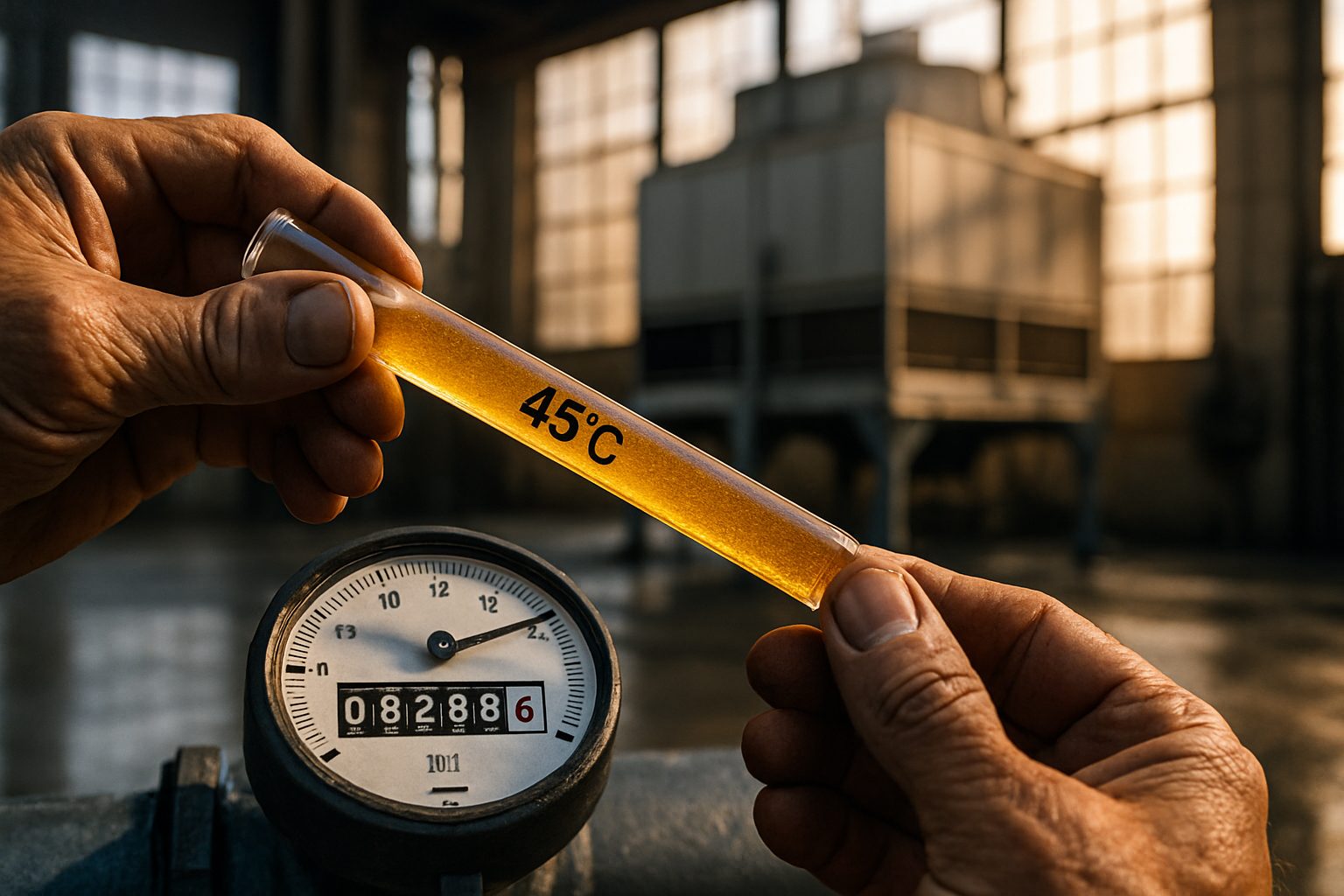
Schneider Electric published a white paper modeling four 100 MW datacenter designs, comparing traditional air cooling against optimized liquid-cooling systems. The centerpiece finding: raising coolant supply temperature from 32°C to 45°C enables at least 50% water reduction in constrained locations like Dallas.
The mechanism is straightforward. Higher coolant temperatures extend the operating window where dry coolers can reject heat passively using ambient air, eliminating reliance on cooling towers. Cooling towers consume 5–20 times more water than dry coolers for equivalent facility size.
Design Scenarios Modeled
- Traditional air cooling baseline
- Liquid cooling at 32°C (early AI datacenter standard)
- Liquid cooling at 45°C with existing equipment
- Liquid cooling at 45°C with right-sized equipment (lowest capex)
The fourth scenario compounds benefits: sizing cooling systems specifically for 45°C operation avoids overcapacity and reduces capital expenditure alongside water savings.
Commercial Conflict: Schneider’s Stake in the Narrative
Schneider acquired a 75% controlling stake in liquid-cooling specialist Motivair in 2024, with plans to purchase the remainder by 2028. The company has direct commercial interest in driving adoption of the cooling architecture it now owns. This doesn’t invalidate the physics—higher coolant temperatures genuinely improve dry-cooler efficiency—but it frames Schneider’s white paper as vendor advocacy rather than independent analysis.
Investment thesis note: The modeling suggests technology capture opportunity. Operators pursuing water reduction without evaluating liquid cooling risk suboptimal designs; those choosing liquid cooling need specialists like Motivair to right-size systems for regional conditions.
Background: Datacenter Water Stress and Regional Variation
Water consumption has become a regulatory flashpoint. US datacenter water use tripled over the past decade, triggering local opposition to new projects and attracting regulatory scrutiny. The UK government faces criticism for promoting AI server farm construction while overlooking water demand implications. Water constraints now compete with power availability as a site-selection bottleneck.
Schneider’s modeling accounts for regional variation by applying the four cooling designs to Paris and Dallas weather profiles. Paris’s cooler climate enables passive cooling longer than Dallas, reducing mechanical chilling needs. Location now functions as a primary design variable. A facility profitable in one region may face insurmountable water costs in another.
Motivair’s acquisition anchors Schneider’s cooling strategy. The specialty vendor provides immersion and direct-to-chip liquid cooling expertise—critical as AI rack densities exceed 50 kW per cabinet. Schneider’s broader infrastructure portfolio (UPS, power distribution, monitoring) creates integration advantages: unified thermal and power management reduces design friction.
The PUE vs. Water Trade-Off: No Universal Optimum
Schneider correctly notes that water and energy efficiency don’t always align. The optimal design depends on local energy and water costs, regulatory constraints, and power usage effectiveness (PUE) requirements. A facility in a water-constrained region might choose 45°C liquid cooling despite slightly higher electricity use. A region with abundant water and cheap hydropower might optimize for minimal PUE instead.
This complexity creates consulting opportunity: operators need facility-specific analysis, not prescriptive recommendations. Schneider’s white paper implicitly positions the company as that analytical partner.
Investment Implications and Operational Priorities
For operators: Thermal design is now a first-order cost and risk variable. Deferring cooling architecture decisions until late design phases locks in inefficiency. Early water-consumption assessment should precede site selection.
For investors: Liquid-cooling vendors capture value across two vectors: direct cooling equipment sales, and the consulting/design integration required to right-size systems. Schneider’s Motivair integration positions it for both. Competitors lacking thermal expertise face margin pressure as customers demand integrated solutions.
For regional policy: Datacenter cooling architecture is now policy-relevant. Jurisdictions concerned about water demand can incentivize or require high-temperature liquid cooling in new permits. This creates regulatory arbitrage: operators may cluster facilities in regions with permissive thermal standards.
The broader pattern: AI infrastructure efficiency is becoming hyper-localized. One-size-fits-all design templates are obsolete. Operators who front-load regional analysis and integrate thermal design early will outcompete those treating cooling as an afterthought.
About the Author