TL;DR
Sebastian Thrun built Udacity into the world’s largest online education platform for tech skills, then pivoted to autonomous flight with Kitty Hawk—betting that moonshot engineering and mass education are the two forces that will reshape human potential. He moves between worlds others see as separate.
Career Highlights
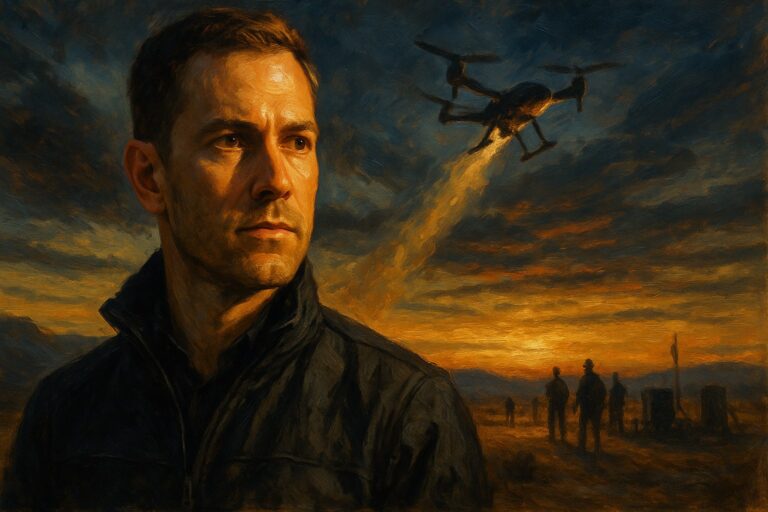
Thrun arrived at Stanford in the late 1990s as a roboticist with a peculiar conviction: that teaching machines to see and navigate the physical world would unlock something fundamental about learning itself. He built Stanley, the autonomous vehicle that won the 2005 DARPA Grand Challenge and proved self-driving cars weren’t science fiction. That victory opened a door at Google, where he became the founding lead of Google’s self-driving car project—the moonshot that would eventually become Waymo.
In 2011, Thrun taught an introductory AI course at Stanford to 160,000 online students. The experience shocked him. He realized the internet had made world-class instruction infinitely scalable. He left Google to found Udacity in 2012, framing it as a “University of the Air”—not a degree-granting institution, but a direct pipeline into tech jobs. The platform grew to serve millions of learners globally. Major tech companies became hiring partners; Udacity became synonymous with upskilling for the 21st century.
By the mid-2010s, Thrun had engineered two separate revolutions. Yet something still nagged at him. Education alone wasn’t enough. He wanted to build something tangible. In 2017, he founded Kitty Hawk, named after the Wright brothers’ birthplace, to commercialize personal electric aircraft. He positioned it not as a science project but as a consumer product: an accessible, safe, autonomous flying vehicle for everyday use.
I. The Inflection Point
Winning the 2005 DARPA Grand Challenge was the hinge. Thrun’s team built Stanley—a VW Touareg outfitted with cameras, lidar, and algorithms—and drove it across the Mojave Desert without human control. The car never stalled. It completed the 131-mile course faster than any competitor. Afterward, offers poured in from every major automaker and tech giant.
Google’s offer was different. Larry Page wanted Thrun to imagine what a fully autonomous transportation system would look like—not as a prototype or research project, but as a product that could reshape cities. Thrun accepted and spent five years building the intellectual and technical foundations of what the company would later weaponize as Waymo. “I learned that when you have the backing of a large company,” Thrun has said, “you can change the world faster than anywhere else.” He left before he was ready, but before he was comfortable staying.
II. The Build
Udacity became a platform designed around outcomes, not seat time. It combined recorded lectures, live mentorship, peer review, and job placement into a coherent curriculum architecture. The company moved fast, pivoting between different competencies and market demands.
- Nanodegrees. Credential programs in AI, autonomous systems, cloud computing, and data science, built in collaboration with industry partners like BMW, Amazon, and AT&T.
- Career services. Resume workshops, interview coaching, and direct connections to hiring managers at participating companies.
- Mentor network. Thousands of engineers and product managers from leading tech firms, deployed globally to provide live feedback on student projects.
- Project-based learning. Students built real systems—image classifiers, self-driving simulators, blockchain applications—rather than passing multiple-choice tests.
- Corporate partnerships. Revenue model shifted toward enterprise: companies paid for bulk licenses to train their own workforces.
The thesis was radical at the time: traditional education was optimized for scarcity. Online education could be optimized for abundance. Thrun didn’t ask permission from universities. He built parallel infrastructure.
Kitty Hawk, launched a decade later, operated on similar principles. Not incremental improvement of existing vehicles. A new category. A battery-powered, AI-enabled flying vehicle designed for short urban and suburban hops.
III. The Person
Thrun is deliberate and restless. He speaks with precision—no flourishes, no hedging—and listens in the same mode. Colleagues describe him as intellectually uncompromising but emotionally curious. He codes, he reads deeply in philosophy and systems theory, and he moves between disciplines with an engineer’s confidence and a teacher’s humility.
He is known for the intensity with which he pursues his own learning. He taught himself Chinese. He has a habit of zeroing in on the first-principles question everyone else treats as solved. His leadership style is collaborative rather than hierarchical—he prefers working alongside engineers and founders as peers rather than pronouncing decisions from above.
Thrun holds strong convictions lightly and weak convictions not at all. He left Google at the height of the self-driving car boom because he believed the problem was partially solved and the real bottleneck was education. He’s since reinvested in aerial vehicles while maintaining that teaching at scale matters more than any single technology. “Impact is not about being right,” he has said. “It’s about being useful to others.”
IV. The Network & Numbers
Milestones Box
- Founded Udacity: 2012
- Founded Kitty Hawk: 2017
- Udacity Valuation (most recent private): ~$1B+
- Udacity Learners: ~15 million (cumulative)
- Udacity Revenue: ~$100M+ (estimated annual, recent)
- Kitty Hawk Status: Operating vehicle demo; working toward FAA certification
Key Relationships
- Larry Page: Early mentor and Google CEO; invested in Thrun’s vision for autonomous systems
- Evan Spiegel (Snapchat): Early investor and strategic advisor to Udacity
- Vasant Dhar (NYU): Collaborator on AI curriculum design
- Ford, BMW, AT&T: Major Udacity industry partners and hiring channels
- Google / Waymo: Former employer; shared DNA on autonomous vehicle approach
V. The Thesis
Thrun believes humanity’s future hinges on two forces: the democratization of world-class education and the automation of physical tasks that consume human time. Most people see these as separate problems. Thrun treats them as inseparable. Without education, automation widens inequality. Without automation, education produces graduates competing for stagnant opportunities.
His big bet is that the next decade will reward people who can learn continuously—who can absorb new technologies, unlearn old ones, and collaborate with intelligent machines. Udacity is the supply chain for that capability. Kitty Hawk and autonomous systems are the proving ground: the domain where new skills become immediately valuable.
He’s not trying to build a billion-dollar company. He’s trying to shift what billion people believe is possible. “The people who change the world,” he has said, “are the ones who are not afraid to fail in public.”
Factbox
Name Sebastian Thrun | Age 53 | Location Mountain View, California | Company & Role Founder, Udacity; Founder, Kitty Hawk; Adjunct Professor, Stanford | Education Ph.D. Computer Science (Bonn University); Research Fellow, Carnegie Mellon | Contrarian Belief Traditional universities will become obsolete not because they’re expensive, but because they’re too slow to adapt to technological change.
About the Author