Alibaba Cloud’s 20GW Expansion Plan: Slower Build, Domestic Chip Strategy
TL;DR: Alibaba Cloud targets 20GW datacenter capacity by 2032 using its Zhenwu V900 AI chip, a measured approach that lags U.S. competitors building 37GW+ but signals confidence in long-term AI demand and Chinese semiconductor self-sufficiency.
The Operational Reality: Scale Without Speed
Alibaba’s 20GW six-year commitment represents measured ambition compared to the infrastructure arms race consuming rival operators. The U.S. alone has 37.7GW under construction, with OpenAI’s Stargate partnership pledging 10GW by 2029 and Meta planning a 5GW campus. Alibaba’s phased approach suggests either capital discipline or realistic demand forecasting—a notable contrast to the speculative overbuilding accelerating across North America.
The investment implication cuts both ways. For operators, this strategy conserves leverage ratios while maintaining sufficient capacity for enterprise AI workloads across Asia-Pacific. For investors in competing hyperscalers, it signals a competitor unwilling to match Western cash burn rates, potentially yielding margin advantages in slower markets.
Zhenwu V900: Vertical Integration as Supply-Chain Insurance
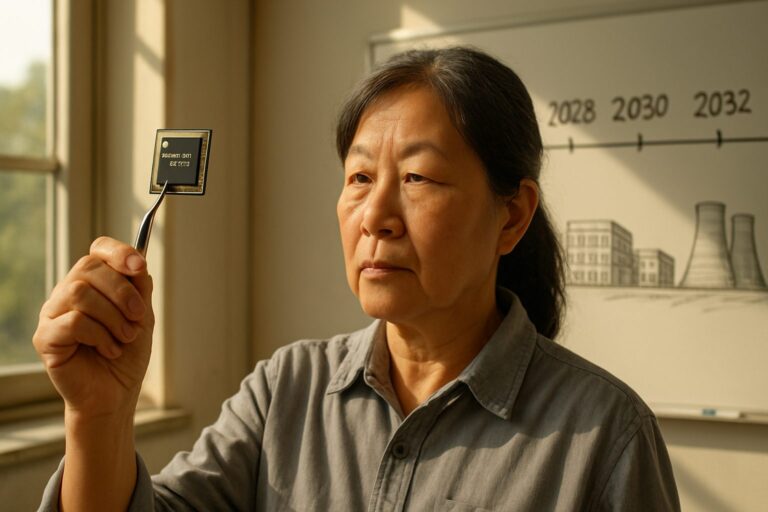
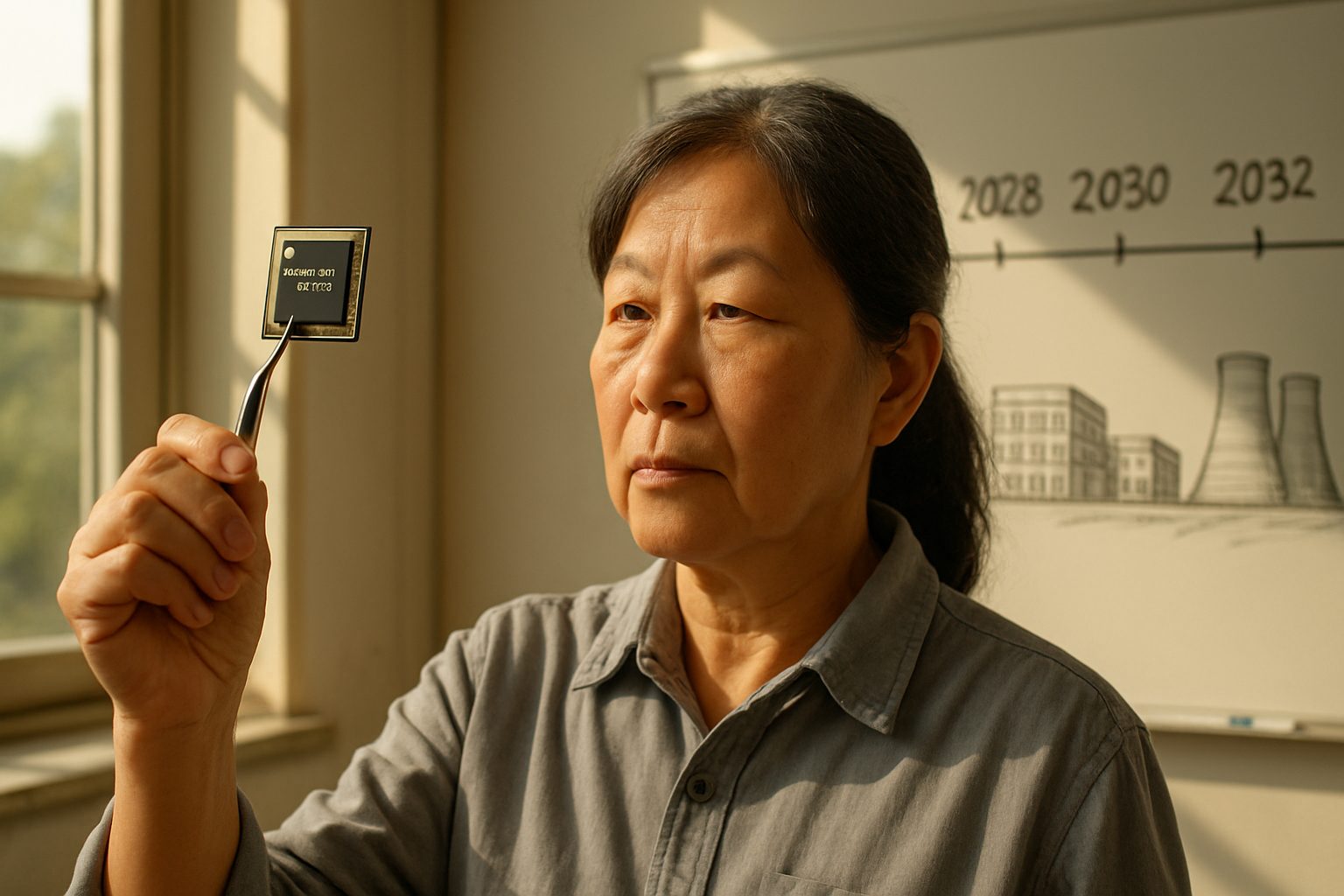
Alibaba’s rollout of the Zhenwu V900—developed through its T-Head semiconductor subsidiary—anchors the expansion strategy in domestic silicon. The V900 delivers 3x the performance of its M890 predecessor with 216GB memory and 1200 GB/s inter-chip bandwidth, supporting clustering up to 500,000 units per system.
The chip specification emphasizes flexibility: native FP32 through FP4 precision support, optimized tensor cores, and support for “cutting-edge AI models and AI application workloads.” This breadth prevents lock-in to single use cases—critical when demand patterns remain volatile.
The strategic calculus is clear. Rather than depend on Nvidia or AMD allocations subject to U.S. export controls, Alibaba manufactures its own bottleneck. This insulates growth from geopolitical friction while establishing T-Head as a viable alternative for Chinese enterprises facing similar supply constraints.
CEO Wu’s “Machine Thinking” Vision: Betting on Decade-Long Adoption
Alibaba CEO Eddie Wu framed the infrastructure bet as a multi-decade play. His analogy compares current AI applications to early electric light—functionally useful but economically marginal until cascading innovation drives ubiquity. He invoked steam engines: once engines proliferated to power 99.9% of physical work, the industrial era accelerated.
Wu’s claim that AI will eventually drive 99.9% of cognition—enabled by millions of domain-specific agents solving subtasks—justifies long-term capacity commitment. The Mars starship example dramatizes the vision: massive parallel agent systems executing intent-driven orchestration at trillion-parameter scales.
This framing matters operationally. It positions the 20GW buildout not as speculative excess but as infrastructure for an assumed baseline demand floor. If Wu’s vision materializes even partially, Alibaba avoids undersupply. If demand plateaus below projections, the phased six-year timeline provides escape hatches that aggressive competitors lack.
Market Context: China’s AI Infrastructure Divergence
Alibaba’s announcement reflects deepening bifurcation in global AI infrastructure. Chinese operators face three constraints absent in Western peers: U.S. export controls on advanced GPUs, domestic demand concentrated in lower-precision inference workloads, and state oversight of capacity expansion. Vertical integration addresses all three.
The V900’s emphasis on low-precision arithmetic (down to FP4) signals optimization for production inference rather than frontier model training. This acknowledges reality: most Chinese AI revenue derives from LLM deployment in customer support, content moderation, and logistics, not training billion-parameter models from scratch.
Investing in domestic silicon simultaneously demonstrates technological autonomy to regulators (reducing political risk) and builds supplier relationships with enterprises locked into the Chinese ecosystem. For Alibaba’s cloud division, the move converts a supply vulnerability into a competitive moat.
Background: Key Players and Recent Context
Alibaba Cloud and T-Head Semiconductor
Alibaba Cloud operates the infrastructure division of the Alibaba Group conglomerate, competing with Tencent Cloud and ByteDance’s infrastructure for Chinese market share. T-Head, its semiconductor subsidiary, launched the Zhenwu line in 2024 as an answer to GPU scarcity and export restrictions. The V900 marks its second-generation offering.
The Global Datacenter Expansion Context
Cushman and Wakefield’s September 2026 analysis identified 37.7GW of datacenters under construction across the U.S., driven by AI demand assumptions and hyperscaler capital availability. OpenAI’s Stargate partnership (backed by SoftBank and others) targets 10GW completion by 2029 using Broadcom accelerators. Meta simultaneously declared a 5GW single-campus project. Amazon reported 3.8GW capacity additions in 2025 alone.
Geopolitical and Technology Constraints
U.S. export controls introduced in October 2022 and tightened in 2023-2024 restrict advanced GPU sales to China, forcing operators like Alibaba toward indigenous solutions. Simultaneously, Western operators face increasing power and water constraints (California recently tightened datacenter regulations), while China offers lower-cost power in certain regions.
What Operators and Investors Should Monitor
- V900 deployment velocity: Watch for public announcements of production deployments. A 500,000-unit cluster would represent ~$10B+ capex and signal genuine demand.
- Geopolitical risk premium: Any U.S. moves to restrict Chinese semiconductor exports or datacenter operations would restructure Alibaba’s competitive position overnight.
- Demand elasticity: If Alibaba expands to 20GW without filling capacity, the broader 37GW-in-construction figure may reflect speculative overbuilding rather than genuine workload growth.
- T-Head customer diversification: The V900’s value depends on adoption beyond Alibaba. Enterprise sales to Tencent competitors or state-owned operators would validate the chip’s market position.
The six-year timeline provides clarity Alibaba’s Western competitors lack. Whether this represents strategic patience or capital constraint will become evident within 18-24 months.
About the Author