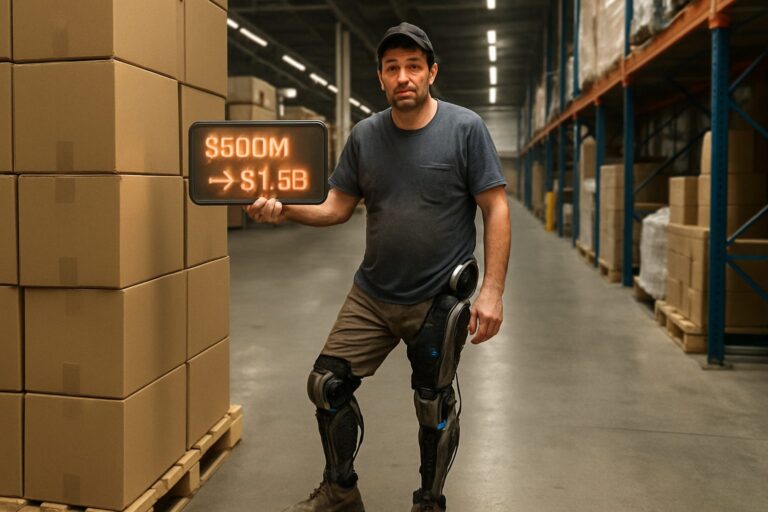
Vention announced on July 15, 2026, that its MachineMotion 2 platform has reached 1,000 active robotic cells deployed across small and mid-sized manufacturers in North America, signaling a structural shift toward cloud-orchestrated, modular systems that reduce time-to-productivity. The milestone validates that cloud-connected robotic platforms can achieve meaningful scale without requiring dedicated robotics teams.
What Changed: The MachineMotion 2 Architecture?
MachineMotion 2 introduced a software-centric control stack that abstracts hardware complexity, enabling non-roboticists to configure and reprogram cells via browser-based interfaces. The platform manages motion, sensing, and task orchestration from the cloud, eliminating the need for on-site PLC programming expertise.
This architecture directly addresses the SME labor bottleneck. Traditional robotic deployments demand scarce mechanical and controls engineers; MachineMotion 2 shifts that burden to Vention’s platform, reducing customer dependency on specialist hires.
How Does the Hardware-as-Code Model Enable Rapid Deployment?
The 1,000-cell benchmark reflects adoption of a hardware-as-code philosophy. Customers specify robotic configurations through the platform; Vention manages compatibility and orchestration. This standardization enables rapid cell replication across facilities without custom engineering per site.
What Is the Competitive Landscape for Cloud Robotics?
The robotics industry has fragmented between hardware vendors (ABB, FANUC, Universal Robots) and independent software-first platforms (Vention, Intrinsic, Formant). Vention’s 1,000-cell milestone suggests SMEs now view cloud-native orchestration as table-stakes rather than differentiation.
Investor signals have backed this trend. Vention raised $85 million in Series B funding in 2024, positioning it against traditional integrators who lack platform leverage. The 1,000-cell milestone validates that positioning.
How Does MachineMotion 2 Integrate with Existing Equipment?
A critical factor in adoption: MachineMotion 2 functions as a software layer atop legacy equipment. SMEs can add robotic cells without replacing existing machinery, reducing capex friction and enabling phased automation rollouts.
What Are the Material Implications of the 1,000-Cell Milestone?
The 1,000-cell milestone carries three material implications. First, platform maturity is now proven; customers can expect stable uptime and regular feature cadence. Second, ecosystem effects are emerging—third-party integrators and hardware vendors are building MachineMotion 2 connectors, reducing lock-in risk. Third, pricing precedent is being set; competitive pressure should accelerate cost normalization across cloud robotics platforms.
What Is the Next Inflection Point for Cloud Robotics?
The next inflection point will be predictive analytics integration. Cloud platforms accumulate motion telemetry across thousands of cells; Vention and competitors will weaponize that data for anomaly detection and prescriptive maintenance. That layer will further compress downtime and amplify the economic case for cloud-connected cells.
For SME buyers evaluating factory automation, the 1,000-cell benchmark signals that cloud robotics platforms have transitioned from early adoption to mainstream deployment. Differentiation will shift from platform availability to specialized vertical stacks and integration speed.
About the Author