TL;DR:
* A New Record: The Artemis II crew has officially traveled 252,756 miles from Earth, breaking the all-time record for human distance from our home planet set during the Apollo era.
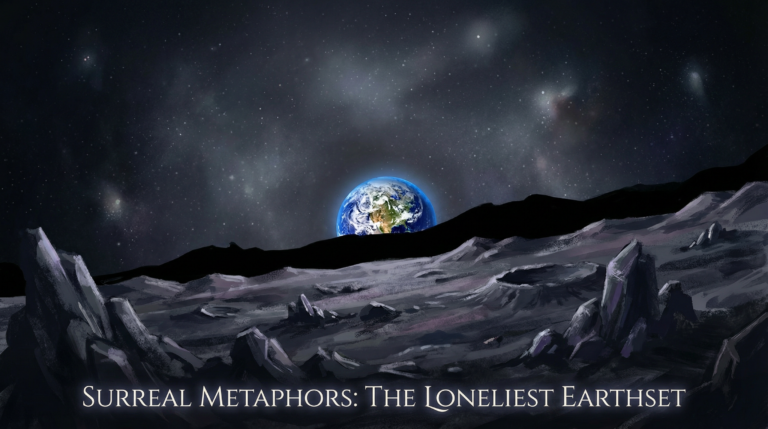
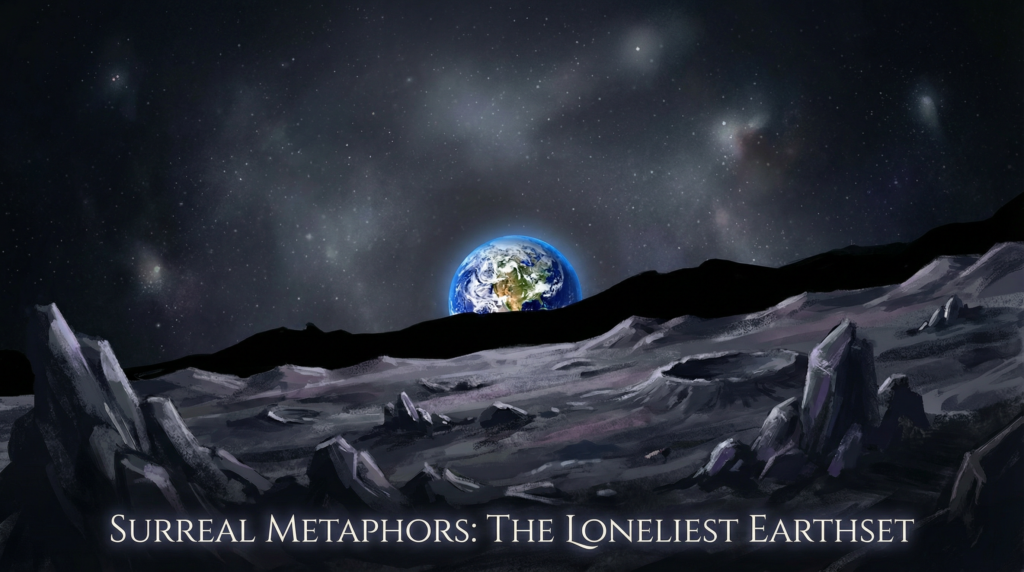
* The Earthset Moment: On April 6, 2026, the four-person crew witnessed a stunning “Earthset” behind the Moon’s far side, the first time human eyes have seen the planet vanish behind the lunar horizon since 1972.
* The Deep Space Burn: NASA has confirmed a successful trajectory correction maneuver (the “Deep Space Burn”) to ensure Orion is perfectly positioned for its return journey, marking the mission’s transition from exploration to homecoming.
As the Orion spacecraft swung around the far side of the Moon this week, the four astronauts of Artemis II experienced something no human has felt in over half a century: the total loss of contact with Earth. In that silent shadow, they witnessed an “Earthset”—the sight of our blue marble slowly dipping below the jagged, ancient lunar horizon. It was a moment of profound cosmic isolation that serves as a stark reminder of humanity’s fragility. While the mission has been a triumph of engineering, the image of a tiny, distant Earth serves as a powerful metaphor for the “Loneliest Earthset,” a transition point where we are no longer just visiting space, but beginning to inhabit it.
The mission has also rewritten the record books. By reaching a maximum distance of 252,756 miles from Earth, the Artemis II crew has pushed the boundaries of human travel further than ever before. This isn’t just a numerical milestone; it is a psychological one. We are now operating in a regime where the “light-speed delay” in communication becomes a tangible barrier, and the spacecraft must rely on its own autonomous systems for survival. The successful “Deep Space Burn” executed on April 7 was a critical test of this autonomy, ensuring that Orion could navigate the complex gravitational dance between the Earth and the Moon with pinpoint precision.
Looking ahead, the success of Artemis II clears the path for Artemis III and the eventual return of humans to the lunar surface. But more importantly, it has reignited the global imagination. The high-definition footage of the Moon’s far side and the Earthset has been beamed back to a world that is more connected, yet more divided, than ever. In the cold vacuum of deep space, the Artemis II crew has found a perspective that is desperately needed on the ground: the realization that from a quarter-million miles away, our borders and conflicts are invisible, replaced by the singular, glowing beauty of a shared home.
Background: NASA’s Artemis Program and the Orion Spacecraft
The Artemis program is NASA’s ambitious multi-national effort to return humans to the Moon and establish a sustainable presence there by the end of the decade. Unlike the Apollo missions, which were “flags and footprints” expeditions, Artemis is designed to build the infrastructure for long-term lunar exploration, including the Gateway space station and lunar base camps. Artemis II is the first crewed mission of the program, testing the life-support systems and flight software of the Orion spacecraft in the deep space environment.
The Orion spacecraft itself is a marvel of modern aerospace engineering. Built by Lockheed Martin in collaboration with the European Space Agency (ESA), it features a robust heat shield capable of withstanding the 5,000-degree Fahrenheit temperatures of re-entry from lunar velocities. The crew—Commander Reid Wiseman, Pilot Victor Glover, and Mission Specialists Christina Koch and Jeremy Hansen—represents a diverse coalition of talent and experience. Their journey is the culmination of decades of research and a multibillion-dollar investment in the future of human spaceflight, serving as the bridge to Mars and beyond.