Tesla’s Cybercab Deployment Triggers Federal Safety Investigation
TL;DR: NHTSA launched an Audit Query into Tesla’s Cybercab just hours after deployment began, questioning whether the steering wheel-free vehicle complies with existing federal safety standards. Tesla faces potential penalties and operational restrictions if it failed to follow exemption processes other robotaxi firms were required to complete.
Regulatory Clash: Tesla Bypasses Exemption Process
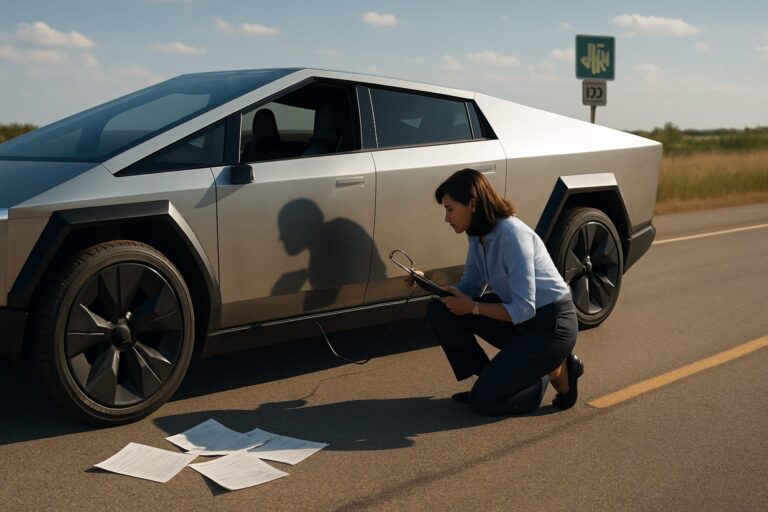
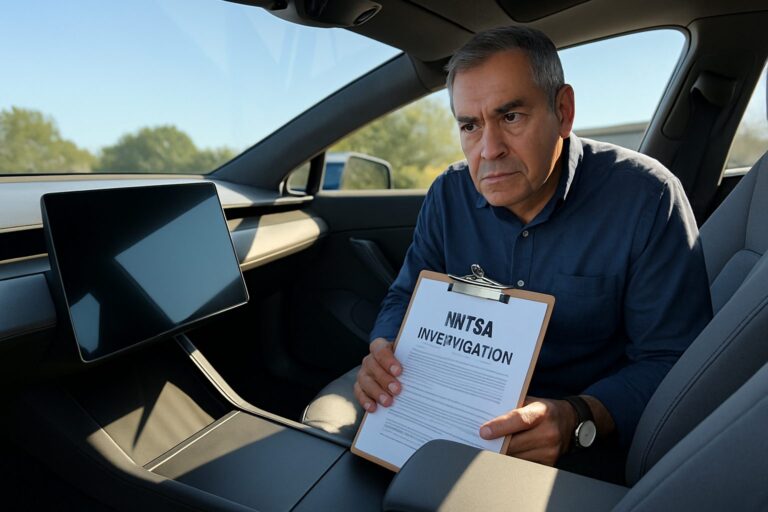
Tesla’s Cybercab deployment triggered immediate federal scrutiny when the National Highway Traffic Safety Administration (NHTSA) opened an investigation into whether the vehicle meets current safety standards. The two-seater lacks steering wheels, brake pedals, and traditional controls—components federal regulations still mandate.
The timing is deliberate and pointed. NHTSA established clear precedent this summer by requiring Amazon subsidiary Zoox to obtain an exemption before operating its similarly configured robotaxi, capped at 2,500 vehicles annually. Tesla rejected that pathway, asserting its vehicles already comply with all existing standards.
This discrepancy signals regulatory frustration. Ann Carlson, former NHTSA acting administrator now at UCLA, called Tesla’s approach “gobsmacking”—an open defiance of the exemption framework the agency explicitly communicated through the Zoox case.
Investment Risk: Enforcement Powers and Precedent
NHTSA’s Audit Query will examine Tesla’s compliance data and engineering justification. The agency retains significant enforcement leverage. In 2023, Volvo Group North America paid $130 million in penalties following a recall process investigation and accepted three years of third-party oversight.
Potential outcomes range from forced vehicle modifications to civil penalties to operational suspension. Tesla currently operates 45 Cybercabs in Texas with plans to deploy millions annually—making regulatory resolution critical to scaling the robotaxi business model.
Background: The Robotaxi Regulatory Landscape
Tesla’s Position Shift: CEO Elon Musk repositioned Tesla as a robotics and autonomous vehicle company rather than a traditional automaker. The Cybercab represents this strategic pivot, designed for fleet deployment through Tesla’s Robotaxi ride-hail network operating in Texas and Florida.
Zoox Precedent: Amazon’s Zoox subsidiary successfully navigated NHTSA’s exemption process in summer 2026, securing approval for 2,500 vehicles with manual override controls optional. This established the regulatory expectation for novel vehicle designs lacking standard safety components.
NHTSA Modernization Efforts: The agency is updating eight federal rules to accommodate autonomous vehicles, including removing requirements for steering wheels, brake pedals, windshield wipers, and rearview mirrors. However, these updates remain pending—existing standards currently govern all deployments.
Self-Certification Model: Contrary to common perception, NHTSA doesn’t pre-approve vehicles. Manufacturers self-certify compliance, then NHTSA conducts adversarial audits to verify claims. Tesla’s gambit assumes its self-certification will withstand federal scrutiny.
Operational Implications for Autonomous Vehicle Deployment
This investigation establishes whether regulatory arbitrage is possible in autonomous vehicle deployment. Tesla bet it could avoid the exemption process; if NHTSA forces compliance, it sets expectations for all subsequent novel vehicle architectures.
The outcome will determine deployment velocity across the industry. Competitor confidence in launching non-traditional designs depends on whether Tesla faces meaningful consequences or wins its regulatory challenge.