TL;DR:
- Nvidia posted a record $81.6 billion in Q1 2026 revenue, driven by surging demand for AI infrastructure in the U.S. and Europe.
- CEO Jensen Huang confirmed Nvidia has “largely conceded” the massive Chinese AI chip market to domestic rival Huawei.
- The admission comes as Nvidia’s H200 chip, despite U.S. export approval, remains stalled without authorization from Beijing.
- Hours before Nvidia’s earnings call, Alibaba unveiled its Zhenwu M890 AI chip, claiming triple the performance of its predecessor.
- The M890, built by Alibaba’s T-Head unit, is already in scaled mass production with over 560,000 units shipped to 400 customers.
Nvidia Concedes China as Revenue Hits Record Highs
Nvidia delivered another blockbuster quarter, posting a record $81.6 billion in revenue for Q1 2026. The massive haul underscores the relentless global demand for AI infrastructure, with hyperscalers and system makers continuing to buy every GPU the company can produce. Yet beneath the record-breaking numbers, CEO Jensen Huang acknowledged a fundamental shift in the global semiconductor landscape: Nvidia has effectively lost China.
Speaking to investors and the media, Huang stated that the company has “largely conceded” China’s advanced artificial intelligence chip market to Huawei. The U.S. chipmaker has been squeezed by Washington’s export restrictions, which forced it to design less capable processors for Chinese buyers. Even when the U.S. government approved the export of the more advanced H200 chip to select Chinese companies, Beijing stalled the imports, pushing domestic firms to buy local.
The geopolitical standoff has transformed what was once a crucial market for Nvidia—historically accounting for a fifth of its data center sales—into a void. Huang’s admission marks the clearest signal yet that the decoupling of the U.S. and Chinese AI hardware ecosystems is no longer a future risk, but a present reality.
Alibaba’s Zhenwu M890 Fills the Void
Just hours before Nvidia’s earnings call, Alibaba seized the moment to unveil its own high-end AI accelerator. The Zhenwu M890, developed by Alibaba’s semiconductor design subsidiary T-Head, delivers three times the performance of its predecessor. Featuring 144GB of HBM memory and an inter-chip bandwidth of 800GB per second, the M890 is purpose-built to handle massive concurrent inference and large-model training workloads.
Alibaba is not merely announcing vaporware; the company confirmed the M890 is already in scaled mass production. T-Head reported cumulative shipments of 560,000 units across the Zhenwu series, serving over 400 enterprise customers in 20 industries, including major players like China Telecom and FAW Group. This deployment scale provides a reliable “Plan B” for Chinese AI companies insulated from the fluctuations of U.S. export controls.
The timing of the M890 launch is extremely precise. With Nvidia’s H200 locked out of the market by Beijing’s unofficial embargo, Alibaba’s new silicon offers domestic hyperscalers a viable alternative for building agentic AI systems without relying on Western hardware.
The Great AI Hardware Decoupling
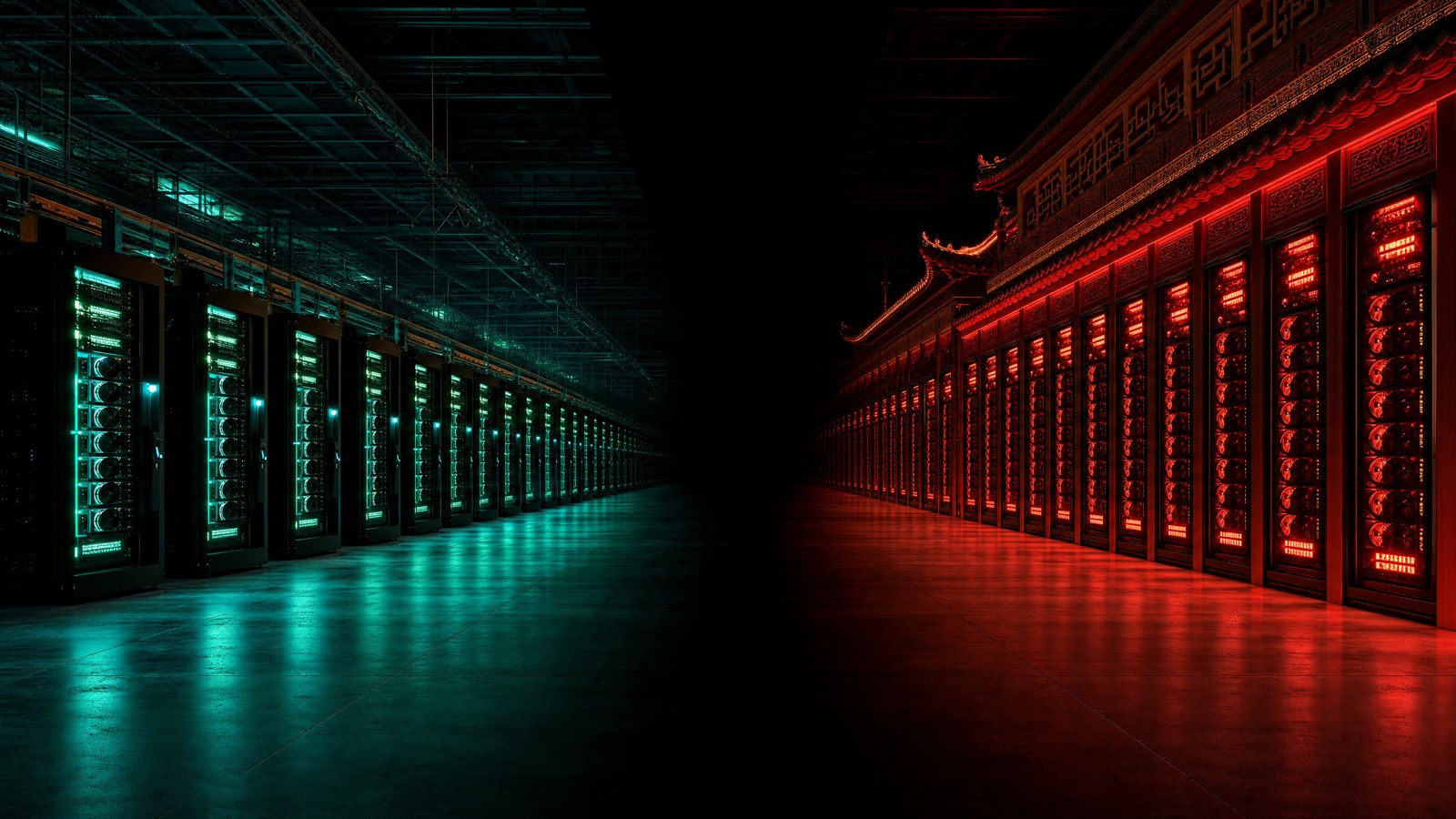
The parallel announcements from Nvidia and Alibaba illustrate the fracturing of the global AI supply chain. While Nvidia dominates the West with its Blackwell and upcoming Vera CPU architectures—targeting a new $200 billion market for agentic AI—China is rapidly building a self-sufficient ecosystem. The forced reliance on domestic chips is accelerating the development timelines for companies like Alibaba, Huawei, and Baidu.
Alibaba also revealed a multi-year roadmap, promising the Zhenwu V900 in 2027 and the J900 in 2028, each expected to deliver significant performance leaps. By cutting off access to Nvidia’s best hardware, U.S. policy has inadvertently subsidized the creation of capable Chinese competitors that are now securing the massive domestic contracts Nvidia has left behind.
This dynamic ensures that the next generation of artificial intelligence will be developed on two entirely separate hardware stacks, cementing a technological Cold War with profound implications for global standards and software compatibility.
Background: The Geopolitics of Silicon
The current schism in the AI chip market is the culmination of years of escalating trade restrictions. Beginning in 2022, the U.S. Commerce Department implemented sweeping export controls designed to choke off China’s access to the advanced semiconductors necessary for training cutting-edge AI models. The policy aimed to maintain a decisive U.S. technological advantage by preventing companies like Nvidia and AMD from selling their top-tier GPUs to Chinese entities.
In response to these curbs, Nvidia developed throttled versions of its chips, such as the H20, specifically engineered to comply with U.S. limits while still serving the Chinese market. However, Beijing recognized the strategic vulnerability of relying on intentionally degraded foreign hardware. The Chinese government launched aggressive initiatives to bolster domestic semiconductor capabilities, pouring billions into state-backed funds and directing local tech giants to prioritize homegrown silicon.
The standoff intensified when the U.S. unexpectedly granted licenses for several Chinese firms to purchase Nvidia’s more capable H200 chips. Rather than embracing the reprieve, Beijing effectively blocked the imports, signaling a permanent shift away from Western reliance. This environment has forced Chinese hyperscalers like Alibaba, Tencent, and Baidu to rapidly mature their internal chip design units, transforming former Nvidia customers into formidable hardware competitors.
The Data
| Key Fact | Details | Source |
|---|---|---|
| Nvidia Q1 2026 Revenue | $81.6 billion, a new record driven by global AI infrastructure demand. | TechCrunch |
| China Market Concession | CEO Jensen Huang stated Nvidia has “largely conceded” the market to Huawei. | CNBC |
| Zhenwu M890 Specs | 144GB HBM memory, 800GB/s inter-chip bandwidth, 3x performance increase. | TrendForce |
| T-Head Shipments | 560,000 Zhenwu units shipped to over 400 enterprise customers. | FMT |
About the Author