Kog’s GPU Inference Engine: Software Optimization Threatens Purpose-Built Chips
TL;DR
French startup Kog claims 30x faster LLM inference on standard datacenter GPUs through software optimization, directly challenging Cerebras’s recent IPO bet on purpose-built silicon. With 200 business leads and a focus on expanding from small models to large language models, Kog represents a meaningful threat to hardware-first inference strategies.
The Operational Implication
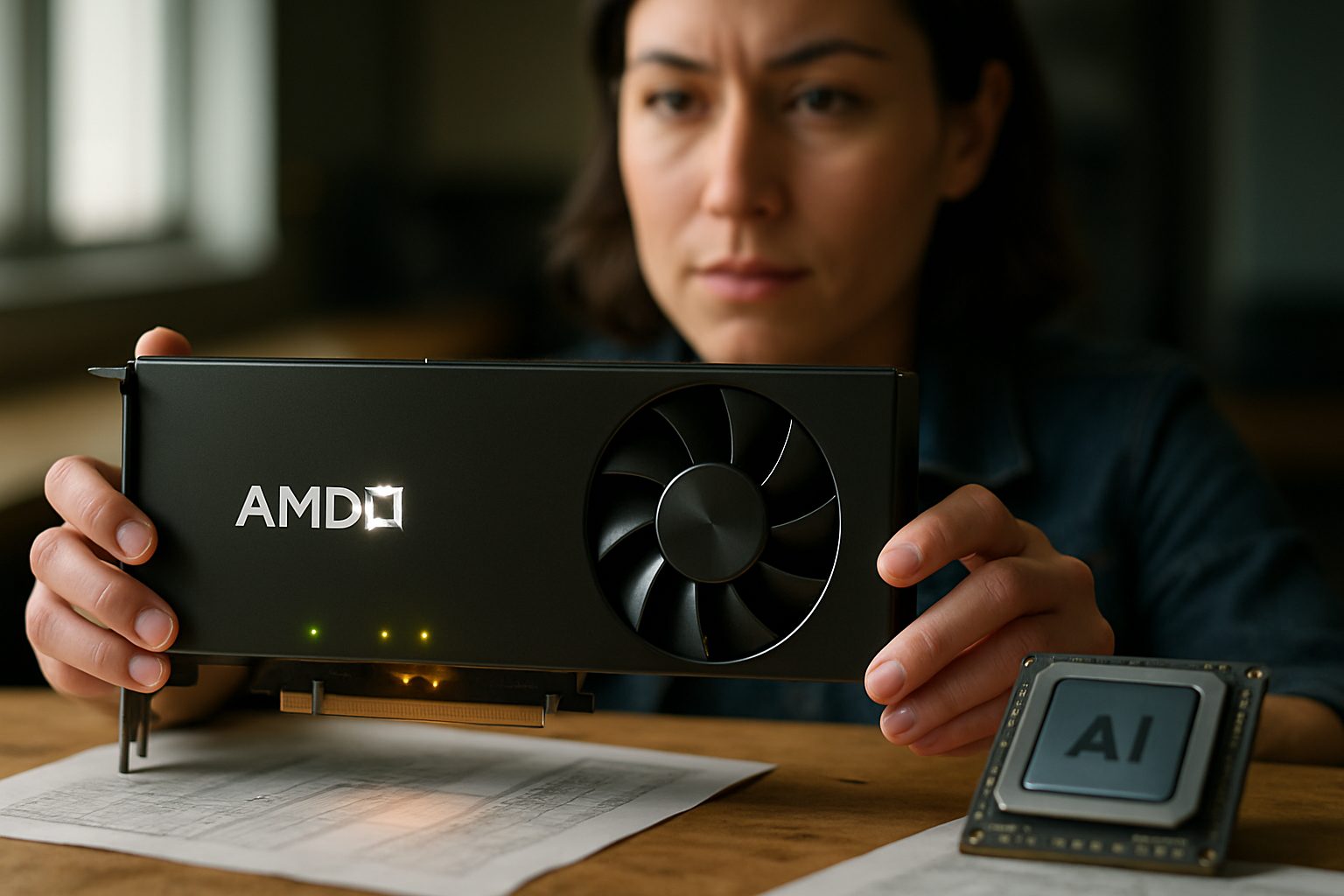
Enterprises sitting on AMD MI300X and Nvidia H200 inventory face a crucial decision: invest in new inference hardware or wait for software optimization gains. Kog’s approach—unlocking existing GPU capacity through algorithmic efficiency—could dramatically alter datacenter purchasing decisions and compress margins for chip-focused competitors.
The timing matters. With inference speed becoming a critical bottleneck, enterprises are desperate for cost reduction. Kog’s Inference Engine (KIE) targets customers frustrated by Claude’s multi-hour wait times, even as Anthropic charges premium rates for Fast Mode.
What Kog Built and Demonstrated
Kog’s tech preview achieved 3,000 tokens per second on standard datacenter GPUs using a 2-billion-parameter model (the now open-sourced Laneformer 2B). The demo proved “extremely fast single-request decoding is possible on the standard datacenter GPUs enterprises already own.”
CEO Gaël Delalleau acknowledges the gap: scaling from 2B parameter models to full-scale LLMs represents “a huge leap.” His confidence stems from newer GPU architectures featuring substantially higher memory bandwidth—a resource he argues remains fundamentally underutilized.
Market Timing and Customer Demand
The startup attracted 200 tangible business leads following its May Hacker News debut. Initial traction centers on software engineering workflows, where Claude Code users routinely wait hours for results. Delalleau noted design partners building game and app generators also see revenue upside from faster inference.
Kog’s early market intelligence revealed prospective customers won’t fine-tune small models. This forced a strategic pivot: “We’ve been fully focused on accelerating the development of larger models to meet the demand we’ve seen.”
Competitive Context: Software vs. Hardware Approaches
Kog enters a crowded optimization space. French competitor ZML released hardware-agnostic software bypassing Nvidia’s CUDA to support inference across competing chips. Delalleau positions Kog as operating at a deeper technical level, comparable to Stanford’s Hazy Research but with commercial intent.
The broader context: Cerebras received market enthusiasm for its purpose-built inference chips during its May IPO. Kog’s bet directly contradicts that narrative—arguing software engineering on conventional hardware will outpace bespoke silicon investments.
Founder Background and Technical Approach
Delalleau’s path to Kog diverges from typical startup trajectories. A solid-state physics graduate from École Polytechnique, he spent years in offensive cybersecurity before founding Stribe (a TechCrunch50 2009 alum). That combination—physics rigor plus reverse-engineering expertise—shapes Kog’s ethos.
As a four-time DEFCON CTF finalist, Delalleau brings “deep assembly language and binary code” thinking to GPU architecture. His team operates under a physics-first mindset: “understanding the laws of the GPU in order to make the most of them.” This explains Kog’s willingness to operate at unusually low abstraction levels.
Seed Funding and Execution Trajectory
Varsity VC co-led Kog’s seed round, with Kamel Zeroual (Delalleau’s former Stribe co-founder turned investor) playing a key role. The lean four-person team faces an aggressive roadmap: proving 30x inference gains on production-scale models within a reasonable timeframe.
Success requires solving a non-trivial problem: the scaling challenge from 2B to 70B+ parameter models while maintaining throughput gains. Failure would validate the purpose-built hardware thesis. Success could reshape enterprise inference economics.
Investment Thesis and Risk Factors
Bull case: GPU memory bandwidth improvements outpace algorithmic innovation timelines. Enterprises prefer software-only solutions over capex-intensive hardware transitions. Kog captures significant market share among cost-sensitive inference workloads.
Bear case: Scaling optimization from 2B to 70B+ models introduces fundamental physics constraints. Nvidia and AMD release purpose-optimized inference software, eliminating Kog’s differentiation. Customer acquisition costs exceed LTV in fragmented enterprise markets.
Watch Kog’s ability to demonstrate 30x gains on production-scale LLMs on standard hardware. That milestone determines whether this is algorithmic innovation or a clever demo.
About the Author