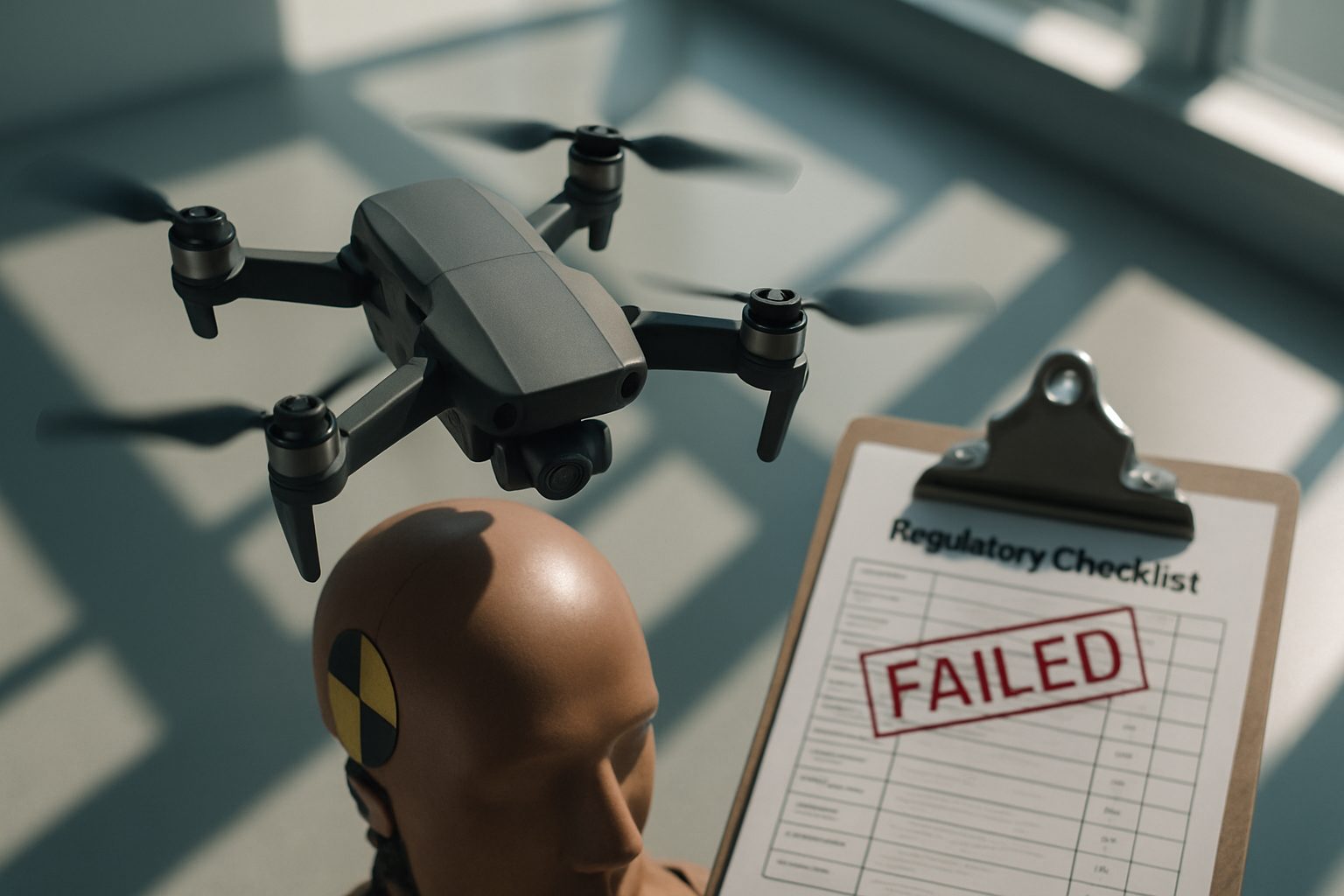
When AI Fails in the Physical World: How Shield AI, Waabi, and GM Are Building for Zero Tolerance
TL;DR: Three leaders in high-stakes AI deployment—Shield AI’s Nathan Michael, Waabi’s Raquel Urtasun, and GM’s Mikell Taylor—will discuss safety validation, regulatory navigation, and trust-building at TechCrunch Disrupt 2026, where the margin for error in autonomous systems is literally zero.
The Operational Stakes: Why AI Validation Separates Unicorns from Failures
An autonomous vehicle crash or aircraft malfunction doesn’t generate a bad review—it generates lawsuits, regulatory clawbacks, and destroyed valuations. The September 2026 Disrupt panel on building AI systems when failure is not an option surfaces an uncomfortable truth for the sector: testing protocols in autonomous systems are the actual competitive moat, not model architecture.
This isn’t abstract—it determines which companies access $1B+ funding rounds and military contracts versus regulatory limbo.
Who’s On Stage and What They’ve Built
Shield AI: From Lab to Combat Drones
Shield AI develops Hivemind, a platform-agnostic autonomy layer designed for unmanned systems. In February 2026, the company was selected as an autonomy provider for the U.S. Air Force’s Collaborative Combat Aircraft drone program—a validation that software handling live military missions can’t fail.
Nathan Michael, Shield AI’s CTO, spent years at Carnegie Mellon’s Robotics Institute directing the Resilient Intelligent Systems Lab. His expertise spans AI, control, perception, and multi-robot coordination—the exact skill set required for systems where assurance must match performance. The company closed Series G at $12.7B post-money valuation with $1.5B in capital, signaling investor confidence in its validation frameworks.
Waabi: Simulation as Validation Theater
Waabi tackles autonomous trucking and robotaxi deployment with a simulator-first approach. CEO Raquel Urtasun brings 25 years in AI and autonomous vehicles, including a tenure as Chief Scientist at Uber ATG and a professorship at University of Toronto. She’s authored over 200 peer-reviewed papers—credibility that matters when regulators evaluate safety claims.
In January 2026, Waabi raised $1B and announced a partnership with Uber for 25,000+ robotaxis. The scale is contingent on validation. Waabi World, the company’s simulator, stress-tests autonomous drivers in virtual environments before real-world deployment. Urtasun has publicly stated that driverless deployment requires full validation first—a discipline that’s rare in the sector.
General Motors: Legacy OEM Embraces Robotics Strategy
Mikell Taylor, Director of Robotics Strategy at General Motors, represents the legacy automaker’s pivot toward autonomous systems integration. GM’s presence signals that established manufacturers are no longer delegating autonomy to startups alone; they’re building internal validation and deployment expertise.
Taylor’s role suggests GM is treating robotics as a core platform play rather than a supplier relationship—a structural shift that has implications for how Detroit approaches software liability and testing standards.
TechCrunch Disrupt 2026: The Stage
TechCrunch Disrupt 2026 hosts the Real World AI Stage, where the three leaders will discuss the conversation under the title “Building AI Systems When Failure Is Not an Option.” The panel explicitly addresses safety culture, testing protocols, regulatory navigation, and trust-building—the unglamorous infrastructure that separates deployable systems from research projects.
What Gets Discussed: The Validation Framework
Testing and Validation in Virtual vs. Physical Domains
Waabi’s simulator approach raises a critical question Urtasun will likely address: How do you prove simulation is representative enough? A virtual environment can be stress-tested with infinite edge cases, but real-world distribution shift is a known unknown. The conversation will likely expose gaps between what engineers can test and what regulators will accept.
Regulatory Arbitrage and Military vs. Commercial Standards
Shield AI operates in military/defense, where failure has kinetic consequences but regulatory frameworks are classified and evolving. Waabi operates in commercial trucking and rideshare, where public safety and liability law set the bar. Michael, Urtasun, and Taylor will address how they navigate regulatory hurdles across different domains—a critical operational question for investors deciding which segments are actually deployable at scale.
Earning Trust: From Engineers to Regulators to Consumers
Building safety culture internally is one problem; convincing external stakeholders—insurance companies, regulators, riders, operators—is another. The panel will likely explore how technical assurance translates to institutional trust, particularly as liability questions remain unresolved.
Why This Panel Matters to the Sector
Validation is now the capital-allocation filter. Companies with credible testing frameworks and regulatory precedent access billion-dollar funding rounds. Those without face venture-scale capital constraints and slow commercialization timelines.
Military and commercial autonomy are on divergent paths. Shield AI’s Air Force contract suggests military autonomy is moving faster than commercial, partly because liability structures are different and performance metrics are clearer. This divergence will likely reshape venture capital allocation over 2026–2027.
Simulation-first approaches are now table stakes. Waabi’s $1B raise and Uber partnership validate that simulation-based validation is no longer a research differentiator—it’s an expected component of deployment readiness. Competitors without mature simulators face competitive pressure.
Legacy OEM engagement signals maturation. GM’s participation indicates that autonomy has moved from startup-only territory into enterprise platform strategy. This suggests M&A and partnership velocity will increase as manufacturers integrate startup-developed autonomy layers into production vehicles.
The Bottom Line
The Disrupt panel exposes the real constraint in autonomous systems deployment: not AI capability, but validation credibility. Investors should treat this conversation as a credibility audit. Companies that can articulate clear testing protocols, regulatory engagement, and third-party assurance mechanisms will likely access the next wave of scale capital. Those that can’t will face increasing pressure to pivot or consolidate.
About the Author