Rivian’s Convergence Play: EVs, Robotics, and Autonomy Signal Manufacturing’s AI Future
TL;DR: Rivian CEO RJ Scaringe is stacking bets across autonomous vehicles (Level 4 by 2028), humanoid robotics ($900M raised), and mass-market EVs ($58K R2) while using his Illinois factory as an AI-robotics integration testbed. This vertical integration approach reveals how legacy manufacturing reinvention demands simultaneous software and hardware breakthroughs.
The Operational Reality: Manufacturing at the AI Inflection Point
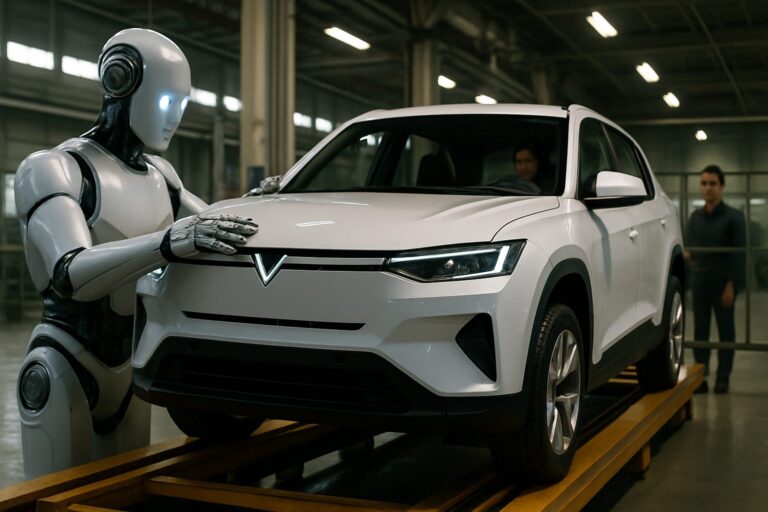
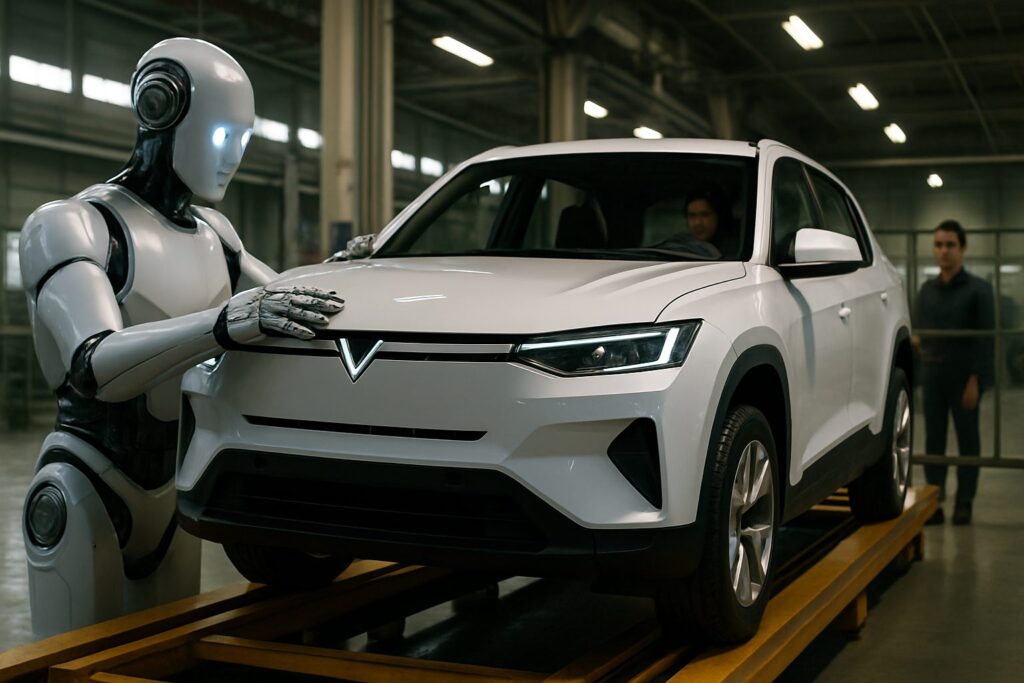
Scaringe’s strategy exposes a critical insight often missed in AI discourse: the next competitive advantage in manufacturing isn’t pure software—it’s orchestrating hardware, autonomy, and labor automation simultaneously. By positioning Rivian’s Normal, Illinois facility as a proving ground for humanoid-robot coexistence on assembly lines, he’s inverting the typical AI company trajectory.
Most AI startups build software first, then chase manufacturing partners. Rivian already owns the factory. This asymmetry matters for execution velocity and unit economics.
The R2 Gamble: Volume Over Margin in EV Wars
The $58,000 R2 SUV isn’t aspirational—it’s survival. Rivian’s pricier R1T and R1S models failed to escape the luxury EV niche as demand softened and Chinese competitors (BYD, NIO) undercut on cost. The R2 targets volume production, a category where manufacturing excellence and labor efficiency directly impact gross margin.
Chinese EV makers have demonstrated that scale-first strategies win in mass markets. Scaringe’s robotics play directly addresses the labor shortage that will constrain R2 production ramps.
Mind Robotics: The Vertical Integration Wildcard
Scaringe’s executive chair role at Mind Robotics—which raised $900M in 2026 alone—isn’t a side venture. It’s infrastructure for Rivian’s supply chain resilience. By owning humanoid robots deployed on assembly lines, Rivian decouples factory throughput from labor market tightness.
This structure also creates optionality: successful robots on Rivian’s line become a licensable product for tier-one suppliers. The precedent is Tesla’s Optimus program, though Scaringe’s approach emphasizes factory integration from day one rather than parallel R&D.
Level 4 Autonomy by 2028: Betting on Regulatory Timing
A 2028 Level 4 autonomy roadmap signals Scaringe believes regulatory pathways will crystallize within 24 months. This is bold given current NHTSA hesitation on SAE Level 4 approval, but it aligns with California’s DMV pilot expansions and federal automated vehicle legislation momentum.
The bet pays off in two ways: first-mover advantage in robo-taxi fleets, and software licensing revenue that offsets automotive margin compression.
Background: The Convergence Thesis at Scale
Rivian is a vertically integrated EV manufacturer founded in 2009, with production facilities in Normal, Illinois. The company went public in November 2021 and has focused on premium electric trucks (R1T) and SUVs (R1S), while scaling toward mass-market models like the R2. Rivian operates a proprietary charging network and has invested heavily in autonomous driving capabilities.
RJ Scaringe, Rivian’s CEO and founder, brings two decades of automotive engineering and startup experience. His dual leadership at Rivian and Mind Robotics reflects a deliberate strategy to bundle hardware manufacturing with AI-driven labor solutions. Mind Robotics, founded separately, has attracted $900M in venture funding and positions humanoid robots as factory-ready products rather than theoretical assets.
TechCrunch Disrupt 2026 runs October 13-15 in San Francisco and hosts 10,000+ founders, investors, and technologists. Scaringe’s stage appearance signals that industrial AI—not just consumer AI—is central to the 2026 tech investment thesis. His session will address how physical-world constraints (supply chains, factory labor, regulatory approval timelines) differ fundamentally from software-first scaling.
The Competitive Landscape has tightened dramatically. Tesla dominates robotaxi sentiment but faces regulatory bottlenecks. Chinese EV makers control cost-tier dominance. Legacy automakers (Ford, GM) struggle with EV profitability. Rivian’s convergence bet—marrying EVs, autonomy, and factory robotics—aims to occupy a defensible position by controlling both supply and demand sides of the manufacturing equation.
Why Disrupt Matters for This Narrative
Scaringe’s Disrupt appearance isn’t promotional—it’s pedagogical. He’ll explain how AI companies misunderstand manufacturing constraints, and why building in the physical world before layering AI differs from software-first scaling. For investors sizing industrial automation opportunities, this context is critical.
The implication: capital will flow toward founders who understand that hardware + software integration is operationally harder than pure software, but defensibly scarce. Scaringe’s simultaneous play across EVs, autonomy, and robotics shows what that looks like at scale.
To hear the strategy directly, register for TechCrunch Disrupt 2026 before the August 22 price increase.