Crusoe’s $3.9B Raise Signals Shift Toward Distributed AI Compute Infrastructure
TL;DR: Crusoe raised $3.9B at a $30.9B valuation to scale both massive data centers and truck-deployable modular “AI factories,” positioning itself as a vertically integrated compute infrastructure player ahead of a likely IPO.
Infrastructure Play: Why $3.9B Matters More Than Valuation
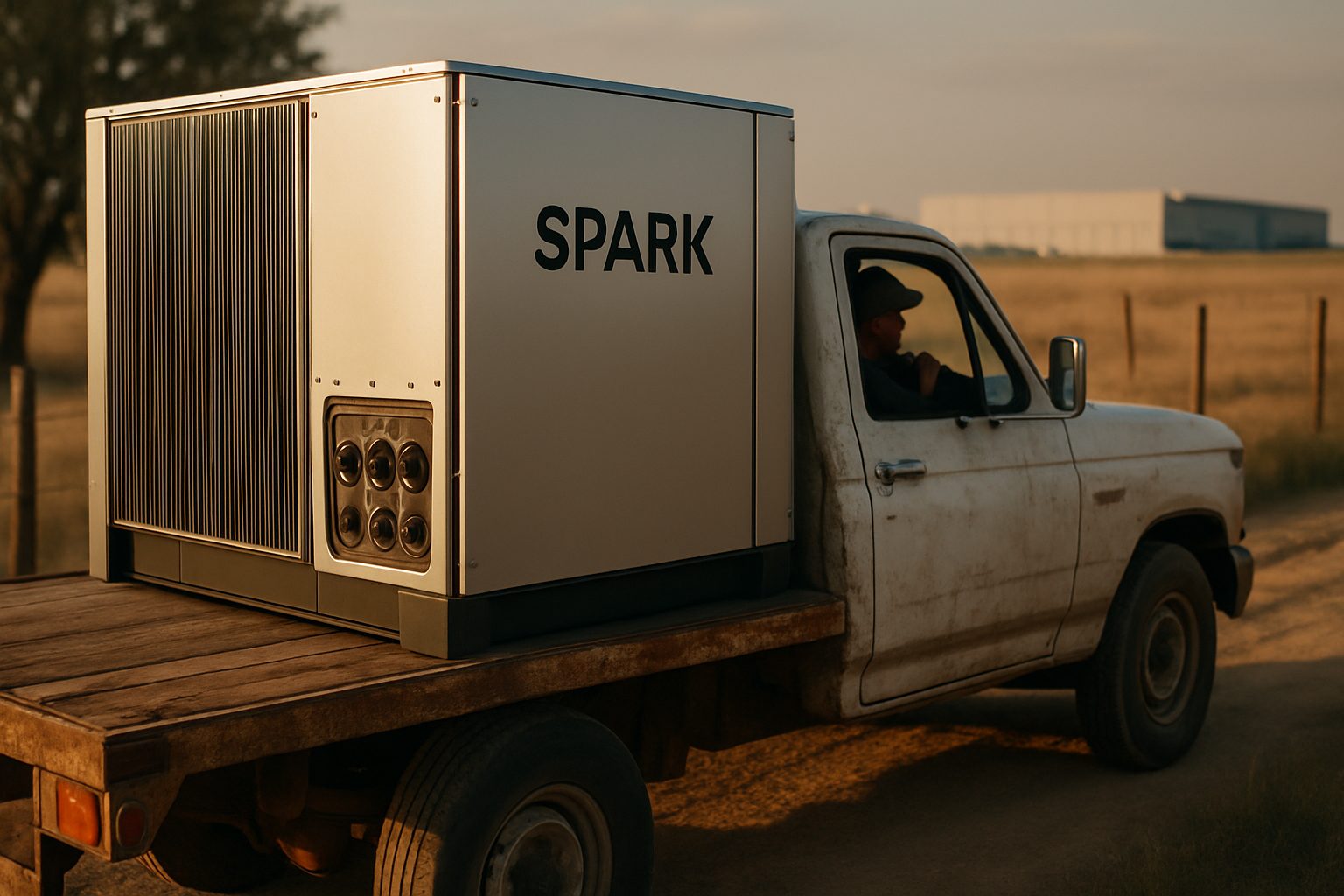
The capital deployment trajectory matters more than the headline figure. Crusoe’s Series F round—co-led by Atreides Management, Mubadala Capital, and Valor Equity Partners—targets two distinct infrastructure strategies simultaneously. The company plans to finance large-scale facilities (like its OpenAI-anchored Abilene, Texas site) while manufacturing modular data centers called “Spark” units that ship by truck.
This dual approach addresses the core constraint suffocating AI infrastructure growth: site availability and community resistance. Modular units bypass zoning delays and NIMBY backlash that plague traditional mega-facility development. For operators, this means faster compute provisioning without the 18-36 month construction cycles that currently plague the sector.
The Vertical Integration Thesis
Crusoe’s three-revenue-stream model—data center leasing, GPU rental, and inference compute sales—positions it as a horizontal infrastructure layer rather than a pure colocation play. Unlike Digital Realty or Equinix, Crusoe controls the stack from power procurement through token output.
Recent wins underscore this leverage. The $13 billion five-year Jane Street contract supplies both GPUs and inference capacity, not rack space. This stickiness explains why the company moved from $10B valuation (October 2025) to $30.9B in under 12 months—a 209% jump driven by predictable, enterprise-scale revenue.
Background: Crusoe’s Path From Crypto to Core Infrastructure
Crusoe Energy was founded in 2018 as a cryptocurrency mining operation powered by flared natural gas—a business that captured stranded energy sources. When crypto demand normalized and AI compute exploded, the company pivoted its thermal and electrical infrastructure toward training and inference workloads.
The company’s customer roster now includes Meta, Microsoft, and Oracle alongside trading powerhouses like Jane Street. This customer diversity—spanning cloud providers, enterprise AI teams, and quantitative finance—demonstrates that Crusoe solved a genuine capacity bottleneck rather than serving a single buyer.
Board additions reinforce the infrastructure-as-critical-asset narrative. New directors include Cloudflare CFO Thomas Seifert (cloud operations expertise), Bill Stein from Primary Digital Infrastructure (institutional capital deployment), and JB Straubel, Redwood Materials CEO and Tesla board member. Straubel’s presence is particularly significant: he personally invested in Crusoe in 2021 and Crusoe became Redwood’s first energy storage customer—a signal that energy management is now integral to data center economics.
The company previously raised $1.38 billion at a $10 billion valuation in October 2025, meaning this round represents aggressive growth capital deployment rather than a survival raise.
Market Timing: IPO Signals and Competitive Pressure
According to TechCrunch reporting, Crusoe met with Goldman Sachs and Morgan Stanley last month to discuss IPO timelines. The Series F round at a $30.9B valuation likely provides the revenue scale and customer concentration needed for public market investors.
The infrastructure space is consolidating rapidly. CoreWeave’s recent $200M+ funding rounds and Lambda Labs’ acquisition activity signal that compute infrastructure is transitioning from startup to critical utility. Crusoe’s IPO timing could establish the comp multiples for the entire sector.
Operational Implications for Operators
For AI teams deploying training or inference workloads, Crusoe’s modular Spark units reduce geographic constraints. Rather than waiting for a mega-facility to reach capex thresholds, compute can be deployed near power sources or existing facilities in weeks rather than years.
For investors, the round confirms that infrastructure-as-differentiator beats pure commodity colocation. Crusoe’s ability to command 2-3x higher multiples than traditional data center REITs stems from vertical integration and predictable, AI-native revenue contracts.
What’s Next
Watch for three developments: (1) IPO filing timeline and valuation expectations, (2) Spark unit deployment velocity and unit economics, and (3) whether the Jane Street contract serves as a template for similar $5B+ enterprise commitments. If modular units achieve sub-12-month deployment cycles at scale, Crusoe will have fundamentally altered AI infrastructure economics.
About the Author