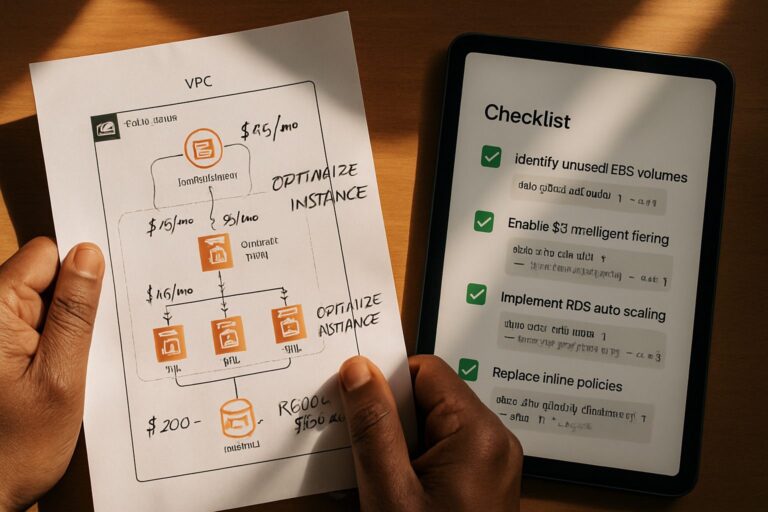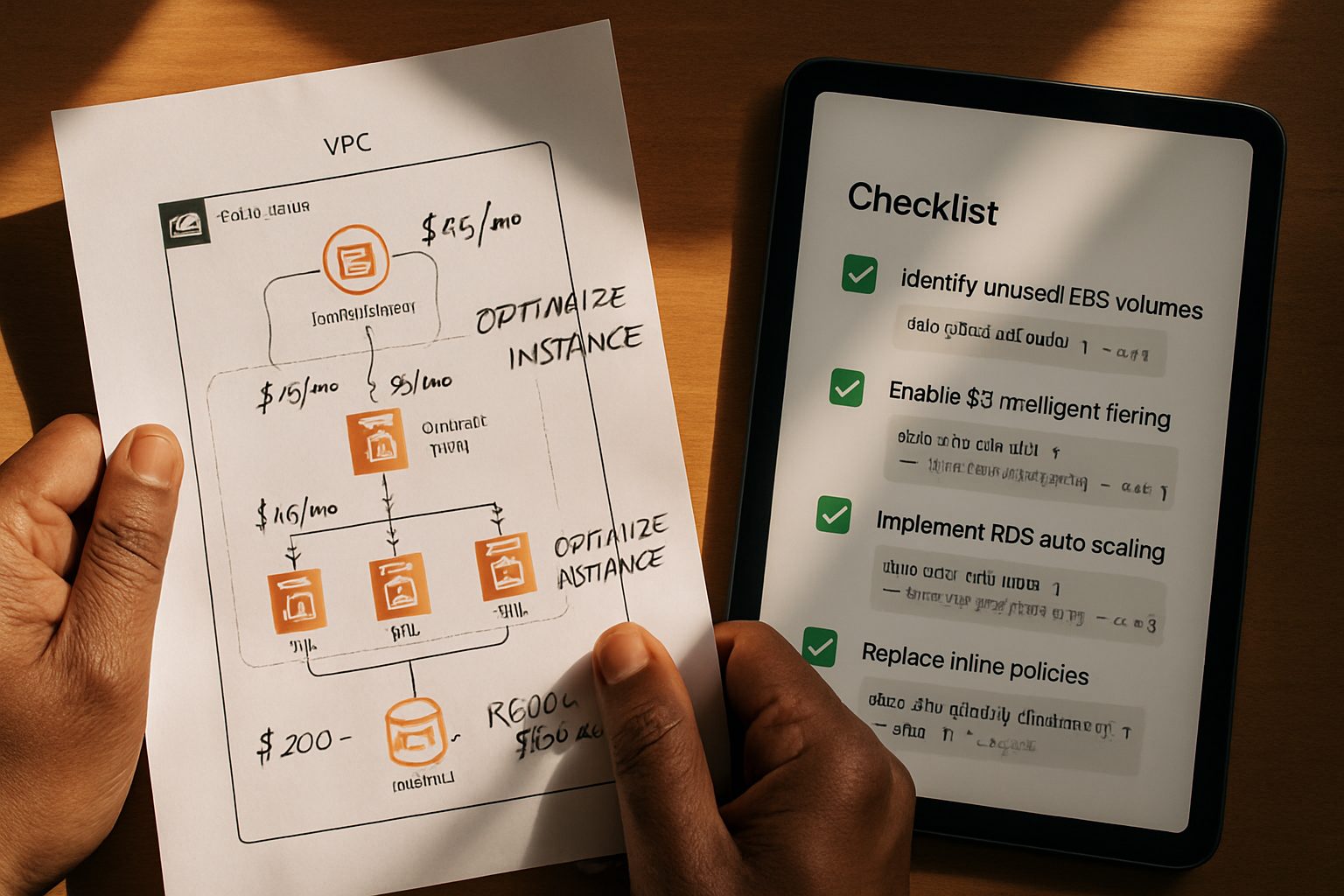
TL;DR: AWS launched the Well-Architected Agent, an AI system that audits cloud environments against 65+ services and recommends cost, security, and performance optimizations with ready-to-implement fixes—reducing dependency on human architects while maintaining manual control.
AWS Automates Cloud Architecture Review with AI Agent
AWS has deployed autonomous architecture recommendation at scale, signaling confidence that enterprises will accept machine-generated infrastructure decisions when properly constrained. The Well-Architected Agent analyzes environments against established best practices, generates cost-impact estimates, and delivers Infrastructure as Code (IaC) remediations—effectively packaging decades of architectural expertise into an agentic workflow.
For cost-conscious operators, this matters: AWS customers often overprovision or misconfigure services, creating waste. An agent that identifies these inefficiencies and quantifies savings removes friction from optimization cycles. Adoption hinges on trust—IT teams must verify recommendations before implementation, but AWS’s phased approach (manual CLI execution → automated rollback) reduces perceived risk.
Background: AWS, Architectural Standards, and AIOps
AWS Well-Architected Framework is Amazon’s operational doctrine, codifying best practices across security, reliability, performance efficiency, cost optimization, and operational excellence. Introduced in 2015, it evolved into a formal review process where AWS-trained reviewers audit customer workloads. The framework now spans 65+ AWS services—a complexity problem that invites automation.
AIOps adoption remains cautious across enterprise IT. Operators distrust black-box recommendations, fearing both technical failures and accountability gaps. Vendors acknowledge this friction: recommendations require human verification initially, with graduated automation only after demonstrable accuracy.
AWS’s market position in cloud enables this move. The company controls both the audit criteria and the remediation tools, eliminating the vendor-agnostic tension competitors face. Customers already pay for AWS support plans; bundling an agent into that service is packaging efficiency, not adding cost.
Operational Design: Constraint and Control
The agent delivers findings across multiple taxonomies: individual resource-level issues with dollar impact, consolidated cross-resource patterns, and architectural redesigns. This layered approach respects that not all recommendations carry equal weight or confidence.
AWS retained manual execution pathways—CLI, console, partner services—ensuring operators can stage, test, and audit changes before production deployment. This design acknowledges legitimate skepticism without forcing binary adoption.
Geographic Rollout and Support Requirements
The agent launches in three US regions (N. Virginia, Ohio, Oregon) but can assess workloads across all AWS commercial regions. Availability is gated behind AWS support plans, limiting initial reach to enterprise and managed service provider customers—the cohorts most likely to iterate on recommendations.
Market Implications: Displacement and Efficiency
This agent directly competes with human architectural review services—both AWS’s own consulting arm and partner ecosystems. AWS is comfortable cannibalizing this revenue stream because optimization recommendations drive service migrations, which increase overall customer spend.
For operators, the calculus is simpler: reduce opex (via cost optimization), improve security posture (via compliance automation), and compress architectural review cycles from weeks to hours. The risk is misaligned recommendations—but AWS’s quantified cost impact and step-by-step remediation lower the penalty for disagreement.
Broader AIOps adoption hinges on this visible win. If the Well-Architected Agent demonstrates reliable recommendations without catastrophic failures, competitors and enterprises will demand similar agents for Kubernetes, networking, and database administration.
Timeline and Limitations
AWS has not announced general availability beyond the three launch regions. Support plan requirement suggests a phased rollout, likely paired with product feedback cycles. Early adopters will drive iteration on recommendation accuracy and false-positive rates.
The agent’s 65-service coverage is comprehensive but not exhaustive—emerging or niche services may receive lower recommendation quality. Long-term success depends on maintaining accuracy as AWS adds services.
Read the full announcement on The Register.
About the Author