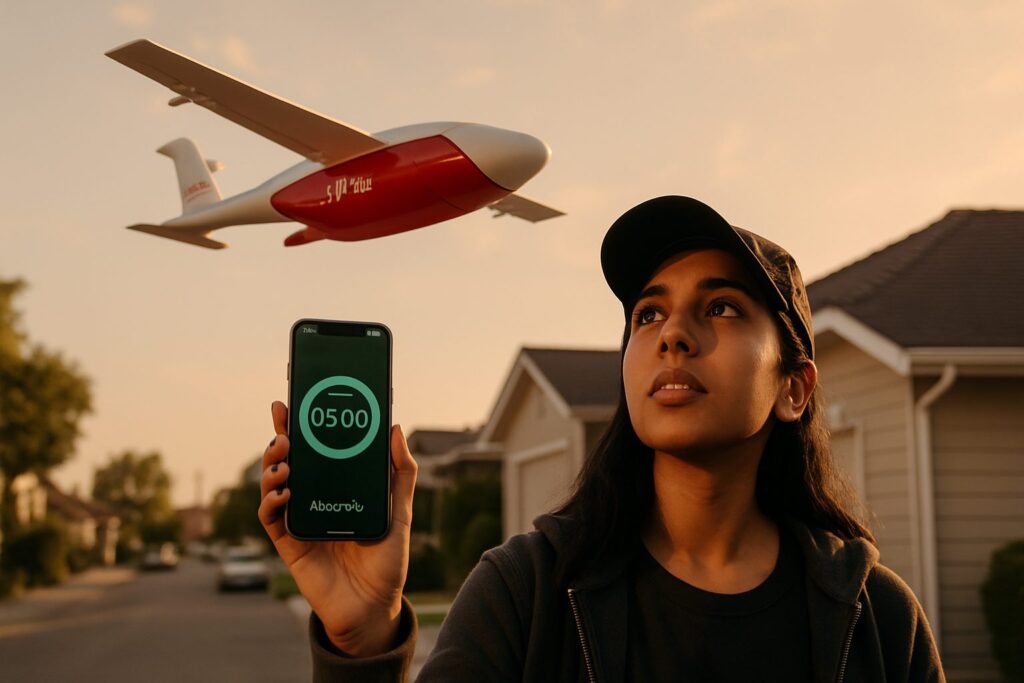
TL;DR: Uber is partnering with Zipline to integrate drone delivery into Uber Eats, targeting one million daily deliveries by 2029. The move extends Uber’s platform-aggregation strategy across autonomous delivery while sidestepping the capital requirements of building proprietary fleet technology.
Uber Betting on Zipline Drones for Rapid Eats Expansion
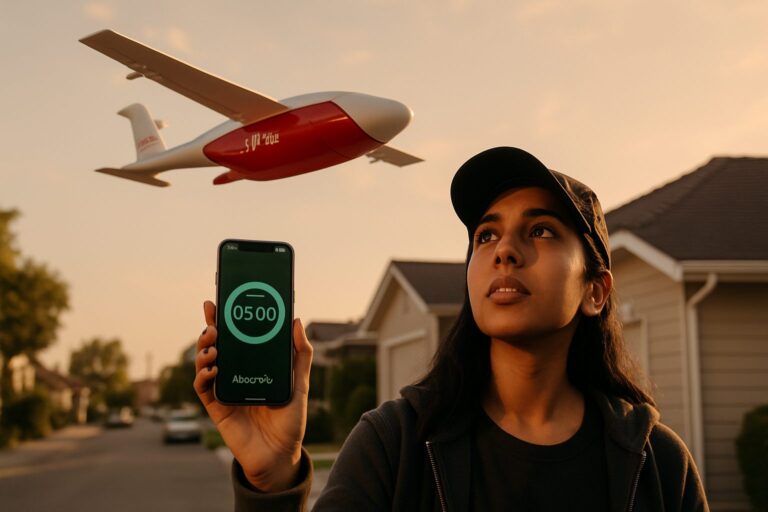
Uber has committed to a partnership and investment with drone delivery startup Zipline, positioning autonomous aerial delivery as a core growth driver for its food and quick-commerce business. The companies aim to begin Zipline drone deliveries on Uber Eats by year-end 2026, with expansion into dozens of U.S. cities following.
The operational metric is aggressive: Uber expects Zipline’s aircraft to fulfill orders within 5-10 minutes. CEO Dara Khosrowshahi framed quick commerce as a larger market opportunity than food delivery itself, signaling where Eats capital allocation is heading.
Platform Aggregation Over Proprietary Build
Uber’s Zipline partnership mirrors its robotaxi playbook—investing in and onboarding multiple autonomous operators rather than building internal capabilities. The company has committed over $10 billion to autonomous vehicle providers while divesting owned programs like Elevate (aerial ridesharing) and its Autonomous Technologies Group.
This approach trades control for speed to market and reduced capex burden. It also diversifies regulatory and technical risk across partners. However, the strategy has exposed friction points: Uber’s partnership with Waymo is expected to end in 2028 after regulatory and operational disagreements.
Zipline’s Scale and Valuation Context
Zipline, based in San Francisco, recently closed an $800 million Series H round, reaching a $7.6 billion valuation. The startup operates in existing markets where it has regulatory approval and operational infrastructure—a critical advantage for rapid Uber Eats rollout.
Zipline co-founder Keller Cliffton positioned the partnership as enabling instant commerce (“as fast as sending a text”), a narrative alignment that suggests both companies see delivery speed as the next competitive battleground after unit economics.
Background: Key Players and Market Timing
Uber’s Autonomous Delivery Strategy
Uber Eats has become the company’s highest-margin business segment, but growth has decelerated as markets saturate. The shift toward drone delivery and quick commerce reflects a bet that sub-15-minute fulfillment can unlock new use cases (pharmacy, retail, non-food CPG) beyond traditional restaurant delivery.
Uber previously tested drone delivery through its Elevate division but shelved the program to focus on robotaxi investments. A 2025 partnership with Israeli startup Flytrex marked Uber’s re-entry into aerial delivery with lower capital commitment. The Zipline deal represents a significant escalation in commitment and scale targets.
Zipline’s Market Position
Zipline operates primarily in Africa and Asia, where it has built regulatory relationships and operational networks for medical supply delivery. Its U.S. expansion has been methodical, with existing approvals in select markets. The Uber partnership accelerates deployment to dozens of cities by providing demand density through Eats’ user base.
Zipline’s recent $800 million funding round values the company above most early-stage autonomous vehicle companies, reflecting investor confidence in the drone-delivery market and the company’s regulatory moat in existing jurisdictions.
Regulatory and Competitive Landscape
FAA Part 135 regulations governing commercial drone operations remain restrictive on range and payload. Zipline’s ability to operate fixed routes in approved corridors gives it an advantage over operators pursuing beyond-visual-line-of-sight (BVLOS) expansion. The Uber partnership will test whether existing regulatory frameworks can scale to mass-market density.
Competitors including Amazon Prime Air, Wing (Alphabet subsidiary), and regional operators are pursuing parallel strategies. Zipline’s integration into Uber Eats creates a demand network advantage that regional players lack, though Amazon’s retail ecosystem poses a longer-term threat.
Investment Implications
- Capex Efficiency: Uber avoids the $5-10 billion capex required to build drone fleet infrastructure, redirecting capital to driver retention and international Eats expansion.
- Valuation Pressure: Success at scale could justify Zipline’s $7.6B valuation, but failure risks creating stranded regulatory approvals. Investors should monitor Q1 2027 delivery volume and unit economics.
- Regulatory Unlock: A Zipline-Uber success in 10+ markets would likely accelerate FAA approval for other operators, benefiting Wing and Amazon but also commoditizing differentiation.
- Competitive Threat: If Uber Eats achieves 1M daily drone deliveries by 2029, traditional last-mile delivery (both gig-driver and logistics) faces margin compression in high-density urban and suburban markets.
The Bottom Line
Uber is using Zipline to de-risk rapid scaling of sub-10-minute delivery while maintaining balance sheet flexibility. The 2029 target of 1 million daily deliveries is bold but achievable if regulatory approval accelerates and Zipline’s unit economics hold. The bigger question: whether quick commerce can generate the margin lift Uber Eats needs to justify its valuation amid investor demands for profitability.
Watch for Q1 2027 guidance on drone delivery penetration and any FAA approval expansions. If execution stalls, Uber may retreat to incremental improvements in gig logistics rather than autonomous transformation.